
在秀丽隐杆线虫中, prohibitin 介导的寿命和线粒体应激涉及 SGK-1、胰岛素/胰岛素样生长因子和 mTORC2。
Prohibitin-mediated lifespan and mitochondrial stress implicate SGK-1, insulin/IGF and mTORC2 in C. elegans.
作者信息
Gatsi Roxani, Schulze Bettina, Rodríguez-Palero María Jesús, Hernando-Rodríguez Blanca, Baumeister Ralf, Artal-Sanz Marta
机构信息
CABD, Centro Andaluz de Biología del Desarrollo, CSIC-Universidad Pablo de Olavide-Junta de Andalucía, Sevilla, Spain.
Centre for Biological Signalling Studies (BIOSS), Albert-Ludwigs-University of Freiburg, Freiburg, Germany; Laboratory for Bioinformatics and Molecular Genetics, Faculty of Biology, Albert-Ludwigs-University of Freiburg, Freiburg, Germany.
出版信息
PLoS One. 2014 Sep 29;9(9):e107671. doi: 10.1371/journal.pone.0107671. eCollection 2014.
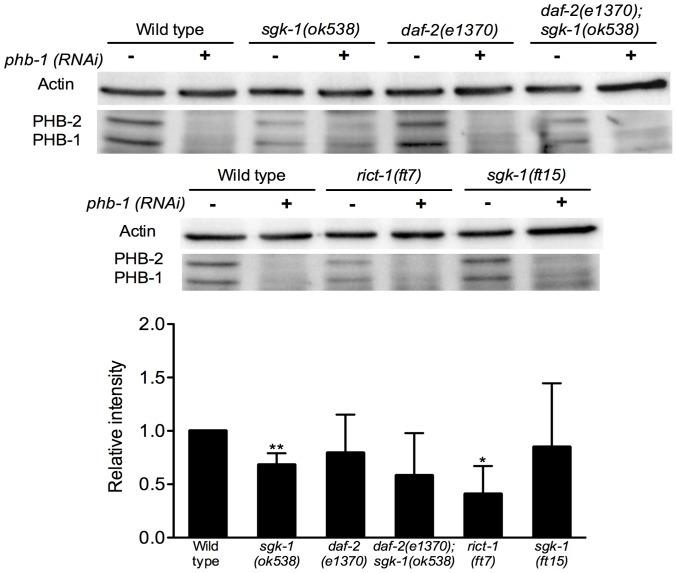
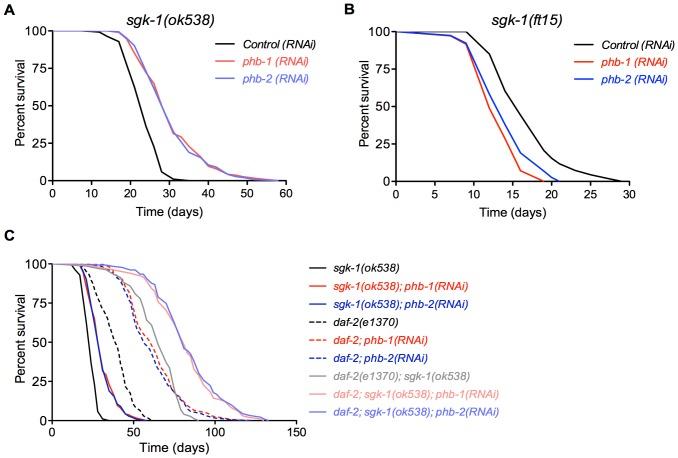
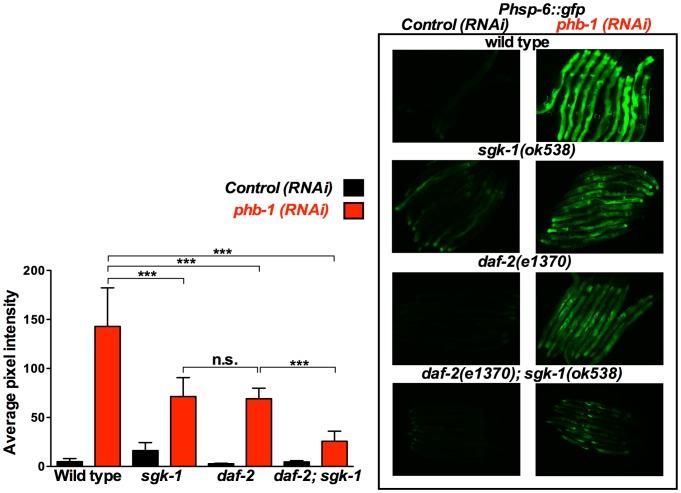
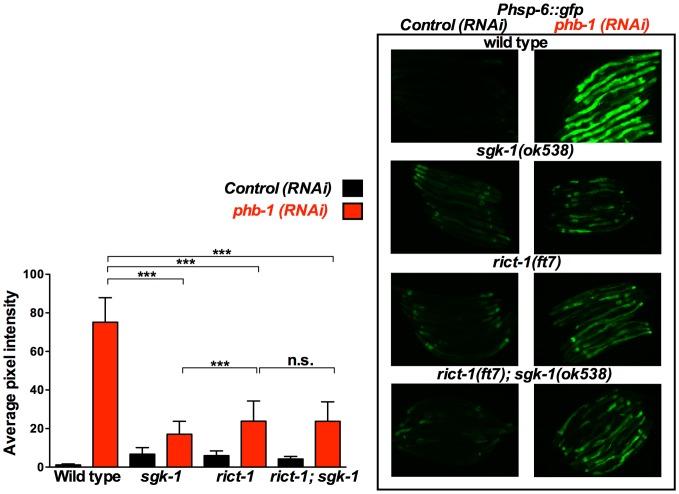
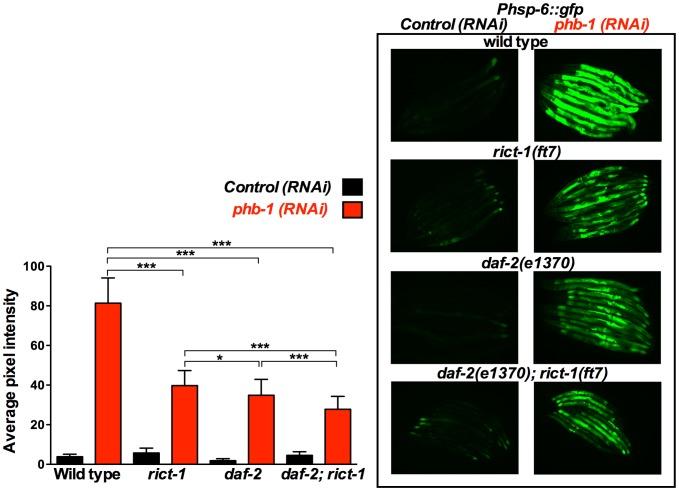
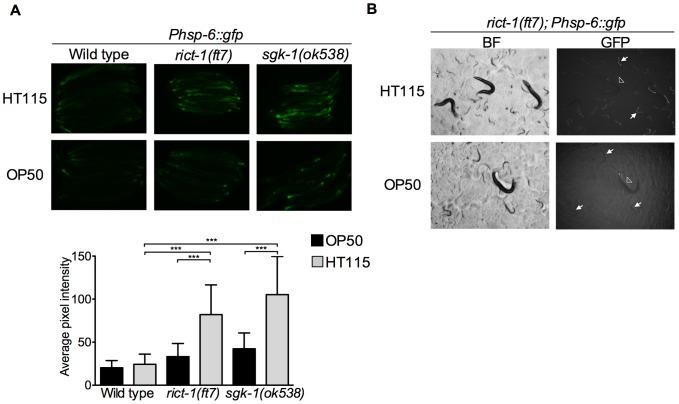
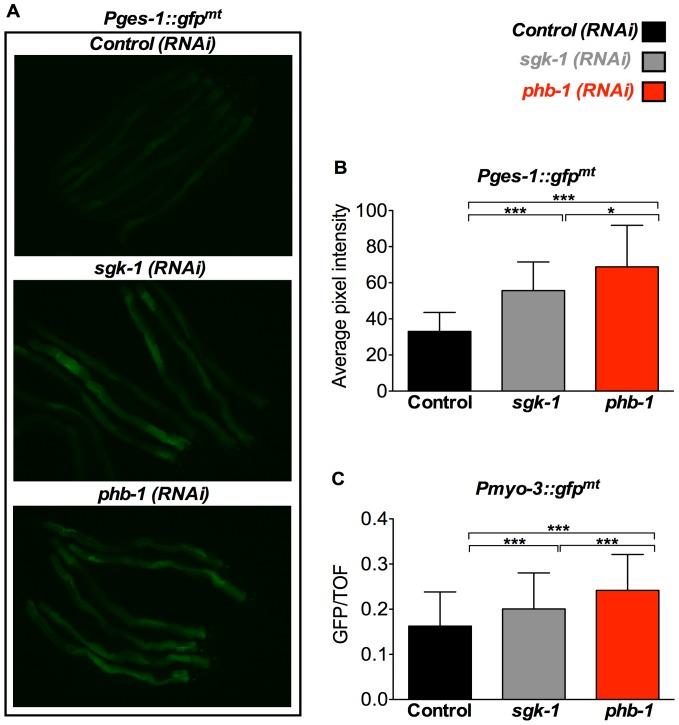
Lifespan regulation by mitochondrial proteins has been well described, however, the mechanism of this regulation is not fully understood. Amongst the mitochondrial proteins profoundly affecting ageing are prohibitins (PHB-1 and PHB-2). Paradoxically, in C. elegans prohibitin depletion shortens the lifespan of wild type animals while dramatically extending that of metabolically compromised animals, such as daf-2-insulin-receptor mutants. Here we show that amongst the three kinases known to act downstream of daf-2, only loss of function of sgk-1 recapitulates the ageing phenotype observed in daf-2 mutants upon prohibitin depletion. Interestingly, signalling through SGK-1 receives input from an additional pathway, parallel to DAF-2, for the prohibitin-mediated lifespan phenotype. We investigated the effect of prohibitin depletion on the mitochondrial unfolded protein response (UPRmt). Remarkably, the lifespan extension upon prohibitin elimination, of both daf-2 and sgk-1 mutants, is accompanied by suppression of the UPRmt induced by lack of prohibitin. On the contrary, gain of function of SGK-1 results in further shortening of lifespan and a further increase of the UPRmt in prohibitin depleted animals. Moreover, SGK-1 interacts with RICT-1 for the regulation of the UPRmt in a parallel pathway to DAF-2. Interestingly, prohibitin depletion in rict-1 loss of function mutant animals also causes lifespan extension. Finally, we reveal an unprecedented role for mTORC2-SGK-1 in the regulation of mitochodrial homeostasis. Together, these results give further insight into the mechanism of lifespan regulation by mitochondrial function and reveal a cross-talk of mitochondria with two key pathways, Insulin/IGF and mTORC2, for the regulation of ageing and stress response.
线粒体蛋白对寿命的调控已有充分描述,然而,这种调控机制尚未完全明确。在深刻影响衰老的线粒体蛋白中,有抗增殖蛋白(PHB - 1和PHB - 2)。矛盾的是,在秀丽隐杆线虫中,抗增殖蛋白缺失会缩短野生型动物的寿命,却显著延长代谢受损动物(如daf - 2胰岛素受体突变体)的寿命。在此我们表明,在已知作用于daf - 2下游的三种激酶中,只有sgk - 1功能缺失能重现抗增殖蛋白缺失时daf - 2突变体中观察到的衰老表型。有趣的是,对于抗增殖蛋白介导的寿命表型,通过SGK - 1的信号传导从与DAF - 2平行的另一条途径接收输入信号。我们研究了抗增殖蛋白缺失对线粒体未折叠蛋白反应(UPRmt)的影响。值得注意的是,daf - 2和sgk - 1突变体在抗增殖蛋白缺失时寿命延长,同时伴随着因抗增殖蛋白缺乏诱导的UPRmt受到抑制。相反,SGK - 1功能获得会导致抗增殖蛋白缺失动物的寿命进一步缩短以及UPRmt进一步增加。此外,SGK - 1与RICT - 1相互作用,在与DAF - 2平行的途径中调节UPRmt。有趣的是,rict - 1功能缺失突变体动物中抗增殖蛋白缺失也会导致寿命延长。最后,我们揭示了mTORC2 - SGK - 1在调节线粒体稳态方面前所未有的作用。总之,这些结果进一步深入了解了线粒体功能对寿命调控的机制,并揭示了线粒体与胰岛素/IGF和mTORC2这两条关键途径之间的相互作用,以调节衰老和应激反应。

 Zotero 插件