
甲基乙二醛诱导肝线粒体功能障碍和细胞死亡。
Methylglyoxal induces mitochondrial dysfunction and cell death in liver.
机构信息
College of Pharmacy, Chosun University, Gwangju, Korea.
出版信息
Toxicol Res. 2014 Sep;30(3):193-8. doi: 10.5487/TR.2014.30.3.193.
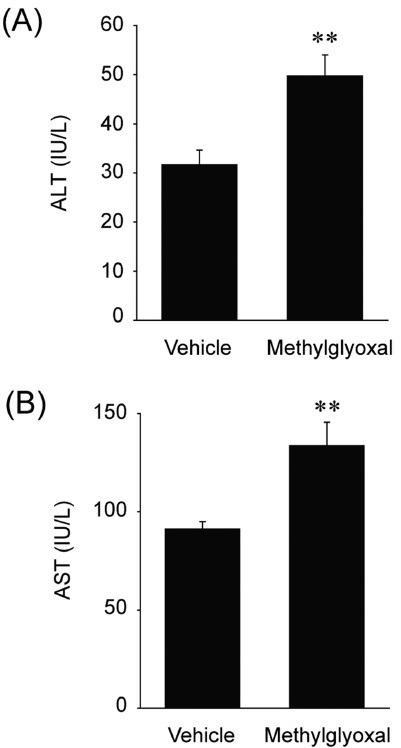
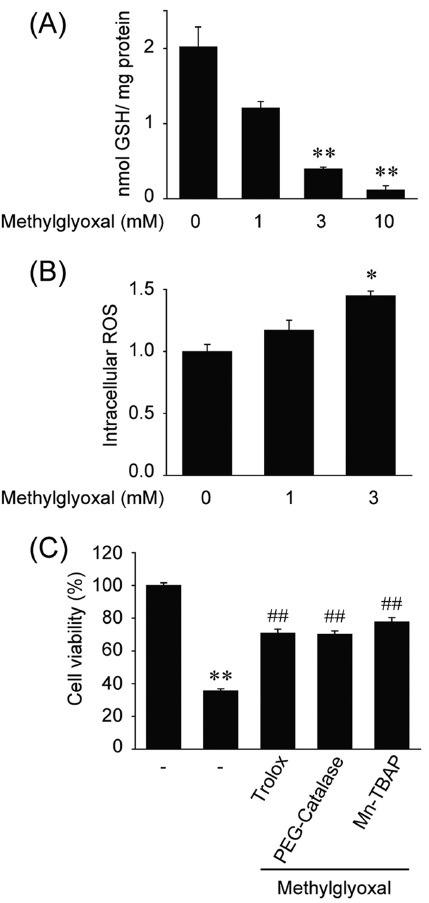
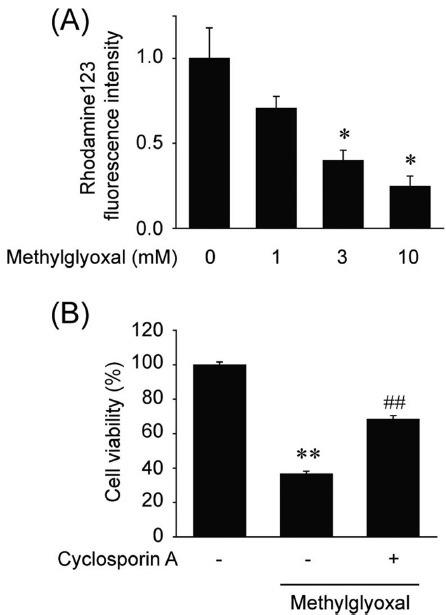
Degradation of glucose is aberrantly increased in hyperglycemia, which causes various harmful effects on the liver. Methylglyoxal is produced during glucose degradation and the levels of methylglyoxal are increased in diabetes patients. In this study we investigated whether methylglyoxal induces mitochondrial impairment and apoptosis in HepG2 cells and induces liver toxicity in vivo. Methylglyoxal caused apoptotic cell death in HepG2 cells. Moreover, methylglyoxal significantly promoted the production of reactive oxygen species (ROS) and depleted glutathione (GSH) content. Pretreatment with antioxidants caused a marked decrease in methylglyoxal-induced apoptosis, indicating that oxidant species are involved in the apoptotic process. Methylglyoxal treatment induced mitochondrial permeability transition, which represents mitochondrial impairment. However, pretreatment with cyclosporin A, an inhibitor of the formation of the permeability transition pore, partially inhibited methylglyoxal-induced cell death. Furthermore, acute treatment of mice with methylglyoxal increased the plasma levels of alanine aminotransferase (ALT) and aspartate aminotransferase (AST), indicating liver toxicity. Collectively, our results showed that methylglyoxal increases cell death and induces liver toxicity, which results from ROS-mediated mitochondrial dysfunction and oxidative stress.
在高血糖症中,葡萄糖的降解异常增加,这会对肝脏造成各种有害影响。在葡萄糖降解过程中会产生甲基乙二醛,糖尿病患者的甲基乙二醛水平升高。在这项研究中,我们研究了甲基乙二醛是否会诱导 HepG2 细胞中的线粒体损伤和细胞凋亡,并在体内诱导肝毒性。甲基乙二醛可导致 HepG2 细胞发生凋亡性细胞死亡。此外,甲基乙二醛可显著促进活性氧(ROS)的产生并耗竭谷胱甘肽(GSH)含量。抗氧化剂预处理可明显降低甲基乙二醛诱导的细胞凋亡,表明氧化物质参与了凋亡过程。甲基乙二醛处理诱导线粒体通透性转换,这代表线粒体损伤。然而,形成通透性转换孔的抑制剂环孢菌素 A 的预处理可部分抑制甲基乙二醛诱导的细胞死亡。此外,急性给予小鼠甲基乙二醛可增加血浆丙氨酸氨基转移酶(ALT)和天冬氨酸氨基转移酶(AST)水平,表明存在肝毒性。综上所述,我们的结果表明,甲基乙二醛会增加细胞死亡并诱导肝毒性,这是由于 ROS 介导的线粒体功能障碍和氧化应激所致。

 Zotero 插件