
食欲肽与睡眠调节在阿尔茨海默病发病机制中的潜在作用。
Potential role of orexin and sleep modulation in the pathogenesis of Alzheimer's disease.
机构信息
Department of Neurology, Hope Center for Neurological Disorders, and Charles F. and Joanne Knight Alzheimer's Disease Research Center, Washington University School of Medicine in St. Louis, St. Louis, MO 63110 Department of Neurology, Hope Center for Neurological Disorders, and Charles F. and Joanne Knight Alzheimer's Disease Research Center, Washington University School of Medicine in St. Louis, St. Louis, MO 63110 Department of Neurology, Hope Center for Neurological Disorders, and Charles F. and Joanne Knight Alzheimer's Disease Research Center, Washington University School of Medicine in St. Louis, St. Louis, MO 63110 Department of Neurology, Asan Medical Center, University of Ulsan College of Medicine, Seoul 138-736, South Korea.
Department of Neurology, Hope Center for Neurological Disorders, and Charles F. and Joanne Knight Alzheimer's Disease Research Center, Washington University School of Medicine in St. Louis, St. Louis, MO 63110 Department of Neurology, Hope Center for Neurological Disorders, and Charles F. and Joanne Knight Alzheimer's Disease Research Center, Washington University School of Medicine in St. Louis, St. Louis, MO 63110 Department of Neurology, Hope Center for Neurological Disorders, and Charles F. and Joanne Knight Alzheimer's Disease Research Center, Washington University School of Medicine in St. Louis, St. Louis, MO 63110.
出版信息
J Exp Med. 2014 Dec 15;211(13):2487-96. doi: 10.1084/jem.20141788. Epub 2014 Nov 24.
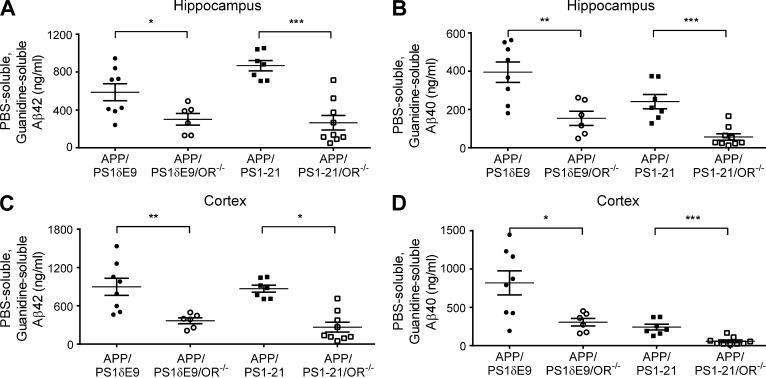
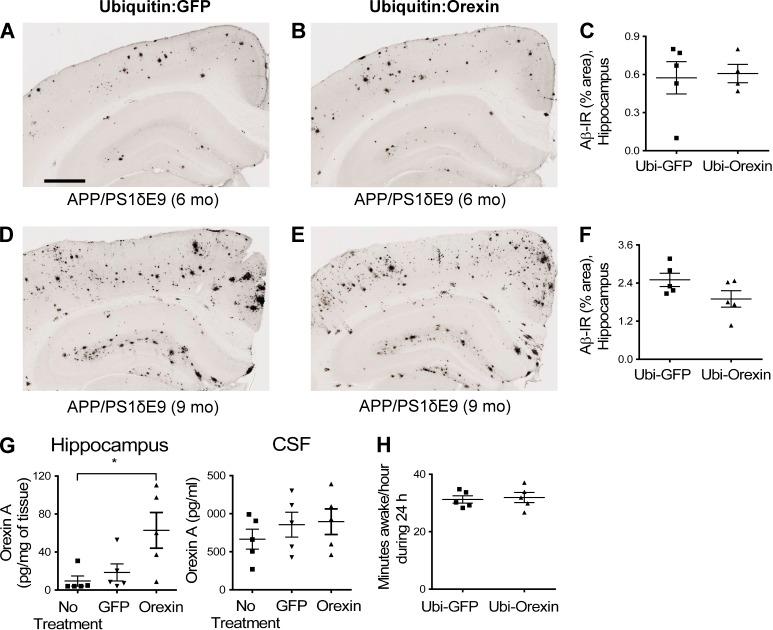
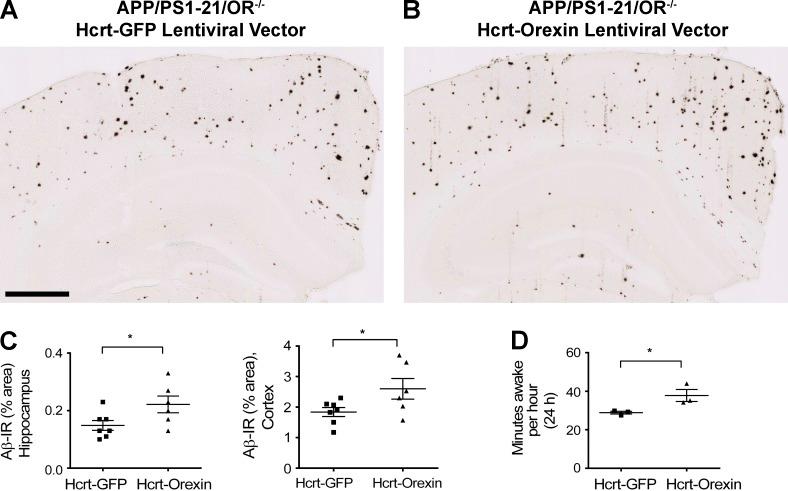
Age-related aggregation of amyloid-β (Aβ) is an upstream pathological event in Alzheimer's disease (AD) pathogenesis, and it disrupts the sleep-wake cycle. The amount of sleep declines with aging and to a greater extent in AD. Poor sleep quality and insufficient amounts of sleep have been noted in humans with preclinical evidence of AD. However, how the amount and quality of sleep affects Aβ aggregation is not yet well understood. Orexins (hypocretins) initiate and maintain wakefulness, and loss of orexin-producing neurons causes narcolepsy. We tried to determine whether orexin release or secondary changes in sleep via orexin modulation affect Aβ pathology. Amyloid precursor protein (APP)/Presenilin 1 (PS1) transgenic mice, in which the orexin gene is knocked out, showed a marked decrease in the amount of Aβ pathology in the brain with an increase in sleep time. Focal overexpression of orexin in the hippocampus in APP/PS1 mice did not alter the total amount of sleep/wakefulness and the amount of Aβ pathology. In contrast, sleep deprivation or increasing wakefulness by rescue of orexinergic neurons in APP/PS1 mice lacking orexin increased the amount of Aβ pathology in the brain. Collectively, modulation of orexin and its effects on sleep appear to modulate Aβ pathology in the brain.
年龄相关的淀粉样蛋白-β(Aβ)聚集是阿尔茨海默病(AD)发病机制中的上游病理事件,它会破坏睡眠-觉醒周期。随着年龄的增长,睡眠量会减少,而在 AD 中则会减少更多。在有 AD 临床前证据的人类中,已经注意到睡眠质量差和睡眠量不足。然而,睡眠的数量和质量如何影响 Aβ聚集还不是很清楚。食欲素(下丘脑分泌素)启动并维持觉醒,而产生食欲素的神经元丧失会导致嗜睡。我们试图确定食欲素的释放或通过食欲素调节引起的睡眠中的继发变化是否会影响 Aβ病理学。在 APP/PS1 转基因小鼠中,敲除了食欲素基因,其大脑中的 Aβ病理学数量明显减少,睡眠时间增加。在 APP/PS1 小鼠的海马体中,食欲素的局部过表达不会改变总睡眠时间/觉醒时间和 Aβ病理学的数量。相比之下,在缺乏食欲素的 APP/PS1 小鼠中,通过挽救食欲能神经元来剥夺睡眠或增加觉醒,会增加大脑中 Aβ病理学的数量。总的来说,食欲素的调节及其对睡眠的影响似乎调节了大脑中的 Aβ病理学。



 Zotero 插件