
猫冠状病毒复制小分子抑制剂的鉴定与表征
Identification and characterisation of small molecule inhibitors of feline coronavirus replication.
作者信息
McDonagh Phillip, Sheehy Paul A, Norris Jacqueline M
机构信息
Faculty of Veterinary Science, Building B14, The University of Sydney, Sydney, NSW 2006, Australia.
Faculty of Veterinary Science, Building B19, The University of Sydney, Sydney, NSW 2006, Australia.
出版信息
Vet Microbiol. 2014 Dec 5;174(3-4):438-447. doi: 10.1016/j.vetmic.2014.10.030. Epub 2014 Nov 4.
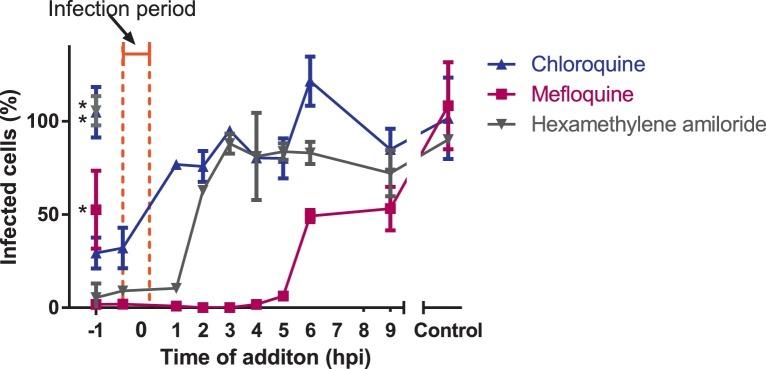
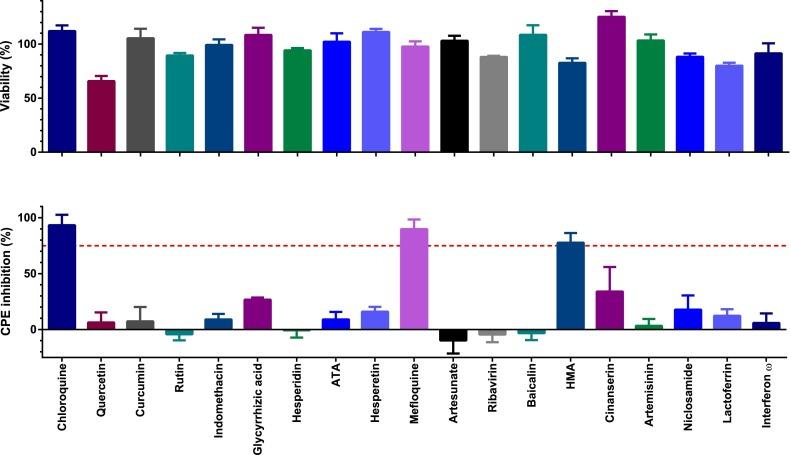
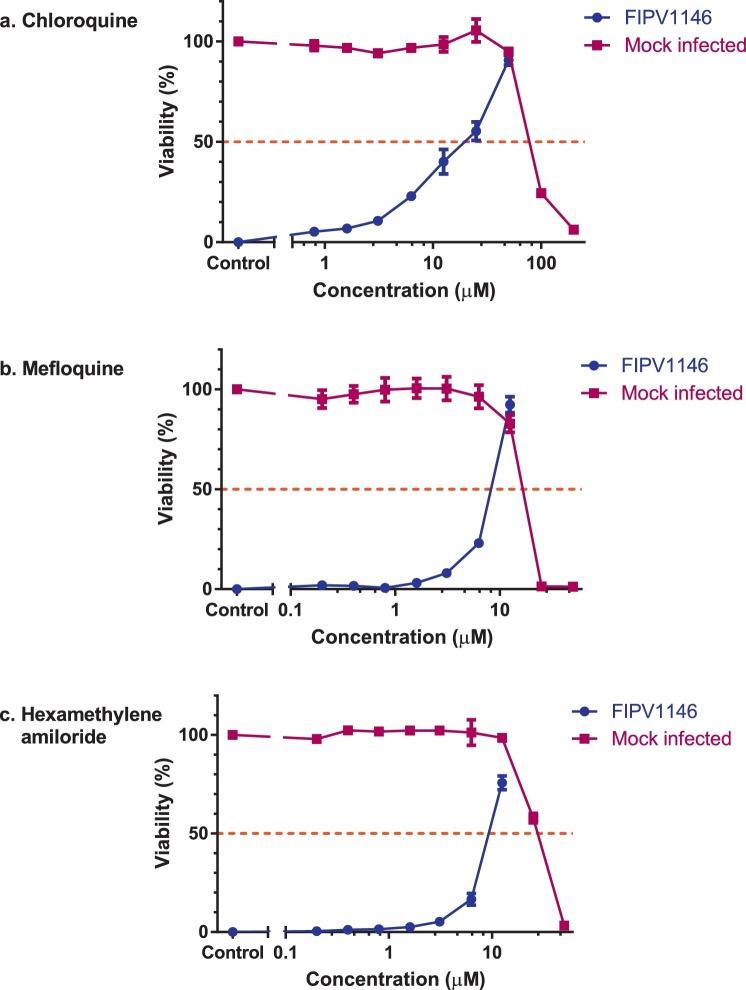
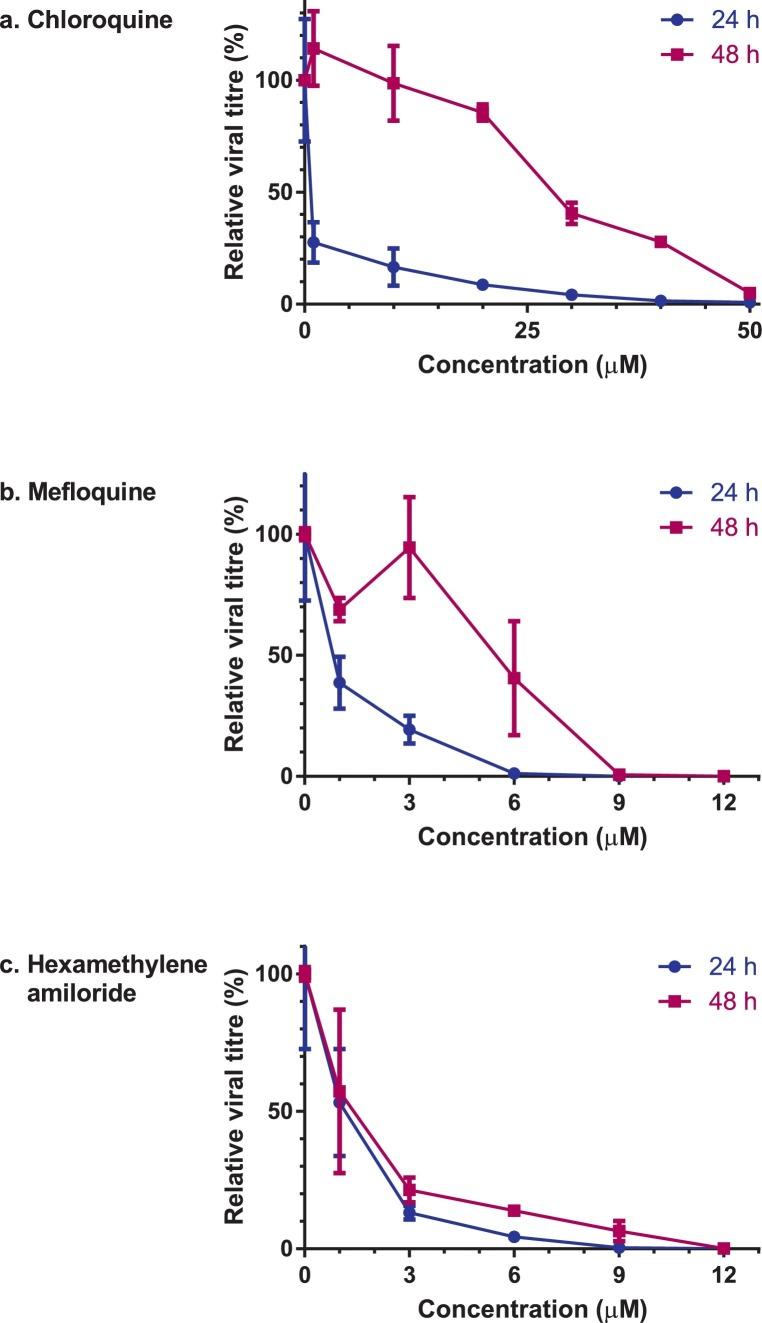
Feline infectious peritonitis (FIP), a feline coronavirus (FCoV) induced disease, is almost invariably fatal with median life expectancy measured in days. Current treatment options are, at best, palliative. The objectives of this study were to evaluate a panel of nineteen candidate compounds for antiviral activity against FCoV in vitro to determine viable candidates for therapy. A resazurin-based cytopathic effect inhibition assay, which detects viable cells through their reduction of the substrate resazurin to fluorescent resorufin, was developed for screening compounds for antiviral efficacy against FCoV. Plaque reduction and virus yield reduction assays were performed to confirm antiviral effects of candidate compounds identified during screening, and the possible antiviral mechanisms of action of these compounds were investigated using virucidal suspension assays and CPE inhibition and IFA-based time of addition assays. Three compounds, chloroquine, mefloquine, and hexamethylene amiloride demonstrated marked inhibition of virus induced CPE at low micromolar concentrations. Orthogonal assays confirmed inhibition of CPE was associated with significant reductions in viral replication. Selectivity indices calculated based on in vitro cytotoxicity screening and reductions in extracellular viral titre were 217, 24, and 20 for chloroquine, mefloquine, and hexamethylene amiloride respectively. Preliminary experiments performed to inform the antiviral mechanism of the compounds demonstrated all three acted at an early stage of viral replication. These results suggest that these direct acting antiviral compounds, or their derivatives, warrant further investigation for clinical use in cats with FIP.
猫传染性腹膜炎(FIP)是一种由猫冠状病毒(FCoV)引起的疾病,几乎无一例外是致命的,中位预期寿命以天数计算。目前的治疗方法充其量只是姑息性的。本研究的目的是评估一组19种候选化合物对FCoV的体外抗病毒活性,以确定可行的治疗候选物。开发了一种基于刃天青的细胞病变效应抑制试验,该试验通过将底物刃天青还原为荧光试卤灵来检测活细胞,用于筛选对FCoV具有抗病毒功效的化合物。进行蚀斑减少和病毒产量减少试验,以确认筛选过程中鉴定出的候选化合物的抗病毒作用,并使用杀病毒悬浮试验、CPE抑制试验和基于免疫荧光分析的添加时间试验研究这些化合物可能的抗病毒作用机制。三种化合物,氯喹、甲氟喹和六甲撑amiloride在低微摩尔浓度下对病毒诱导的CPE表现出显著抑制作用。正交试验证实,CPE的抑制与病毒复制的显著减少有关。根据体外细胞毒性筛选和细胞外病毒滴度降低计算的选择性指数,氯喹、甲氟喹和六甲撑amiloride分别为217、24和20。为了解这些化合物的抗病毒机制而进行的初步实验表明,这三种化合物均在病毒复制的早期起作用。这些结果表明,这些直接作用的抗病毒化合物或其衍生物值得进一步研究,以用于FIP猫的临床治疗。
 Zotero 插件