
泛素羧基末端水解酶L1(UCHL1)的过表达在体内可延缓阿尔茨海默病的进展。
Overexpression of ubiquitin carboxyl-terminal hydrolase L1 (UCHL1) delays Alzheimer's progression in vivo.
作者信息
Zhang Mingming, Cai Fang, Zhang Shuting, Zhang Si, Song Weihong
机构信息
Townsend Family Laboratories, Department of Psychiatry, Brain Research Center, The University of British Columbia, 2255 Wesbrook Mall, Vancouver, BC V6T 1Z3, Canada.
出版信息
Sci Rep. 2014 Dec 3;4:7298. doi: 10.1038/srep07298.
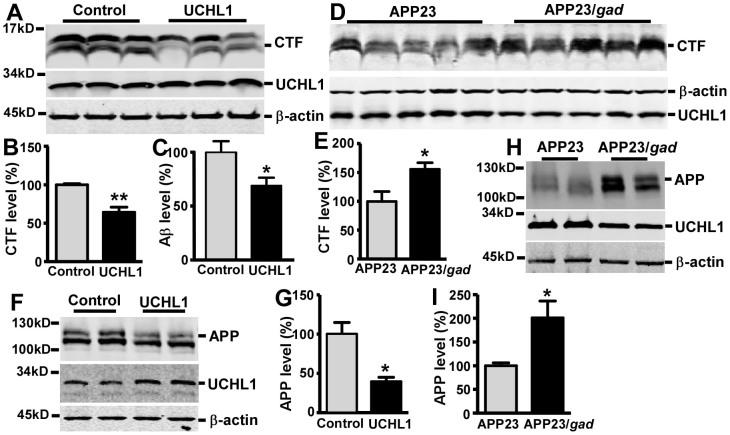
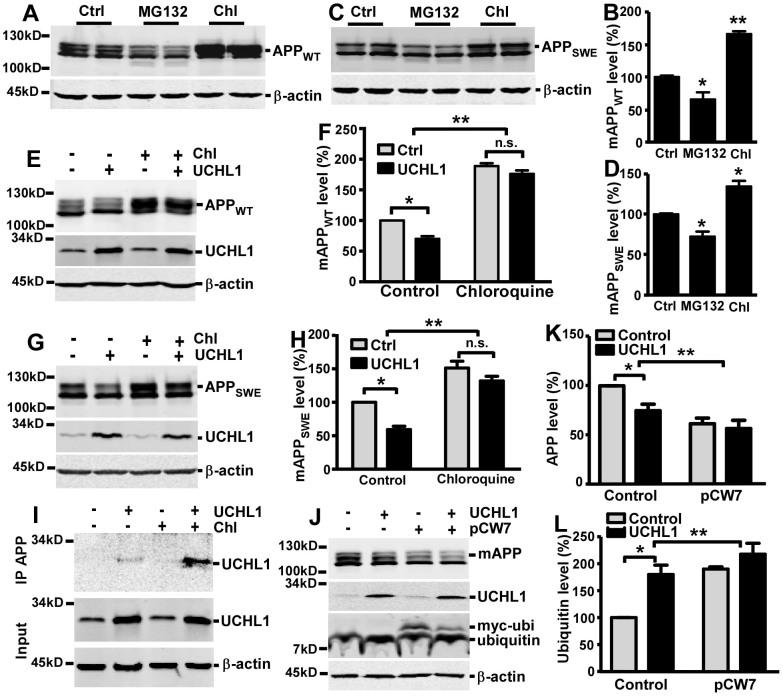
Deposition of amyloid β protein (Aβ) to form neuritic plaques in the brain is the pathological hallmark of Alzheimer's disease (AD). Aβ is produced by β- and γ-cleavages of amyloid β precursor protein (APP). Ubiquitin carboxyl-terminal hydrolase L1 (UCHL1) is a de-ubiquitinating enzyme that cleaves ubiquitin at its carboxyl terminal. Dysfunction of UCHL1 has been reported in neurodegenerative diseases. However, whether UCHL1 affects Aβ production and AD progression remains unknown. Here we report that UCHL1 interacts with APP and regulates Aβ production. UCHL1 increases free ubiquitin level and accelerates the lysosomal degradation of APP by promoting its ubiquitination. Furthermore, we demonstrate that overexpression of UCHL1 by intracranial injection of UCHL1-expressing rAAV reduces Aβ production, inhibits neuritic plaque formation and improves memory deficits in AD transgenic model mice. Our study suggests that UCHL1 may delay Alzheimer's progression by regulating APP degradation in a long-term fashion, and that overexpression of UCHL1 may be a safe and effective disease-modifying strategy to treat AD.
淀粉样β蛋白(Aβ)在大脑中沉积形成神经炎性斑块是阿尔茨海默病(AD)的病理标志。Aβ由淀粉样β前体蛋白(APP)经β和γ裂解产生。泛素羧基末端水解酶L1(UCHL1)是一种在羧基末端切割泛素的去泛素化酶。UCHL1功能障碍在神经退行性疾病中已有报道。然而,UCHL1是否影响Aβ产生及AD进展仍不清楚。在此我们报道UCHL1与APP相互作用并调节Aβ产生。UCHL1通过促进APP泛素化增加游离泛素水平并加速APP的溶酶体降解。此外,我们证明通过颅内注射表达UCHL1的重组腺相关病毒(rAAV)使UCHL1过表达可减少AD转基因模型小鼠的Aβ产生,抑制神经炎性斑块形成并改善记忆缺陷。我们的研究表明UCHL1可能通过长期调节APP降解来延缓阿尔茨海默病进展,且UCHL1过表达可能是一种安全有效的治疗AD的疾病修饰策略。


 Zotero 插件