
在乳腺癌中,FOXA1抑制与BRCA1缺失、启动子甲基化增加及染色质沉默相关。
FOXA1 repression is associated with loss of BRCA1 and increased promoter methylation and chromatin silencing in breast cancer.
作者信息
Gong C, Fujino K, Monteiro L J, Gomes A R, Drost R, Davidson-Smith H, Takeda S, Khoo U S, Jonkers J, Sproul D, Lam E W-F
机构信息
Department of Surgery and Cancer, Imperial College London, Hammersmith Hospital Campus, London, UK.
Department of Pathology, Li Ka Shing Faculty of Medicine, The University of Hong Kong, Hong Kong SAR, China.
出版信息
Oncogene. 2015 Sep 24;34(39):5012-24. doi: 10.1038/onc.2014.421. Epub 2014 Dec 22.
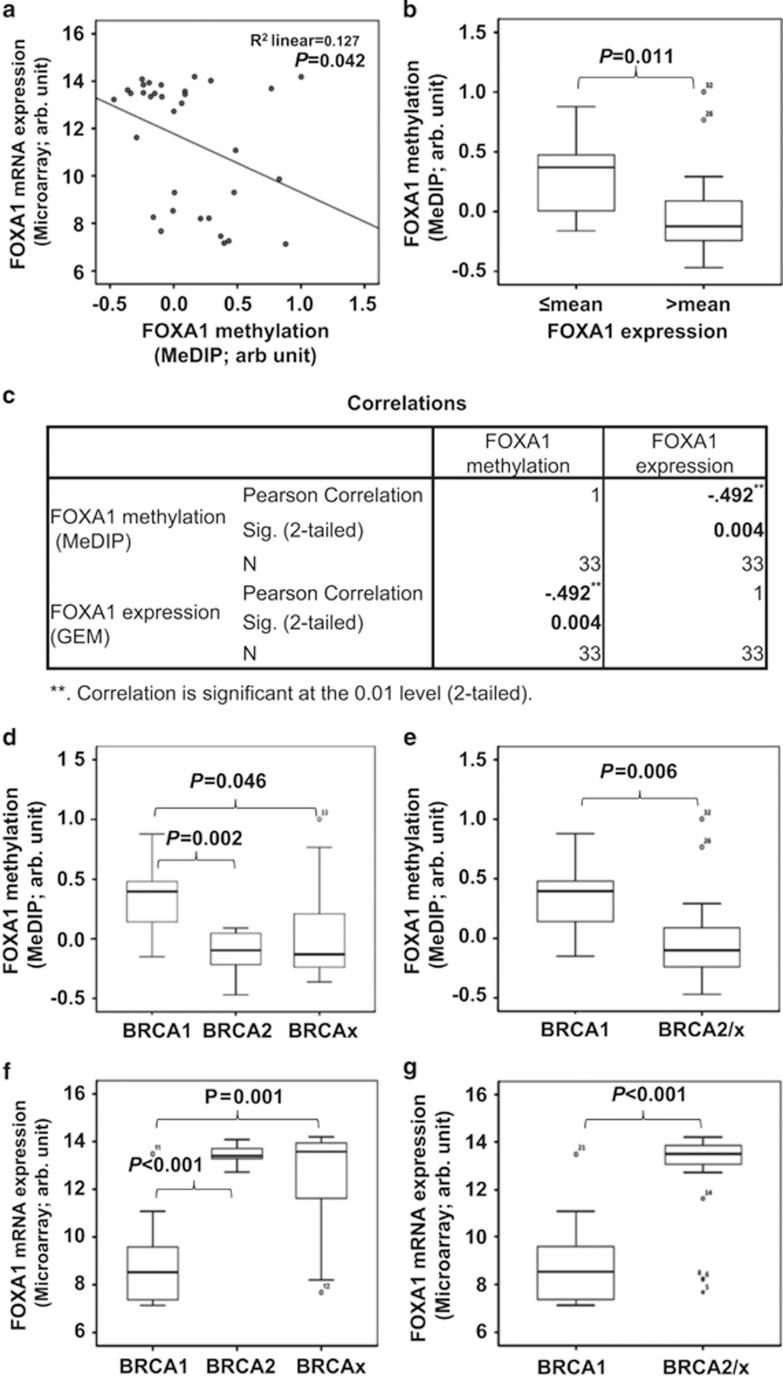
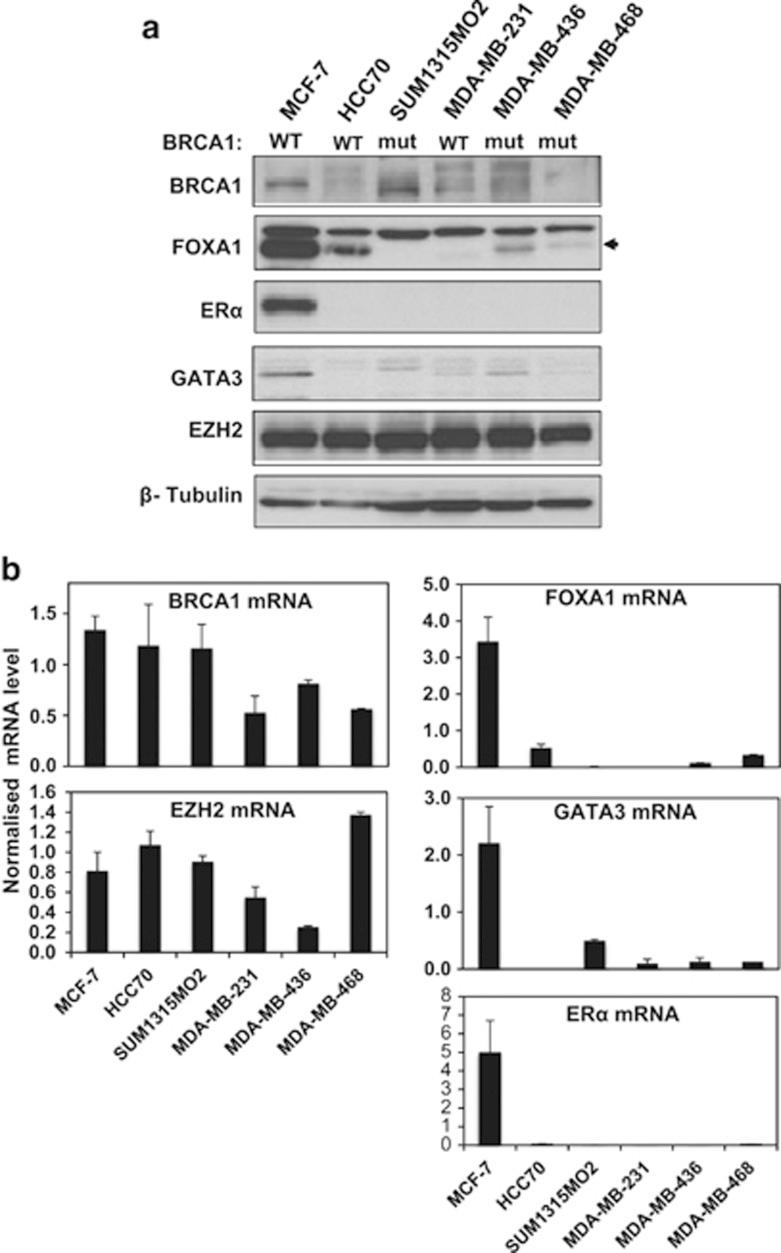
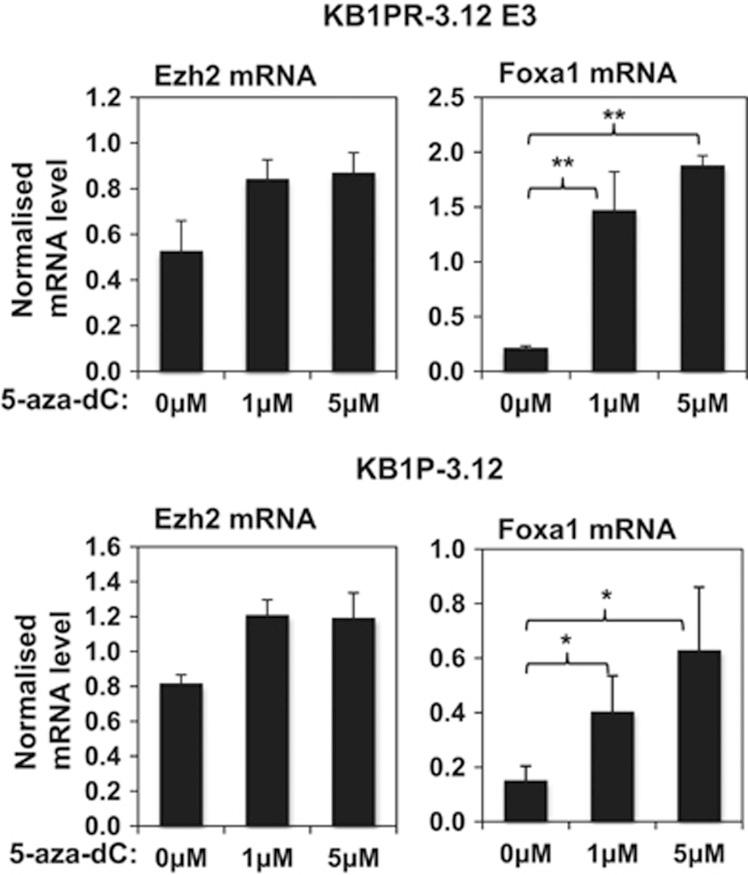
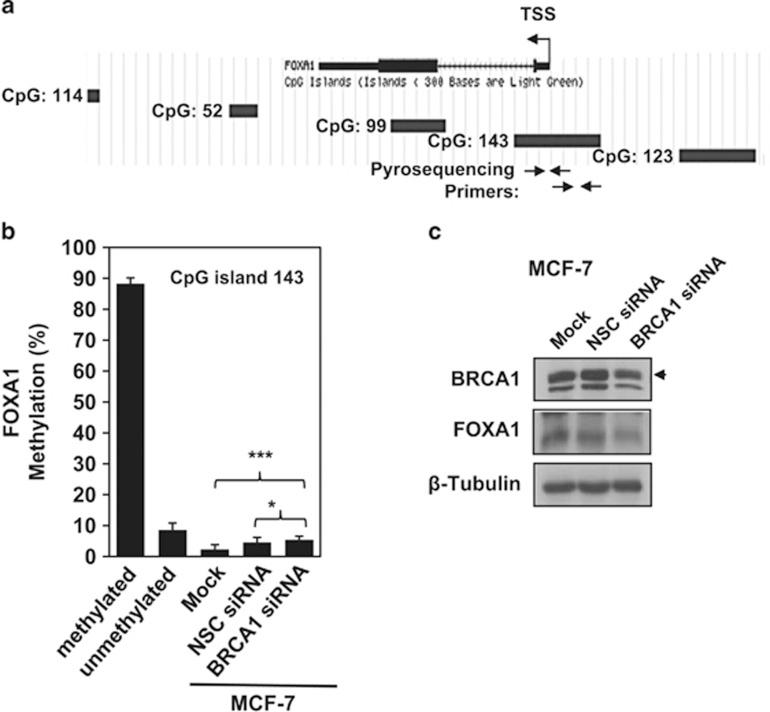
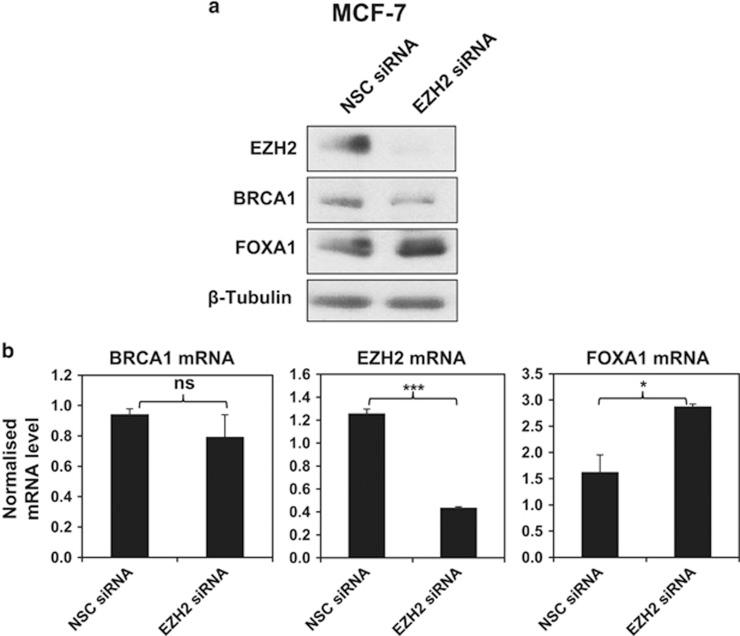
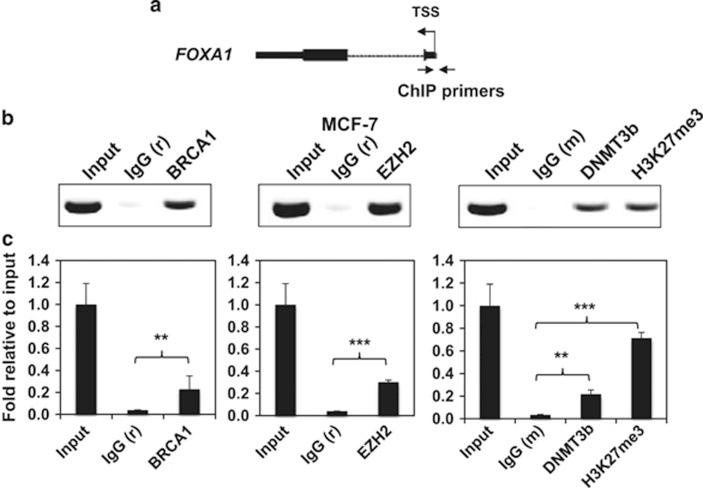
FOXA1 expression correlates with the breast cancer luminal subtype and patient survival. RNA and protein analysis of a panel of breast cancer cell lines revealed that BRCA1 deficiency is associated with the downregulation of FOXA1 expression. Knockdown of BRCA1 resulted in the downregulation of FOXA1 expression and enhancement of FOXA1 promoter methylation in MCF-7 breast cancer cells, whereas the reconstitution of BRCA1 in Brca1-deficent mouse mammary epithelial cells (MMECs) promoted Foxa1 expression and methylation. These data suggest that BRCA1 suppresses FOXA1 hypermethylation and silencing. Consistently, the treatment of MMECs with the DNA methylation inhibitor 5-aza-2'-deoxycitydine induced Foxa1 mRNA expression. Furthermore, treatment with GSK126, an inhibitor of EZH2 methyltransferase activity, induced FOXA1 expression in BRCA1-deficient but not in BRCA1-reconstituted MMECs. Likewise, the depletion of EZH2 by small interfering RNA enhanced FOXA1 mRNA expression. Chromatin immunoprecipitation (ChIP) analysis demonstrated that BRCA1, EZH2, DNA methyltransferases (DNMT)1/3a/3b and H3K27me3 are recruited to the endogenous FOXA1 promoter, further supporting the hypothesis that these proteins interact to modulate FOXA1 methylation and repression. Further co-immunoprecipitation and ChIP analysis showed that both BRCA1 and DNMT3b form complexes with EZH2 but not with each other, consistent with the notion that BRCA1 binds to EZH2 and negatively regulates its methyltransferase activity. We also found that EZH2 promotes and BRCA1 impairs the deposit of the gene silencing histone mark H3K27me3 on the FOXA1 promoter. These associations were validated in a familial breast cancer patient cohort. Integrated analysis of the global gene methylation and expression profiles of a set of 33 familial breast tumours revealed that FOXA1 promoter methylation is inversely correlated with the transcriptional expression of FOXA1 and that BRCA1 mutation breast cancer is significantly associated with FOXA1 methylation and downregulation of FOXA1 expression, providing physiological evidence to our findings that FOXA1 expression is regulated by methylation and chromatin silencing and that BRCA1 maintains FOXA1 expression through suppressing FOXA1 gene methylation in breast cancer.
FOXA1的表达与乳腺癌管腔亚型及患者生存率相关。对一组乳腺癌细胞系进行RNA和蛋白质分析发现,BRCA1缺陷与FOXA1表达下调有关。在MCF-7乳腺癌细胞中敲低BRCA1会导致FOXA1表达下调以及FOXA1启动子甲基化增强,而在Brca1缺陷的小鼠乳腺上皮细胞(MMECs)中重建BRCA1则会促进Foxa1表达并降低其甲基化。这些数据表明BRCA1可抑制FOXA1的高甲基化和沉默。同样,用DNA甲基化抑制剂5-氮杂-2'-脱氧胞苷处理MMECs可诱导Foxa1 mRNA表达。此外,用EZH2甲基转移酶活性抑制剂GSK126处理可在BRCA1缺陷的MMECs中诱导FOXA1表达,但在重建了BRCA1的MMECs中则无此作用。同样,用小干扰RNA敲低EZH2可增强FOXA1 mRNA表达。染色质免疫沉淀(ChIP)分析表明,BRCA1、EZH2、DNA甲基转移酶(DNMT)1/3a/3b和H3K27me3被招募至内源性FOXA1启动子,进一步支持了这些蛋白相互作用以调节FOXA1甲基化和抑制的假说。进一步的免疫共沉淀和ChIP分析表明,BRCA1和DNMT3b均与EZH2形成复合物,但彼此之间不形成复合物,这与BRCA1与EZH2结合并负向调节其甲基转移酶活性的观点一致。我们还发现EZH2促进而BRCA1削弱基因沉默组蛋白标记H3K27me3在FOXA1启动子上的沉积。这些关联在一个家族性乳腺癌患者队列中得到了验证。对一组33个家族性乳腺肿瘤的全基因组甲基化和表达谱进行综合分析发现,FOXA1启动子甲基化与FOXA1的转录表达呈负相关,且BRCA1突变的乳腺癌与FOXA1甲基化及FOXA1表达下调显著相关,为我们关于FOXA1表达受甲基化和染色质沉默调节以及BRCA1通过抑制乳腺癌中FOXA1基因甲基化来维持FOXA1表达的研究结果提供了生理学证据。





 Zotero 插件