
介导恐惧记忆提取的神经回路中的时间性变化。
A temporal shift in the circuits mediating retrieval of fear memory.
作者信息
Do-Monte Fabricio H, Quiñones-Laracuente Kelvin, Quirk Gregory J
机构信息
1] Department of Psychiatry, University of Puerto Rico School of Medicine, PO Box 365067, San Juan 00936, Puerto Rico [2] Department of Anatomy &Neurobiology, University of Puerto Rico School of Medicine, P.O. Box 365067, San Juan 00936, Puerto Rico.
出版信息
Nature. 2015 Mar 26;519(7544):460-3. doi: 10.1038/nature14030. Epub 2015 Jan 19.
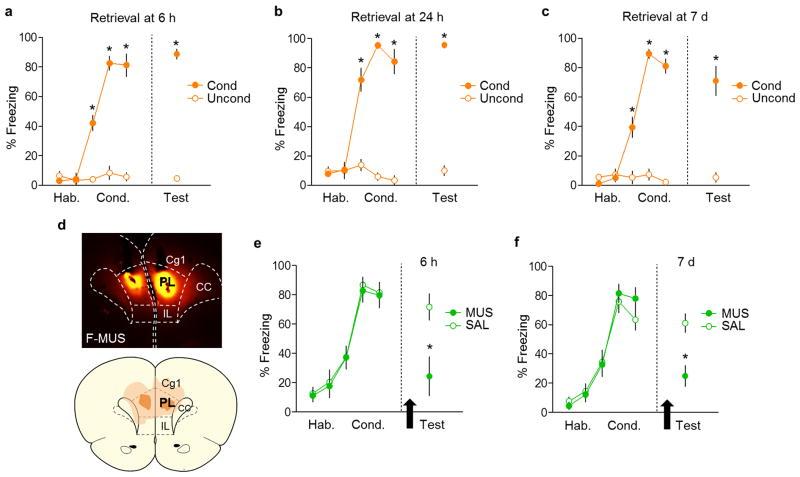
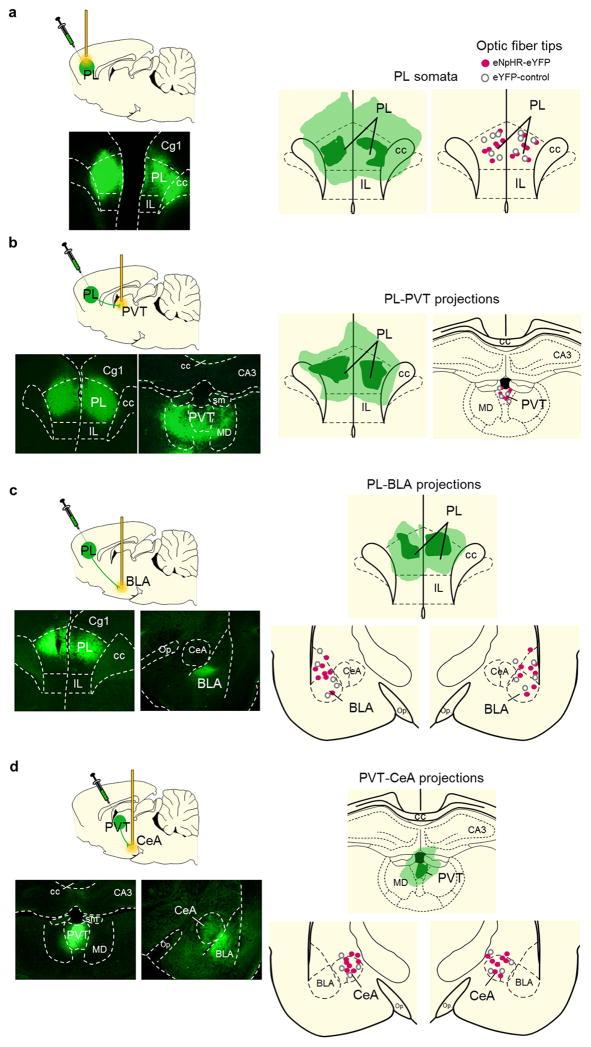
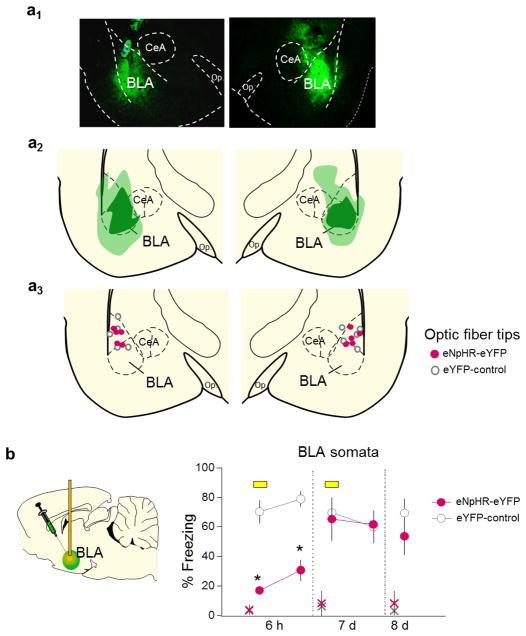
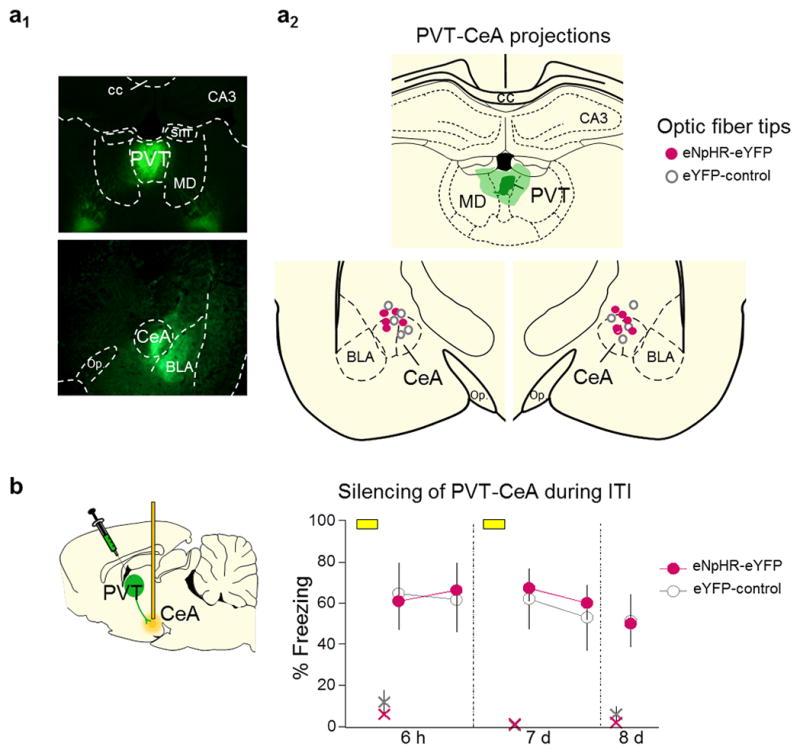
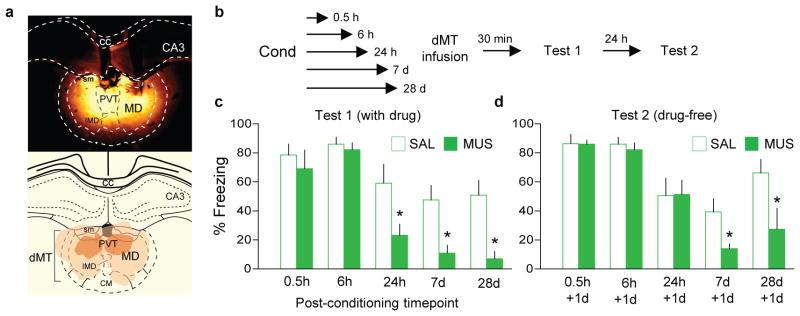
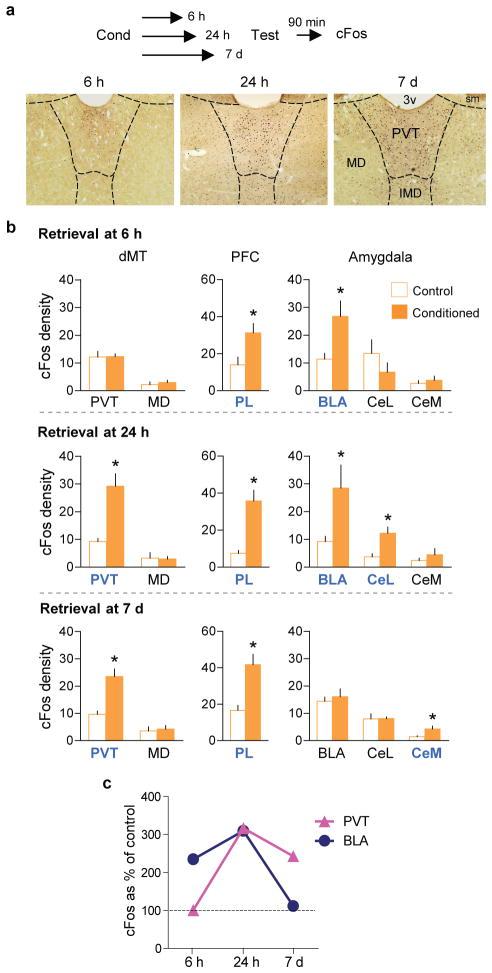
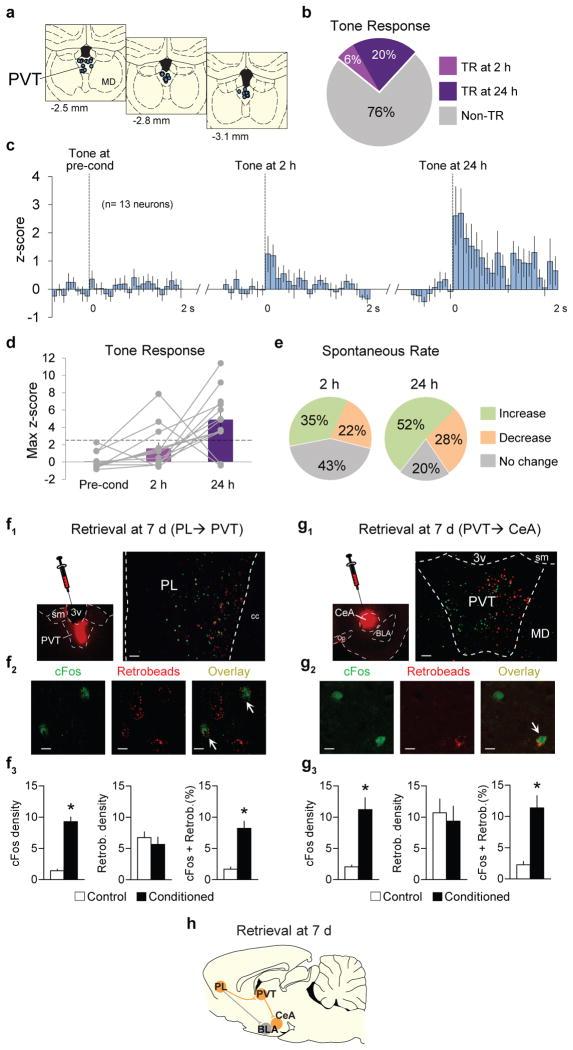
Fear memories allow animals to avoid danger, thereby increasing their chances of survival. Fear memories can be retrieved long after learning, but little is known about how retrieval circuits change with time. Here we show that the dorsal midline thalamus of rats is required for the retrieval of auditory conditioned fear at late (24 hours, 7 days, 28 days), but not early (0.5 hours, 6 hours) time points after learning. Consistent with this, the paraventricular nucleus of the thalamus (PVT), a subregion of the dorsal midline thalamus, showed increased c-Fos expression only at late time points, indicating that the PVT is gradually recruited for fear retrieval. Accordingly, the conditioned tone responses of PVT neurons increased with time after training. The prelimbic (PL) prefrontal cortex, which is necessary for fear retrieval, sends dense projections to the PVT. Retrieval at late time points activated PL neurons projecting to the PVT, and optogenetic silencing of these projections impaired retrieval at late, but not early, time points. In contrast, silencing of PL inputs to the basolateral amygdala impaired retrieval at early, but not late, time points, indicating a time-dependent shift in retrieval circuits. Retrieval at late time points also activated PVT neurons projecting to the central nucleus of the amygdala, and silencing these projections at late, but not early, time points induced a persistent attenuation of fear. Thus, the PVT may act as a crucial thalamic node recruited into cortico-amygdalar networks for retrieval and maintenance of long-term fear memories.
恐惧记忆能使动物规避危险,从而增加其生存几率。恐惧记忆在学习很久之后仍可被提取,但对于提取回路如何随时间变化却知之甚少。在此我们表明,大鼠背侧中线丘脑是学习后晚期(24小时、7天、28天)而非早期(0.5小时、6小时)听觉条件性恐惧提取所必需的。与此一致的是,丘脑室旁核(PVT)作为背侧中线丘脑的一个亚区,仅在晚期时间点显示出c-Fos表达增加,这表明PVT逐渐被招募用于恐惧提取。相应地,PVT神经元的条件性音调反应在训练后随时间增加。恐惧提取所必需的前额叶前边缘皮层(PL)向PVT发出密集投射。晚期时间点的提取激活了投射到PVT的PL神经元,对这些投射进行光遗传学沉默会损害晚期而非早期时间点的提取。相反,对基底外侧杏仁核的PL输入进行沉默会损害早期而非晚期时间点的提取,这表明提取回路存在时间依赖性转变。晚期时间点的提取还激活了投射到杏仁核中央核的PVT神经元,在晚期而非早期时间点沉默这些投射会导致恐惧的持续减弱。因此,PVT可能作为一个关键的丘脑节点被纳入皮质-杏仁核网络,用于长期恐惧记忆的提取和维持。





 Zotero 插件