
一株野生型甲型流感(H1N1)病毒株作为人类实验性攻击因子的特性研究。
Characterisation of a wild-type influenza (A/H1N1) virus strain as an experimental challenge agent in humans.
作者信息
Watson Jeannette M, Francis James N, Mesens Sofie, Faiman Gabriel A, Makin Jill, Patriarca Peter, Treanor John J, Georges Bertrand, Bunce Campbell J
机构信息
Immune Targeting Systems Ltd, London BioScience Innovation Centre, 2 Royal College Street, London, NW1 0NH, UK.
SGS LSS, Clinical Research Unit, Antwerpen, Belgium.
出版信息
Virol J. 2015 Feb 3;12:13. doi: 10.1186/s12985-015-0240-5.
BACKGROUND
Human challenge models using respiratory viruses such as influenza are increasingly utilised in the development of novel vaccines and anti-viral modalities and can provide preliminary evidence of protection before evaluation in field trials. We describe the results of a clinical study characterising an A/H1N1 influenza challenge virus in humans.
METHODS
The challenge agent, influenza A/California/2009 (H1N1), was manufactured under cGMP conditions and characterised in accordance with regulatory guidelines. A dose-ascending open-label clinical study was conducted in 29 healthy young adults screened sero-negative to the challenge strain. Subjects were intranasally inoculated with three increasing doses of virus and physician-reported signs, subjected-reported symptoms, viral shedding and immunological responses were monitored.
RESULTS
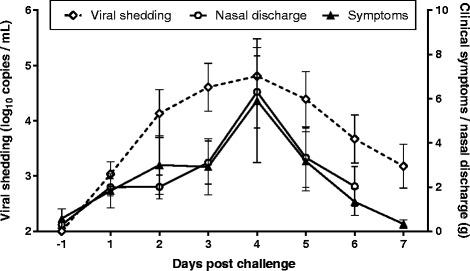
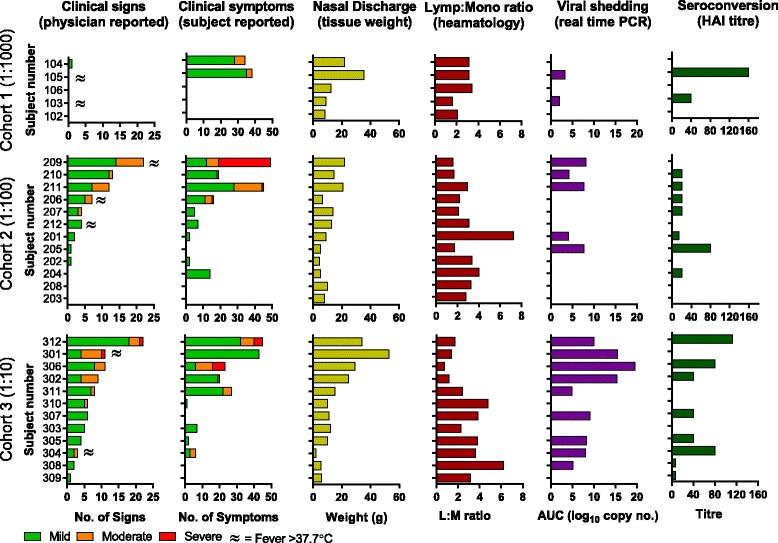
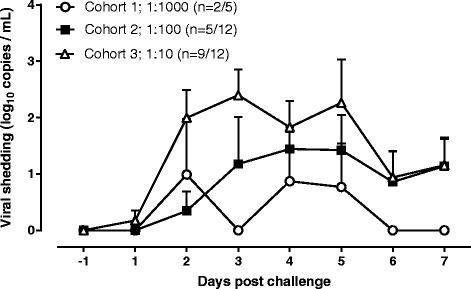
A dose-dependent increase in clinical signs and symptoms was observed with 75% of subjects developing laboratory-confirmed illness at the highest inoculum (3.5 × 10(6) TCID50). At the highest dose, physician or subject-reported signs of infection were classified as mild (all subjects), moderate (50%) and severe (16%) with peak symptoms recorded four days after infection. Clinical signs were correlated with nasal mucus weight (P < .001) and subject-reported symptoms (P < .001). Geometric mean peak viral shedding was log10 5.16 TCID50 and occurred three days after inoculation with a median duration of five days. The safety profile was such that physiological responses to viral infection were mainly restricted to the upper airways but were not of such severity to be of clinical concern.
CONCLUSIONS
A highly characterised wild-type Influenza A/California/2009 (H1N1) virus manufactured for clinical use was shown to induce a good infectivity profile in human volunteers. This clinical challenge model can be used for evaluating potential efficacy of vaccines and anti-viral therapeutics.
TRIAL REGISTRATION
NCT02014870.
背景
使用流感等呼吸道病毒的人体激发模型在新型疫苗和抗病毒药物的研发中得到越来越广泛的应用,并且可以在进行现场试验评估之前提供保护的初步证据。我们描述了一项对人体中甲型H1N1流感激发病毒进行特征分析的临床研究结果。
方法
激发剂甲型/加利福尼亚/2009(H1N1)流感病毒在符合cGMP条件下生产,并按照监管指南进行特征分析。对29名针对激发毒株血清学检测呈阴性的健康年轻成年人进行了一项剂量递增的开放标签临床研究。受试者经鼻接种三种递增剂量的病毒,并监测医生报告的体征、受试者报告的症状、病毒脱落情况和免疫反应。
结果
观察到临床体征和症状呈剂量依赖性增加,75%的受试者在最高接种量(3.5×10⁶ TCID50)时出现实验室确诊疾病。在最高剂量时,医生或受试者报告的感染体征被分类为轻度(所有受试者)、中度(50%)和重度(16%),感染后四天记录到症状高峰。临床体征与鼻黏液重量(P < 0.001)和受试者报告的症状(P < 0.001)相关。几何平均峰值病毒脱落量为log10 5.16 TCID50,接种后三天出现,中位持续时间为五天。安全性方面,对病毒感染的生理反应主要局限于上呼吸道,但严重程度未达到临床关注水平。
结论
一种经高度特征化的用于临床的野生型甲型/加利福尼亚/2009(H1N1)流感病毒在人类志愿者中显示出良好的感染性特征。这种临床激发模型可用于评估疫苗和抗病毒治疗药物的潜在疗效。
试验注册
NCT02014870。
 Zotero 插件