
物理干预措施以阻断或减少呼吸道病毒的传播。
Physical interventions to interrupt or reduce the spread of respiratory viruses.
机构信息
Department for Continuing Education, University of Oxford, Oxford OX1 2JA, UK.
Institute for Evidence-Based Healthcare, Bond University, Gold Coast, Australia.
出版信息
Cochrane Database Syst Rev. 2023 Jan 30;1(1):CD006207. doi: 10.1002/14651858.CD006207.pub6.
BACKGROUND
Viral epidemics or pandemics of acute respiratory infections (ARIs) pose a global threat. Examples are influenza (H1N1) caused by the H1N1pdm09 virus in 2009, severe acute respiratory syndrome (SARS) in 2003, and coronavirus disease 2019 (COVID-19) caused by SARS-CoV-2 in 2019. Antiviral drugs and vaccines may be insufficient to prevent their spread. This is an update of a Cochrane Review last published in 2020. We include results from studies from the current COVID-19 pandemic.
OBJECTIVES
To assess the effectiveness of physical interventions to interrupt or reduce the spread of acute respiratory viruses.
SEARCH METHODS
We searched CENTRAL, PubMed, Embase, CINAHL, and two trials registers in October 2022, with backwards and forwards citation analysis on the new studies.
SELECTION CRITERIA
We included randomised controlled trials (RCTs) and cluster-RCTs investigating physical interventions (screening at entry ports, isolation, quarantine, physical distancing, personal protection, hand hygiene, face masks, glasses, and gargling) to prevent respiratory virus transmission. DATA COLLECTION AND ANALYSIS: We used standard Cochrane methodological procedures.
MAIN RESULTS
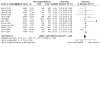
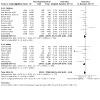
We included 11 new RCTs and cluster-RCTs (610,872 participants) in this update, bringing the total number of RCTs to 78. Six of the new trials were conducted during the COVID-19 pandemic; two from Mexico, and one each from Denmark, Bangladesh, England, and Norway. We identified four ongoing studies, of which one is completed, but unreported, evaluating masks concurrent with the COVID-19 pandemic. Many studies were conducted during non-epidemic influenza periods. Several were conducted during the 2009 H1N1 influenza pandemic, and others in epidemic influenza seasons up to 2016. Therefore, many studies were conducted in the context of lower respiratory viral circulation and transmission compared to COVID-19. The included studies were conducted in heterogeneous settings, ranging from suburban schools to hospital wards in high-income countries; crowded inner city settings in low-income countries; and an immigrant neighbourhood in a high-income country. Adherence with interventions was low in many studies. The risk of bias for the RCTs and cluster-RCTs was mostly high or unclear. Medical/surgical masks compared to no masks We included 12 trials (10 cluster-RCTs) comparing medical/surgical masks versus no masks to prevent the spread of viral respiratory illness (two trials with healthcare workers and 10 in the community). Wearing masks in the community probably makes little or no difference to the outcome of influenza-like illness (ILI)/COVID-19 like illness compared to not wearing masks (risk ratio (RR) 0.95, 95% confidence interval (CI) 0.84 to 1.09; 9 trials, 276,917 participants; moderate-certainty evidence. Wearing masks in the community probably makes little or no difference to the outcome of laboratory-confirmed influenza/SARS-CoV-2 compared to not wearing masks (RR 1.01, 95% CI 0.72 to 1.42; 6 trials, 13,919 participants; moderate-certainty evidence). Harms were rarely measured and poorly reported (very low-certainty evidence). N95/P2 respirators compared to medical/surgical masks We pooled trials comparing N95/P2 respirators with medical/surgical masks (four in healthcare settings and one in a household setting). We are very uncertain on the effects of N95/P2 respirators compared with medical/surgical masks on the outcome of clinical respiratory illness (RR 0.70, 95% CI 0.45 to 1.10; 3 trials, 7779 participants; very low-certainty evidence). N95/P2 respirators compared with medical/surgical masks may be effective for ILI (RR 0.82, 95% CI 0.66 to 1.03; 5 trials, 8407 participants; low-certainty evidence). Evidence is limited by imprecision and heterogeneity for these subjective outcomes. The use of a N95/P2 respirators compared to medical/surgical masks probably makes little or no difference for the objective and more precise outcome of laboratory-confirmed influenza infection (RR 1.10, 95% CI 0.90 to 1.34; 5 trials, 8407 participants; moderate-certainty evidence). Restricting pooling to healthcare workers made no difference to the overall findings. Harms were poorly measured and reported, but discomfort wearing medical/surgical masks or N95/P2 respirators was mentioned in several studies (very low-certainty evidence). One previously reported ongoing RCT has now been published and observed that medical/surgical masks were non-inferior to N95 respirators in a large study of 1009 healthcare workers in four countries providing direct care to COVID-19 patients. Hand hygiene compared to control Nineteen trials compared hand hygiene interventions with controls with sufficient data to include in meta-analyses. Settings included schools, childcare centres and homes. Comparing hand hygiene interventions with controls (i.e. no intervention), there was a 14% relative reduction in the number of people with ARIs in the hand hygiene group (RR 0.86, 95% CI 0.81 to 0.90; 9 trials, 52,105 participants; moderate-certainty evidence), suggesting a probable benefit. In absolute terms this benefit would result in a reduction from 380 events per 1000 people to 327 per 1000 people (95% CI 308 to 342). When considering the more strictly defined outcomes of ILI and laboratory-confirmed influenza, the estimates of effect for ILI (RR 0.94, 95% CI 0.81 to 1.09; 11 trials, 34,503 participants; low-certainty evidence), and laboratory-confirmed influenza (RR 0.91, 95% CI 0.63 to 1.30; 8 trials, 8332 participants; low-certainty evidence), suggest the intervention made little or no difference. We pooled 19 trials (71, 210 participants) for the composite outcome of ARI or ILI or influenza, with each study only contributing once and the most comprehensive outcome reported. Pooled data showed that hand hygiene may be beneficial with an 11% relative reduction of respiratory illness (RR 0.89, 95% CI 0.83 to 0.94; low-certainty evidence), but with high heterogeneity. In absolute terms this benefit would result in a reduction from 200 events per 1000 people to 178 per 1000 people (95% CI 166 to 188). Few trials measured and reported harms (very low-certainty evidence). We found no RCTs on gowns and gloves, face shields, or screening at entry ports.
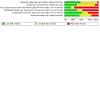
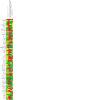
AUTHORS' CONCLUSIONS: The high risk of bias in the trials, variation in outcome measurement, and relatively low adherence with the interventions during the studies hampers drawing firm conclusions. There were additional RCTs during the pandemic related to physical interventions but a relative paucity given the importance of the question of masking and its relative effectiveness and the concomitant measures of mask adherence which would be highly relevant to the measurement of effectiveness, especially in the elderly and in young children. There is uncertainty about the effects of face masks. The low to moderate certainty of evidence means our confidence in the effect estimate is limited, and that the true effect may be different from the observed estimate of the effect. The pooled results of RCTs did not show a clear reduction in respiratory viral infection with the use of medical/surgical masks. There were no clear differences between the use of medical/surgical masks compared with N95/P2 respirators in healthcare workers when used in routine care to reduce respiratory viral infection. Hand hygiene is likely to modestly reduce the burden of respiratory illness, and although this effect was also present when ILI and laboratory-confirmed influenza were analysed separately, it was not found to be a significant difference for the latter two outcomes. Harms associated with physical interventions were under-investigated. There is a need for large, well-designed RCTs addressing the effectiveness of many of these interventions in multiple settings and populations, as well as the impact of adherence on effectiveness, especially in those most at risk of ARIs.
背景
病毒性传染病大流行或急性呼吸道感染(ARI)疫情构成全球性威胁。例如,2009 年由 H1N1pdm09 病毒引起的流感(H1N1)、2003 年的严重急性呼吸综合征(SARS)以及 2019 年由 SARS-CoV-2 引起的 2019 年冠状病毒病(COVID-19)。抗病毒药物和疫苗可能不足以阻止其传播。这是 2020 年发表的 Cochrane 综述的更新。我们纳入了当前 COVID-19 大流行期间的研究结果。
目的
评估物理干预措施中断或减少急性呼吸道病毒传播的有效性。
检索方法
我们于 2022 年 10 月在 Cochrane 图书馆、PubMed、Embase、CINAHL 和两个试验注册库中进行了检索,并对新研究进行了回溯和引用分析。
选择标准
我们纳入了随机对照试验(RCT)和整群随机对照试验,研究了物理干预措施(入境口岸筛查、隔离、检疫、身体距离、个人保护、手部卫生、口罩、眼镜和漱口)预防呼吸道病毒传播的效果。
数据收集与分析
我们使用标准的 Cochrane 方法学程序。
主要结果
本次更新纳入了 11 项新的 RCT 和整群 RCT(610872 名参与者),使 RCT 总数达到 78 项。其中 6 项新试验是在 COVID-19 大流行期间进行的,2 项来自墨西哥,1 项来自丹麦、孟加拉国、英国和挪威。我们确定了 4 项正在进行的研究,其中 1 项已完成,但尚未报告,评估了在 COVID-19 大流行期间同时使用口罩。许多研究是在非流感流行期间进行的。其中一些是在 2009 年 H1N1 流感大流行期间进行的,其他研究是在 2016 年之前的流行流感季节进行的。因此,与 COVID-19 相比,许多研究是在较低的呼吸道病毒循环和传播背景下进行的。纳入的研究在不同环境中进行,范围从郊区学校到高收入国家的医院病房;从低收入国家拥挤的城市中心到高收入国家的移民社区。许多研究中干预措施的依从性较低。RCT 和整群 RCT 的偏倚风险大多较高或不明确。
医用/外科口罩与不戴口罩相比 我们纳入了 12 项试验(10 项整群 RCT),比较了医用/外科口罩与不戴口罩预防病毒性呼吸道疾病的效果(2 项针对医护人员,10 项针对社区)。与不戴口罩相比,社区戴口罩对流感样疾病(ILI)/COVID-19 样疾病的结局影响不大(风险比(RR)0.95,95%置信区间(CI)0.84 至 1.09;9 项研究,276917 名参与者;中等确定性证据)。社区戴口罩对实验室确诊的流感/SARS-CoV-2 的影响与不戴口罩相比也不大(RR 1.01,95%CI 0.72 至 1.42;6 项研究,13919 名参与者;中等确定性证据)。很少测量和报告危害(非常低确定性证据)。
N95/P2 呼吸器与医用/外科口罩相比 我们汇总了比较 N95/P2 呼吸器与医用/外科口罩的试验(4 项在医疗保健环境中,1 项在家庭环境中)。我们对 N95/P2 呼吸器与医用/外科口罩相比在临床呼吸道疾病结局方面的效果非常不确定(RR 0.70,95%CI 0.45 至 1.10;3 项研究,7779 名参与者;非常低确定性证据)。N95/P2 呼吸器可能对 ILI 有效(RR 0.82,95%CI 0.66 至 1.03;5 项研究,8407 名参与者;低确定性证据)。由于主观结局的精确度和异质性限制,这些证据有限。使用 N95/P2 呼吸器与医用/外科口罩相比,对实验室确诊的流感感染的客观和更精确结局影响不大(RR 1.10,95%CI 0.90 至 1.34;5 项研究,8407 名参与者;中等确定性证据)。将研究仅限于医护人员并没有改变总体结果。很少测量和报告危害,但在几项研究中提到佩戴医用/外科口罩或 N95/P2 呼吸器时感到不适(非常低确定性证据)。
一项先前报告的正在进行的 RCT 现在已经发表,结果表明,在为直接照顾 COVID-19 患者的 1009 名医护人员进行的一项大型研究中,医用/外科口罩与 N95 呼吸器相比没有差异。
手部卫生与对照相比 19 项试验比较了手部卫生干预措施与对照(即无干预)的效果,并有足够的数据进行 meta 分析。研究地点包括学校、托儿所和家庭。与对照组相比(即无干预),手部卫生干预组的 ARI 人数相对减少 14%(RR 0.86,95%CI 0.81 至 0.90;9 项研究,52105 名参与者;中等确定性证据),这可能表明有效。从绝对数量来看,这将使每 1000 人减少 380 次发病事件,至每 1000 人减少 327 次发病事件(95%CI 308 至 342)。当考虑到更严格定义的 ILI 和实验室确诊流感的结果时,ILI(RR 0.94,95%CI 0.81 至 1.09;11 项研究,34503 名参与者;低确定性证据)和实验室确诊流感(RR 0.91,95%CI 0.63 至 1.30;8 项研究,8332 名参与者;低确定性证据)的估计效果表明干预措施没有明显效果。我们汇总了 19 项试验(71 项,210 名参与者),这些试验报告了 ARI 或 ILI 或流感的复合结局,每项研究仅报告一次,且报告了最全面的结局。汇总数据表明,手部卫生可能有效,呼吸道疾病减少 11%(RR 0.89,95%CI 0.83 至 0.94;低确定性证据),但存在高度异质性。从绝对数量来看,这将使每 1000 人减少 200 次发病事件,至每 1000 人减少 178 次发病事件(95%CI 166 至 188)。很少有试验测量和报告危害(非常低确定性证据)。我们没有发现关于长袍和手套、面罩或入口筛查的 RCT。
作者结论
试验的高偏倚风险、结局测量的差异以及研究中干预措施的相对低依从性,阻碍了我们对结果的准确判断。在大流行期间,有一些关于物理干预措施的 RCT,但鉴于该问题的重要性,即口罩的效果及其相对有效性,以及同时测量口罩依从性的相关措施对测量效果的重要性,特别是在老年人和幼儿中,相对缺乏 RCT。口罩的效果不确定。低到中等确定性证据意味着我们对效应估计的信心有限,实际效应可能与观察到的效应估计值不同。RCT 的汇总结果并未显示使用医用/外科口罩可明显减少呼吸道病毒感染。在常规护理中使用医用/外科口罩与 N95/P2 呼吸器来减少呼吸道病毒感染时,医护人员之间没有明显差异。手部卫生可能适度减轻呼吸道疾病负担,尽管在单独分析 ILI 和实验室确诊流感时也存在这种效果,但在这两种结局上没有发现统计学意义。物理干预措施的危害未得到充分调查。需要进行大型、精心设计的 RCT,以评估多种干预措施在多种环境和人群中的有效性,以及在那些最易患呼吸道疾病的人群中,依从性对有效性的影响。






 Zotero 插件