
用于肿瘤靶向治疗的聚合物纳米颗粒:当前见解
Polymeric nanoparticles for targeted treatment in oncology: current insights.
作者信息
Prabhu Rashmi H, Patravale Vandana B, Joshi Medha D
机构信息
Department of Pharmaceutical Sciences and Technology, Institute of Chemical Technology, Mumbai, India.
Department of Pharmaceutical Sciences, Chicago College of Pharmacy, Midwestern University, Downers Grove, IL, USA.
出版信息
Int J Nanomedicine. 2015 Feb 2;10:1001-18. doi: 10.2147/IJN.S56932. eCollection 2015.
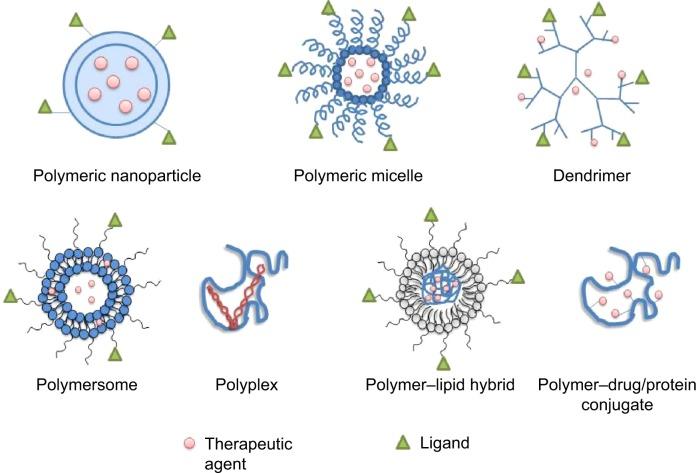
Chemotherapy, a major strategy for cancer treatment, lacks the specificity to localize the cancer therapeutics in the tumor site, thereby affecting normal healthy tissues and advocating toxic adverse effects. Nanotechnological intervention has greatly revolutionized the therapy of cancer by surmounting the current limitations in conventional chemotherapy, which include undesirable biodistribution, cancer cell drug resistance, and severe systemic side effects. Nanoparticles (NPs) achieve preferential accumulation in the tumor site by virtue of their passive and ligand-based targeting mechanisms. Polymer-based nanomedicine, an arena that entails the use of polymeric NPs, polymer micelles, dendrimers, polymersomes, polyplexes, polymer-lipid hybrid systems, and polymer-drug/protein conjugates for improvement in efficacy of cancer therapeutics, has been widely explored. The broad scope for chemically modifying the polymer into desired construct makes it a versatile delivery system. Several polymer-based therapeutic NPs have been approved for clinical use. This review provides an insight into the advances in polymer-based targeted nanocarriers with focus on therapeutic aspects in the field of oncology.
化疗作为癌症治疗的主要策略,缺乏将癌症治疗药物定位在肿瘤部位的特异性,从而影响正常健康组织并引发毒性副作用。纳米技术干预通过克服传统化疗目前存在的局限性,极大地变革了癌症治疗方法,这些局限性包括不良的生物分布、癌细胞耐药性和严重的全身副作用。纳米颗粒(NPs)凭借其被动靶向和基于配体的靶向机制在肿瘤部位实现优先积累。基于聚合物的纳米药物是一个涉及使用聚合物纳米颗粒、聚合物胶束、树枝状大分子、聚合物囊泡、多聚体、聚合物 - 脂质杂化系统以及聚合物 - 药物/蛋白质缀合物来提高癌症治疗效果的领域,已得到广泛探索。将聚合物化学修饰成所需结构的广阔空间使其成为一种多功能递送系统。几种基于聚合物的治疗性纳米颗粒已获批用于临床。本综述深入探讨了基于聚合物的靶向纳米载体的进展,重点关注肿瘤学领域的治疗方面。

 Zotero 插件