
诺福克欧洲癌症前瞻性调查(EPIC-Norfolk)前瞻性亚队列中蔗糖摄入量与超重和肥胖风险之间的关联。
Association between sucrose intake and risk of overweight and obesity in a prospective sub-cohort of the European Prospective Investigation into Cancer in Norfolk (EPIC-Norfolk).
作者信息
Kuhnle Gunter G C, Tasevska Natasha, Lentjes Marleen A H, Griffin Julian L, Sims Matthew A, Richardson Larissa, Aspinall Sue M, Mulligan Angela A, Luben Robert N, Khaw Kay-Tee
机构信息
1Department of Food & Nutritional Sciences,University of Reading,Reading RG6 6AP,UK.
3School of Nutrition and Health Promotion,Arizona State University,Phoenix,AZ,USA.
出版信息
Public Health Nutr. 2015 Oct;18(15):2815-24. doi: 10.1017/S1368980015000300. Epub 2015 Feb 23.
OBJECTIVE
The objective of the present study was to investigate associations between sugar intake and overweight using dietary biomarkers in the Norfolk cohort of the European Prospective Investigation into Cancer and Nutrition (EPIC-Norfolk).
DESIGN
Prospective cohort study.
SETTING
EPIC-Norfolk in the UK, recruitment between 1993 and 1997.
SUBJECTS
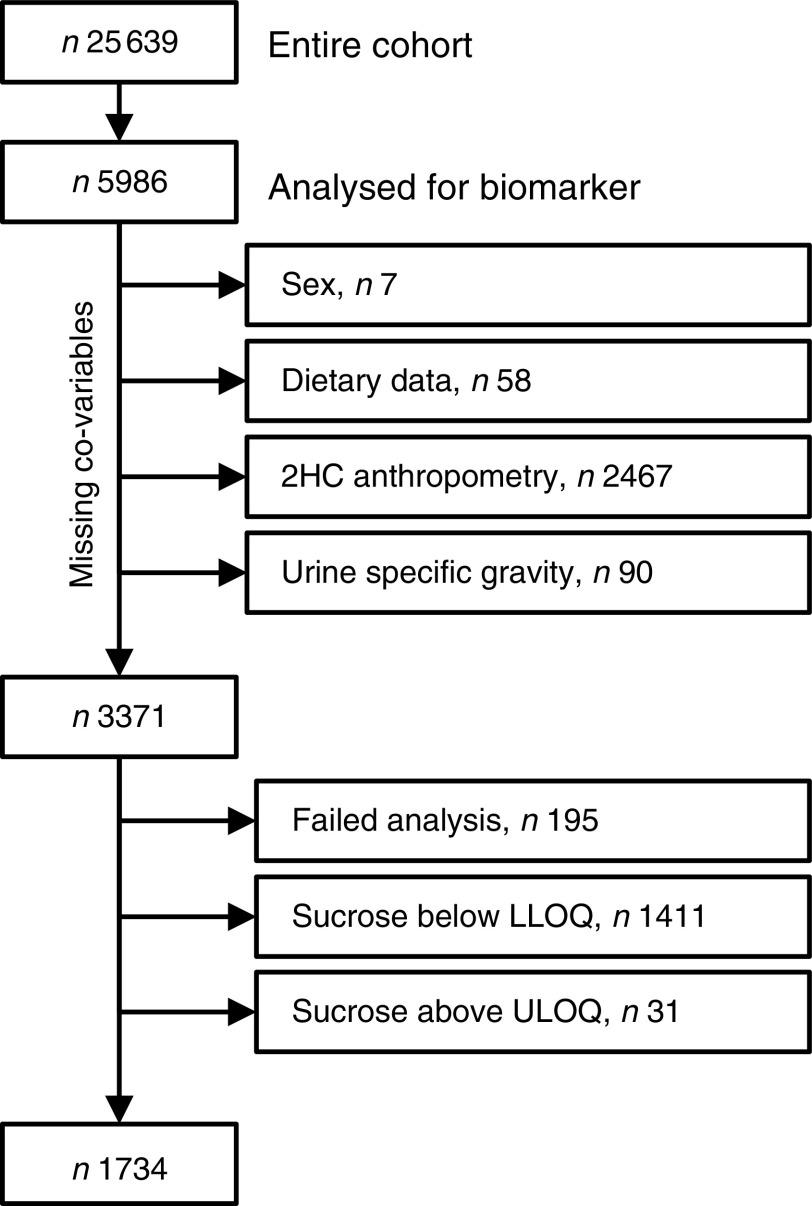
Men and women (n 1734) aged 39-77 years. Sucrose intake was assessed using 7 d diet diaries. Baseline spot urine samples were analysed for sucrose by GC-MS. Sucrose concentration adjusted by specific gravity was used as a biomarker for intake. Regression analyses were used to investigate associations between sucrose intake and risk of BMI>25·0 kg/m2 after three years of follow-up.
RESULTS
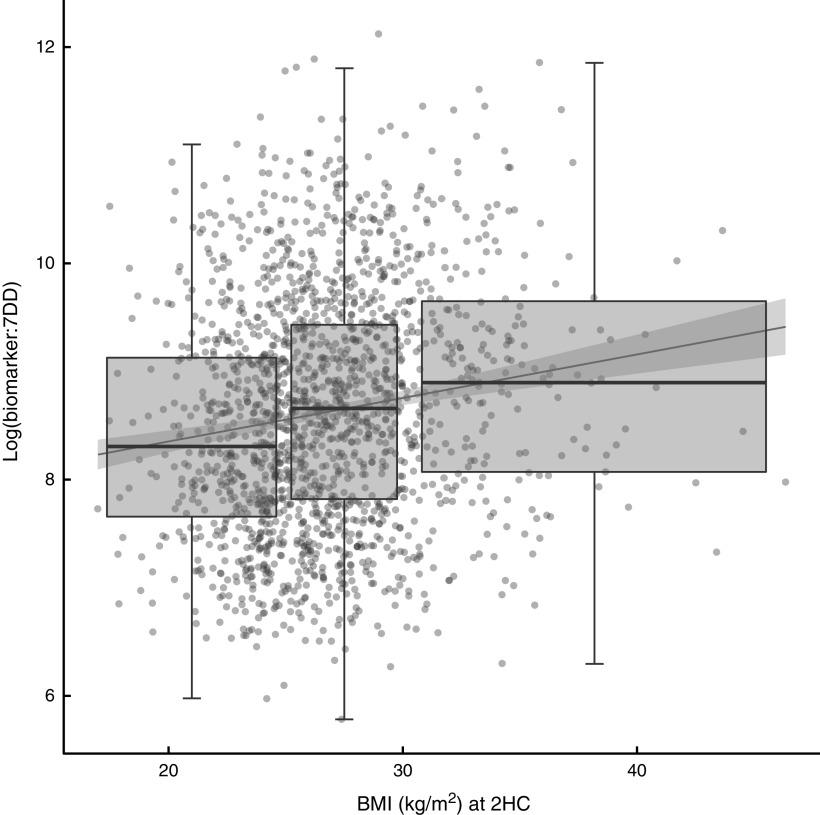
After three years of follow-up, mean BMI was 26·8 kg/m2. Self-reported sucrose intake was significantly positively associated with the biomarker. Associations between the biomarker and BMI were positive (β=0·25; 95 % CI 0·08, 0·43), while they were inverse when using self-reported dietary data (β=-1·40; 95 % CI -1·81, -0·99). The age- and sex-adjusted OR for BMI>25·0 kg/m2 in participants in the fifth v. first quintile was 1·54 (95 % CI 1·12, 2·12; P trend=0·003) when using biomarker and 0·56 (95 % CI 0·40, 0·77; P trend<0·001) with self-reported dietary data.
CONCLUSIONS
Our results suggest that sucrose measured by objective biomarker but not self-reported sucrose intake is positively associated with BMI. Future studies should consider the use of objective biomarkers of sucrose intake.
目的
本研究旨在利用欧洲癌症与营养前瞻性调查(EPIC - 诺福克)诺福克队列中的膳食生物标志物,调查糖摄入量与超重之间的关联。
设计
前瞻性队列研究。
地点
英国的EPIC - 诺福克,1993年至1997年招募。
研究对象
年龄在39 - 77岁的男性和女性(n = 1734)。使用7天饮食日记评估蔗糖摄入量。通过气相色谱 - 质谱法分析基线即时尿样中的蔗糖。经比重调整后的蔗糖浓度用作摄入量的生物标志物。采用回归分析研究随访三年后蔗糖摄入量与体重指数(BMI)>25.0 kg/m²风险之间的关联。
结果
随访三年后,平均BMI为26.8 kg/m²。自我报告的蔗糖摄入量与生物标志物显著正相关。生物标志物与BMI之间的关联为正(β = 0.25;95%可信区间0.08,0.43),而使用自我报告的饮食数据时则呈负相关(β = -1.40;95%可信区间 -1.81,-0.99)。当使用生物标志物时,第五分位数与第一分位数参与者中BMI>25.0 kg/m²的年龄和性别调整后的比值比为1.54(95%可信区间1.12,2.12;P趋势 = 0.003),而使用自我报告的饮食数据时为0.56(95%可信区间0.40,0.77;P趋势<0.001)。
结论
我们的结果表明,通过客观生物标志物测量的蔗糖而非自我报告的蔗糖摄入量与BMI呈正相关。未来的研究应考虑使用蔗糖摄入量的客观生物标志物。

 Zotero 插件