
致癌性HRAS的有效转化需要MTH1的表达。
MTH1 expression is required for effective transformation by oncogenic HRAS.
作者信息
Giribaldi Maria G, Munoz Anisleidys, Halvorsen Katherine, Patel Asmita, Rai Priyamvada
机构信息
Department of Medicine, University of Miami Miller School of Medicine, Miami, FL, USA.
University of California, San Diego, CA, USA.
出版信息
Oncotarget. 2015 May 10;6(13):11519-29. doi: 10.18632/oncotarget.3447.
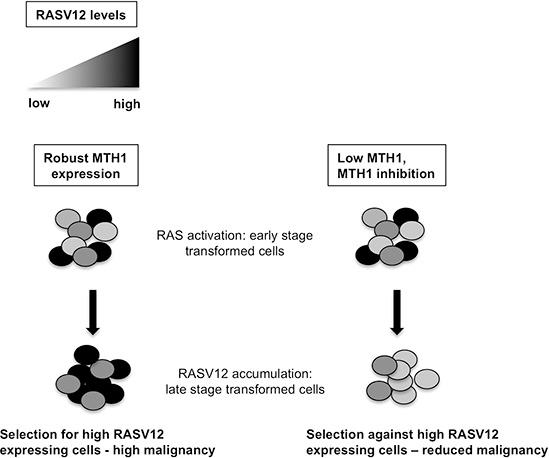
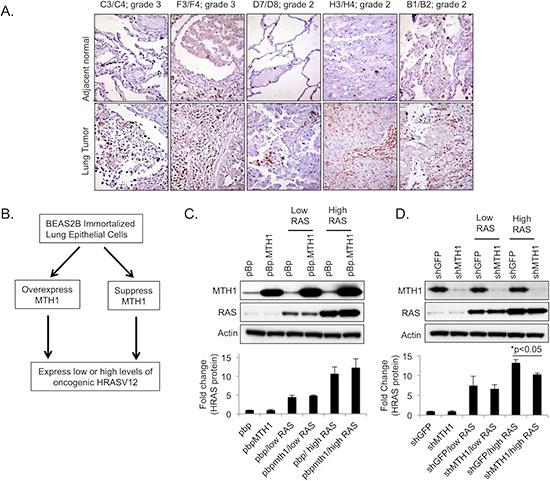
Due to sustaining elevated reactive oxygen species (ROS), oncogenic RAS-transformed cells upregulate redox-protective genes, among them the mammalian 8-oxodGTPase, MutT Homolog 1 (MTH1). We previously showed MTH1 abrogates RAS oncogene-induced senescence (OIS) in normal cells and that its inhibition compromises the tumorigenicity of established oncogenic RAS-harboring cancer cells. Here, we investigated how pre-transformation MTH1 levels in immortalized cells influence HRASV12-induced oncogenic transformation. We find MTH1 suppression prior to HRASV12 transduction into BEAS2B immortalized epithelial cells compromised maintenance of high RASV12- and oncogenic ROS-expressing cell populations. Furthermore, pre-transformation MTH1 levels modulated the efficiency of HRASV12-mediated soft agar colony formation. Downstream transformation-associated traits such as the epithelial-mesenchymal transition (EMT) were also compromised by MTH1 inhibition. These collective effects were observed to a greater degree in cells harboring high vs. low RASV12 levels, suggesting MTH1 is required for tumor cells to accumulate RAS oncoprotein. This is significant as, a priori, one cannot ascertain whether tumor-promoting adaptations wrought by introducing oncogenic RAS into an immortalized cell are capable of overcoming pre-transformation deficiencies. Our results suggest nucleotide pool sanitization comprises an important transformation-promoting requirement that, if compromised, cannot be adequately compensated post-transformation and thus is likely to affect optimal development and progression of RAS-driven tumors.
由于持续产生高水平的活性氧(ROS),致癌RAS转化的细胞会上调氧化还原保护基因,其中包括哺乳动物8-氧代鸟嘌呤三磷酸酶(MutT同源物1,MTH1)。我们之前发现,MTH1可消除正常细胞中RAS癌基因诱导的衰老(OIS),并且抑制它会损害已建立的携带致癌RAS的癌细胞的致瘤性。在这里,我们研究了永生化细胞中转化前的MTH1水平如何影响HRASV12诱导的致癌转化。我们发现,在将HRASV12转导到BEAS2B永生化上皮细胞之前抑制MTH1,会损害高表达RASV12和致癌ROS的细胞群体的维持。此外,转化前的MTH1水平调节了HRASV12介导的软琼脂集落形成效率。下游与转化相关的特征,如上皮-间质转化(EMT),也因MTH1抑制而受到损害。在高RASV12水平与低RASV12水平的细胞中,这些共同作用在更大程度上被观察到,这表明MTH1是肿瘤细胞积累RAS癌蛋白所必需的。这一点很重要,因为事先无法确定将致癌RAS引入永生化细胞所产生的促肿瘤适应性是否能够克服转化前的缺陷。我们的结果表明,核苷酸池净化是促进转化的一项重要要求,如果受到损害,转化后无法得到充分补偿,因此可能会影响RAS驱动肿瘤的最佳发展和进展。


 Zotero 插件