
迷迭香酸通过miR-155对胃癌细胞的抗瓦伯格效应
Anti-Warburg effect of rosmarinic acid via miR-155 in gastric cancer cells.
作者信息
Han Shuai, Yang Shaohua, Cai Zhai, Pan Dongyue, Li Zhou, Huang Zonghai, Zhang Pusheng, Zhu Huijuan, Lei Lijun, Wang Weiwei
机构信息
Department of General Surgery, Zhujiang Hospital, Southern Medical University, Guangzhou, People's Republic of China.
出版信息
Drug Des Devel Ther. 2015 May 19;9:2695-703. doi: 10.2147/DDDT.S82342. eCollection 2015.
BACKGROUND
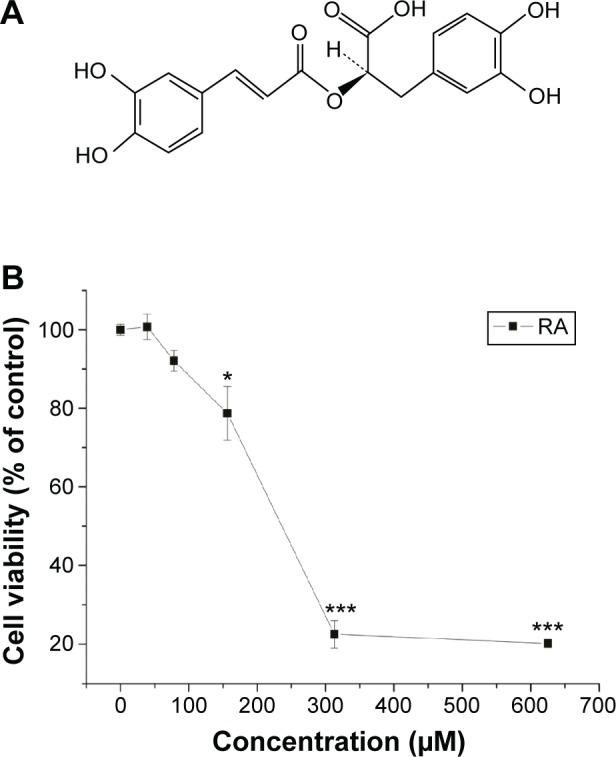
The Warburg effect refers to glycolytic production of adenosine triphosphate under aerobic conditions, and is a universal property of most cancer cells. Chronic inflammation is a key factor promoting the Warburg effect. This study aimed to determine whether rosmarinic acid (RA) has an anti-Warburg effect in gastric carcinoma in vitro and in vivo. The mechanism for the anti-Warburg effect was also investigated.
METHODS
An MTT assay was used to examine MKN45 cell growth in vitro. An enzyme-linked immunosorbent assay was used to detect proinflammatory cytokines. Real-time polymerase chain reaction was used to evaluate levels of microRNA expression in cells. Protein expression was determined by Western blotting assay. Mouse xenograft models were established using MKN45 cells to assess the anti-Warburg effect in gastric carcinoma in vivo.
RESULTS
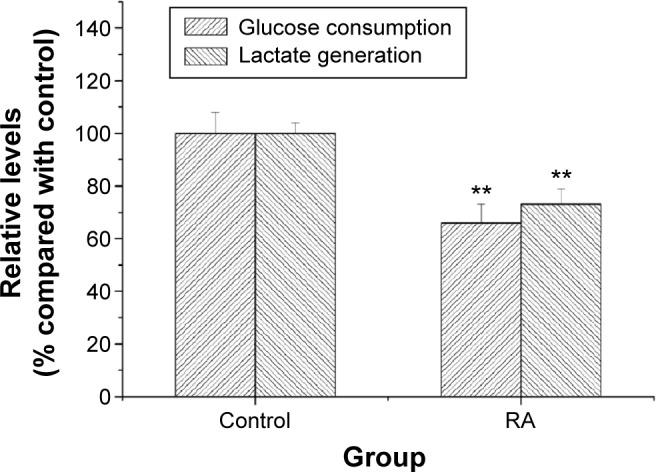
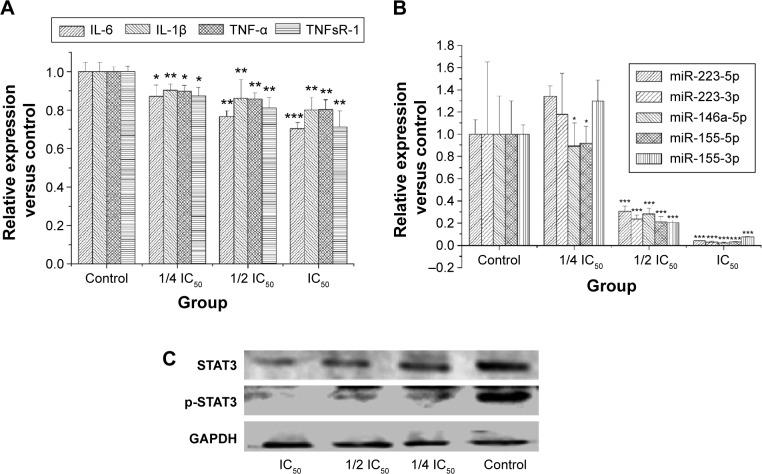
RA suppressed glucose uptake and lactate production. It also inhibited expression of transcription factor hypoxia-inducible factor-1α, which affects the glycolytic pathway. Inflammation promoted the Warburg effect in cancer cells. As expected, RA inhibited proinflammatory cytokines and microRNAs related to inflammation, suggesting that RA may suppress the Warburg effect via an inflammatory pathway, such as that involving interleukin (IL)-6/signal transducer and activator of transcription-3 (STAT3). miR-155 was found to be an important mediator in the relationship between inflammation and tumorigenesis. We further showed that miR-155 was the target gene regulating the Warburg effect via inactivation of the IL-6/STAT3 pathway. Moreover, we found that RA suppressed the Warburg effect in vivo.
CONCLUSION
RA might potentially be a therapeutic agent for suppressing the Warburg effect in gastric carcinoma.
背景
瓦伯格效应是指在有氧条件下通过糖酵解产生三磷酸腺苷,是大多数癌细胞的普遍特性。慢性炎症是促进瓦伯格效应的关键因素。本研究旨在确定迷迭香酸(RA)在体外和体内对胃癌是否具有抗瓦伯格效应。同时还研究了抗瓦伯格效应的机制。
方法
采用MTT法检测体外培养的MKN45细胞的生长情况。采用酶联免疫吸附测定法检测促炎细胞因子。采用实时聚合酶链反应评估细胞中微小RNA的表达水平。通过蛋白质印迹法测定蛋白质表达。利用MKN45细胞建立小鼠异种移植模型,以评估体内胃癌的抗瓦伯格效应。
结果
RA抑制葡萄糖摄取和乳酸生成。它还抑制影响糖酵解途径的转录因子缺氧诱导因子-1α的表达。炎症促进癌细胞中的瓦伯格效应。正如预期的那样,RA抑制促炎细胞因子和与炎症相关的微小RNA,这表明RA可能通过炎症途径(如涉及白细胞介素(IL)-6/信号转导和转录激活因子-3(STAT3)的途径)抑制瓦伯格效应。发现miR-155是炎症与肿瘤发生关系中的重要介质。我们进一步表明,miR-155是通过使IL-6/STAT3途径失活来调节瓦伯格效应的靶基因。此外,我们发现RA在体内抑制瓦伯格效应。
结论
RA可能是一种抑制胃癌中瓦伯格效应的治疗药物。


 Zotero 插件