
AID引发的DNA双链断裂的方向特异性连接促进抗体类别转换。
Orientation-specific joining of AID-initiated DNA breaks promotes antibody class switching.
作者信息
Dong Junchao, Panchakshari Rohit A, Zhang Tingting, Zhang Yu, Hu Jiazhi, Volpi Sabrina A, Meyers Robin M, Ho Yu-Jui, Du Zhou, Robbiani Davide F, Meng Feilong, Gostissa Monica, Nussenzweig Michel C, Manis John P, Alt Frederick W
机构信息
Howard Hughes Medical Institute, Program in Cellular and Molecular Medicine, Boston Children's Hospital, and Department of Genetics, Harvard Medical School, Boston, MA 02115, USA.
Boston Children's Hospital and Joint Program in Transfusion Medicine, Harvard Medical School, Boston, Massachusetts, USA.
出版信息
Nature. 2015 Sep 3;525(7567):134-139. doi: 10.1038/nature14970. Epub 2015 Aug 26.
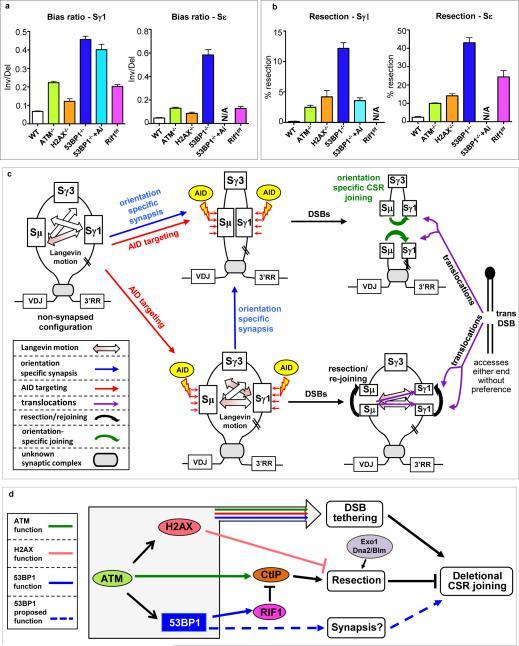
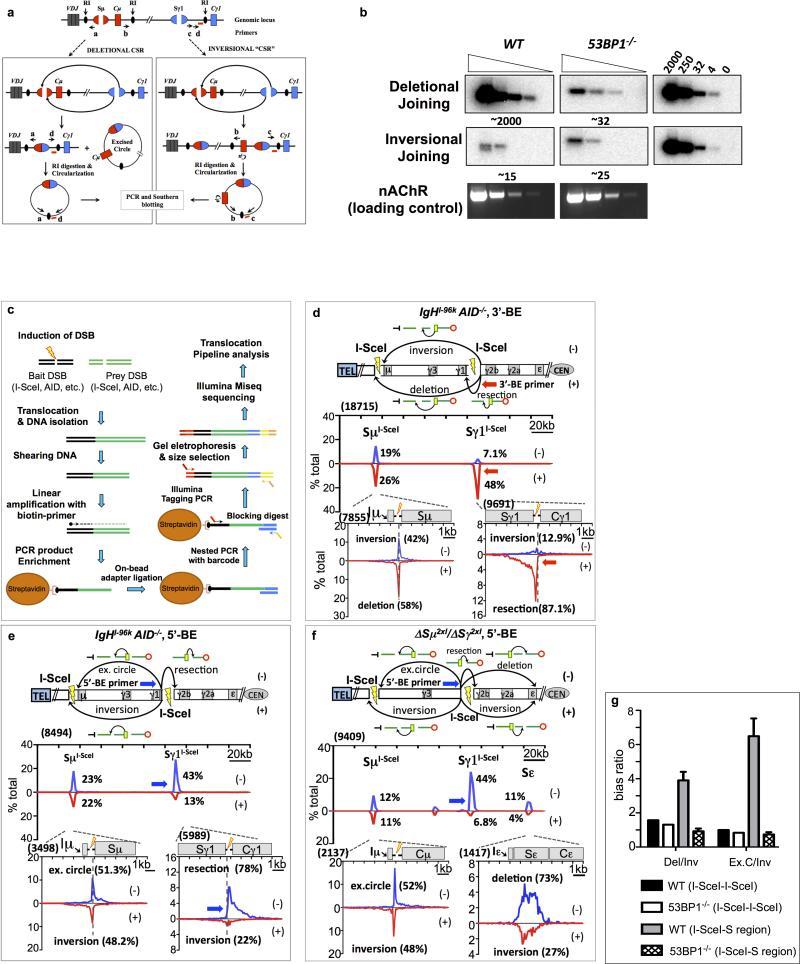
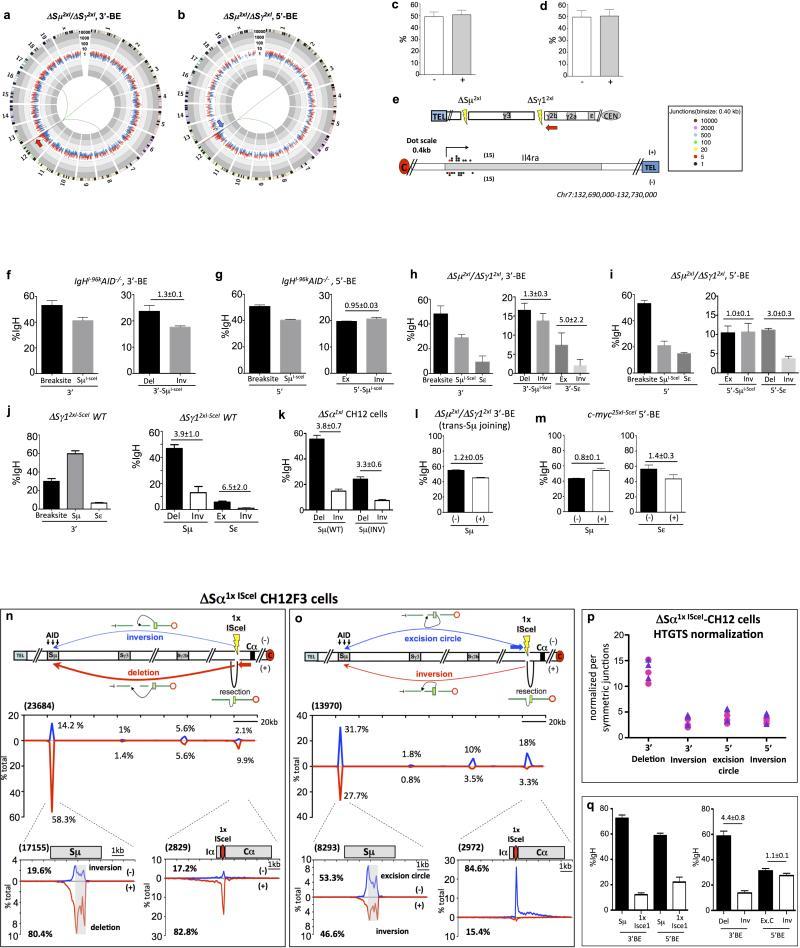
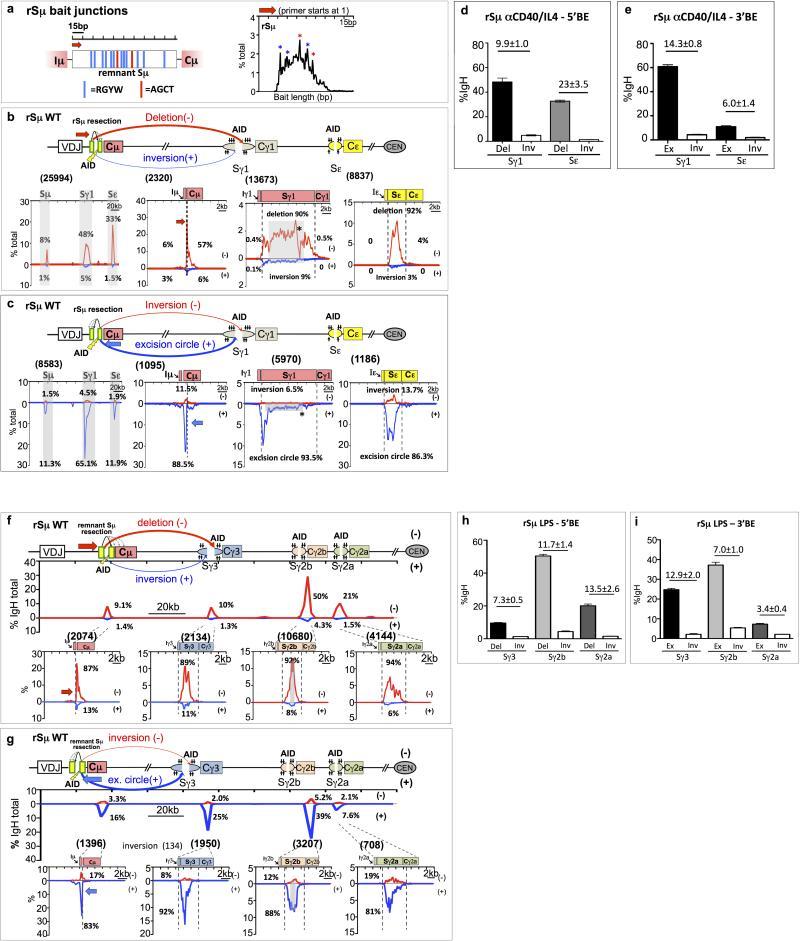
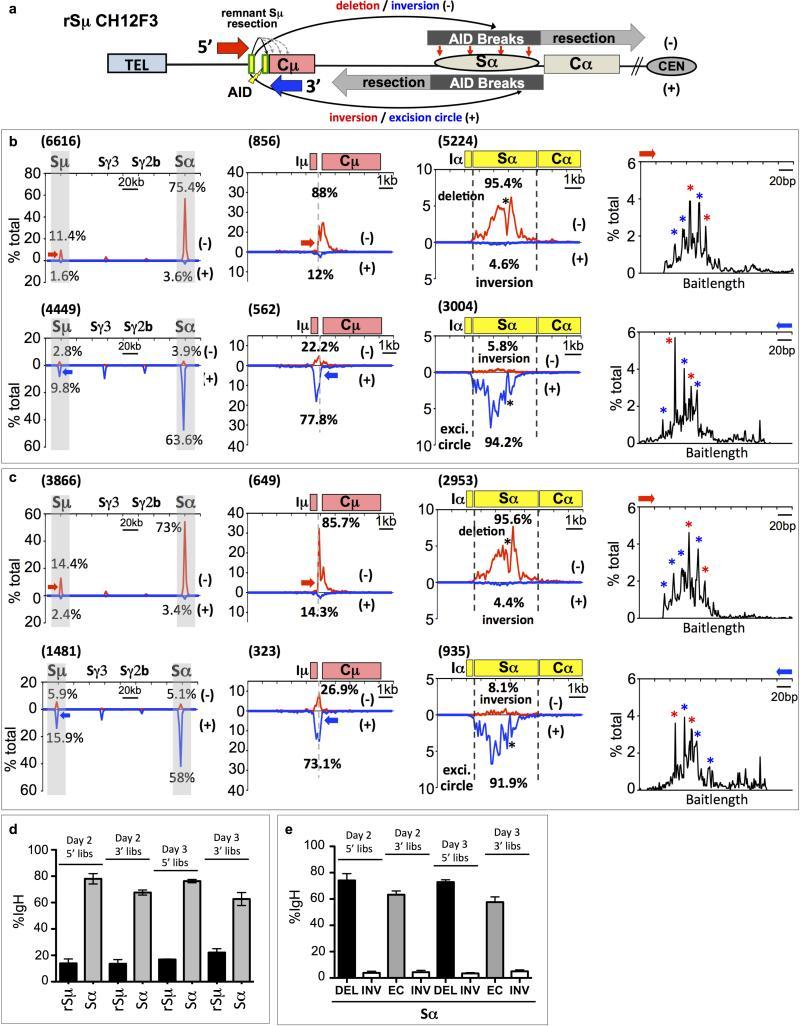
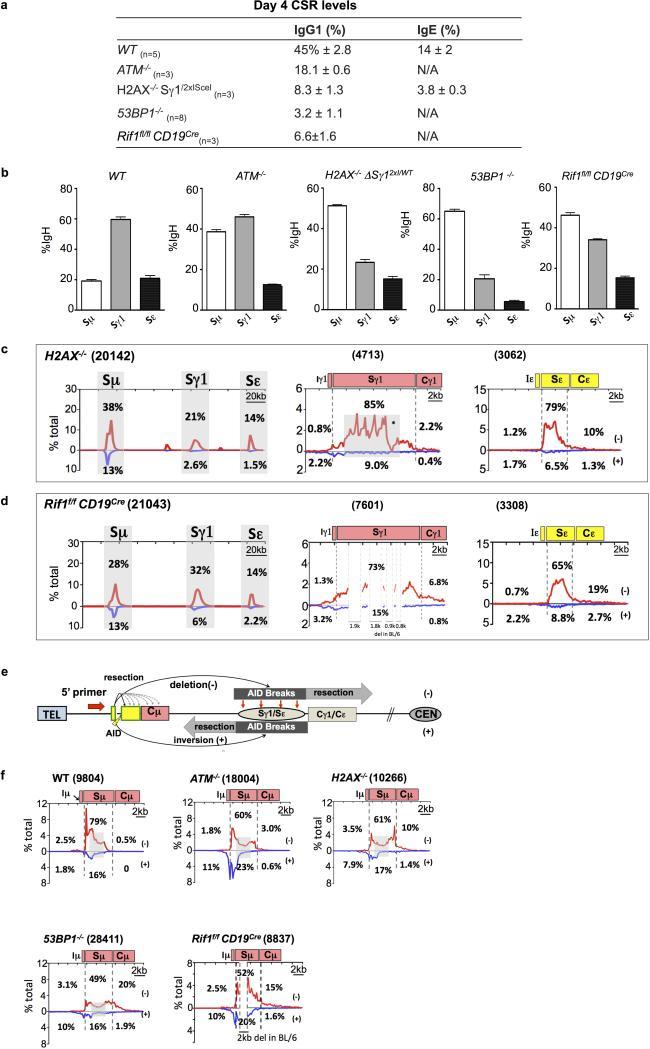
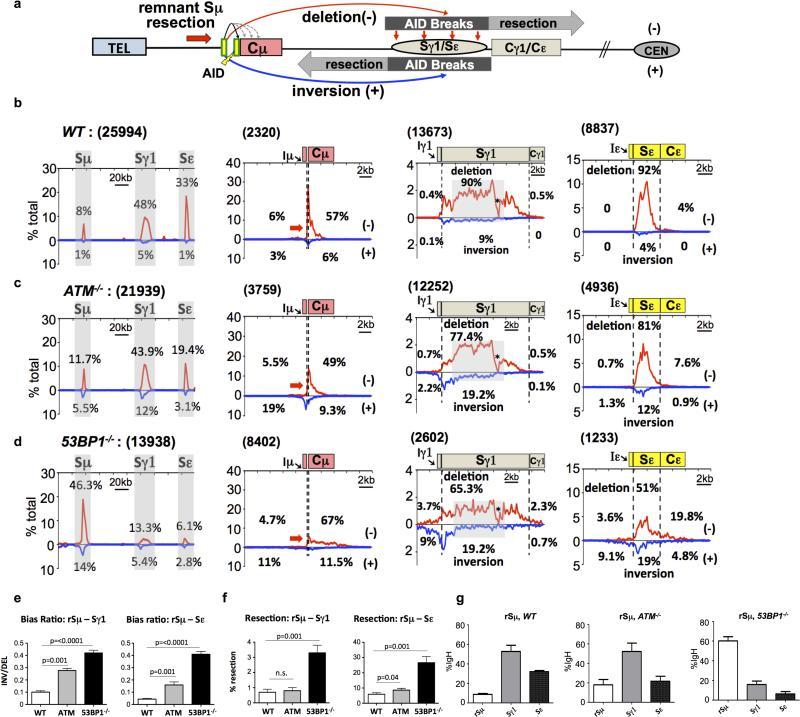
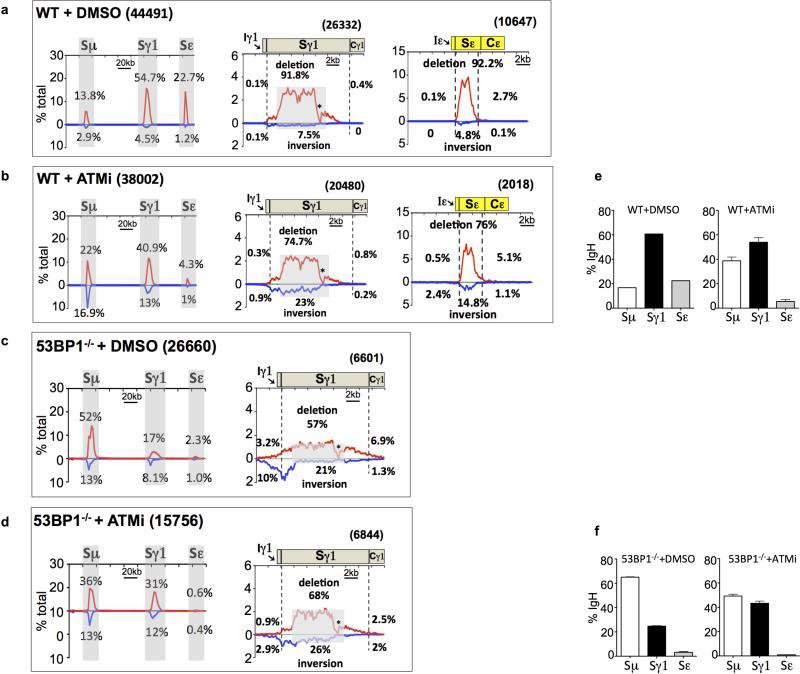
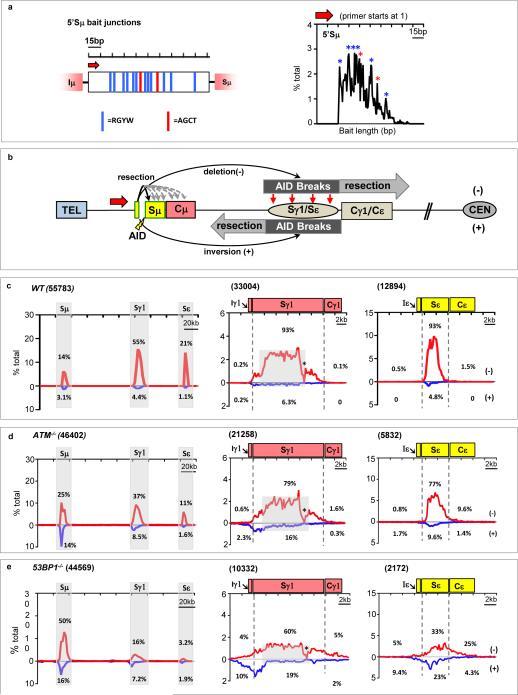
During B-cell development, RAG endonuclease cleaves immunoglobulin heavy chain (IgH) V, D, and J gene segments and orchestrates their fusion as deletional events that assemble a V(D)J exon in the same transcriptional orientation as adjacent Cμ constant region exons. In mice, six additional sets of constant region exons (CHs) lie 100-200 kilobases downstream in the same transcriptional orientation as V(D)J and Cμ exons. Long repetitive switch (S) regions precede Cμ and downstream CHs. In mature B cells, class switch recombination (CSR) generates different antibody classes by replacing Cμ with a downstream CH (ref. 2). Activation-induced cytidine deaminase (AID) initiates CSR by promoting deamination lesions within Sμ and a downstream acceptor S region; these lesions are converted into DNA double-strand breaks (DSBs) by general DNA repair factors. Productive CSR must occur in a deletional orientation by joining the upstream end of an Sμ DSB to the downstream end of an acceptor S-region DSB. However, the relative frequency of deletional to inversional CSR junctions has not been measured. Thus, whether orientation-specific joining is a programmed mechanistic feature of CSR as it is for V(D)J recombination and, if so, how this is achieved is unknown. To address this question, we adapt high-throughput genome-wide translocation sequencing into a highly sensitive DSB end-joining assay and apply it to endogenous AID-initiated S-region DSBs in mouse B cells. We show that CSR is programmed to occur in a productive deletional orientation and does so via an unprecedented mechanism that involves in cis Igh organizational features in combination with frequent S-region DSBs initiated by AID. We further implicate ATM-dependent DSB-response factors in enforcing this mechanism and provide an explanation of why CSR is so reliant on the 53BP1 DSB-response factor.
在B细胞发育过程中,RAG核酸内切酶切割免疫球蛋白重链(IgH)的V、D和J基因片段,并协调它们的融合,这些融合是删除事件,以与相邻Cμ恒定区外显子相同的转录方向组装一个V(D)J外显子。在小鼠中,另外六组恒定区外显子(CHs)以与V(D)J和Cμ外显子相同的转录方向位于下游100 - 200千碱基处。长重复转换(S)区域位于Cμ和下游CHs之前。在成熟B细胞中,类别转换重组(CSR)通过用下游的CH替换Cμ来产生不同的抗体类别(参考文献2)。激活诱导的胞苷脱氨酶(AID)通过促进Sμ和下游受体S区域内的脱氨基损伤来启动CSR;这些损伤由一般的DNA修复因子转化为DNA双链断裂(DSBs)。有效的CSR必须通过将Sμ DSB的上游末端与受体S区域DSB的下游末端连接,以删除方向发生。然而,删除型与倒位型CSR连接的相对频率尚未测定。因此,方向特异性连接是否是CSR的一种程序化机制特征,就像它在V(D)J重组中那样,如果是,这是如何实现的尚不清楚。为了解决这个问题,我们将高通量全基因组易位测序应用于一种高度灵敏的DSB末端连接测定,并将其应用于小鼠B细胞中内源性AID启动的S区域DSBs。我们表明,CSR被编程为以有效的删除方向发生,并且通过一种前所未有的机制来实现,该机制涉及顺式Igh组织特征与AID启动的频繁S区域DSBs相结合。我们进一步表明ATM依赖性DSB反应因子在执行这一机制中起作用,并解释了为什么CSR如此依赖53BP1 DSB反应因子。




 Zotero 插件