
趋化因子CXCL8/IL-8单体和二聚体与糖胺聚糖结合的溶液核磁共振表征:结构可塑性介导不同的结合相互作用。
Solution NMR characterization of chemokine CXCL8/IL-8 monomer and dimer binding to glycosaminoglycans: structural plasticity mediates differential binding interactions.
作者信息
Joseph Prem Raj B, Mosier Philip D, Desai Umesh R, Rajarathnam Krishna
机构信息
Department of Biochemistry and Molecular Biology, The University of Texas Medical Branch, Galveston, TX 77555, U.S.A. Sealy Center for Structural Biology and Molecular Biophysics, The University of Texas Medical Branch, Galveston, TX 77555, U.S.A. Institute for Structural Biology, Drug Discovery and Development, Virginia Commonwealth University, Richmond, VA 23219, U.S.A.
Department of Medicinal Chemistry, Virginia Commonwealth University, Richmond, VA 23219, U.S.A. Institute for Structural Biology, Drug Discovery and Development, Virginia Commonwealth University, Richmond, VA 23219, U.S.A.
出版信息
Biochem J. 2015 Nov 15;472(1):121-33. doi: 10.1042/BJ20150059. Epub 2015 Sep 14.
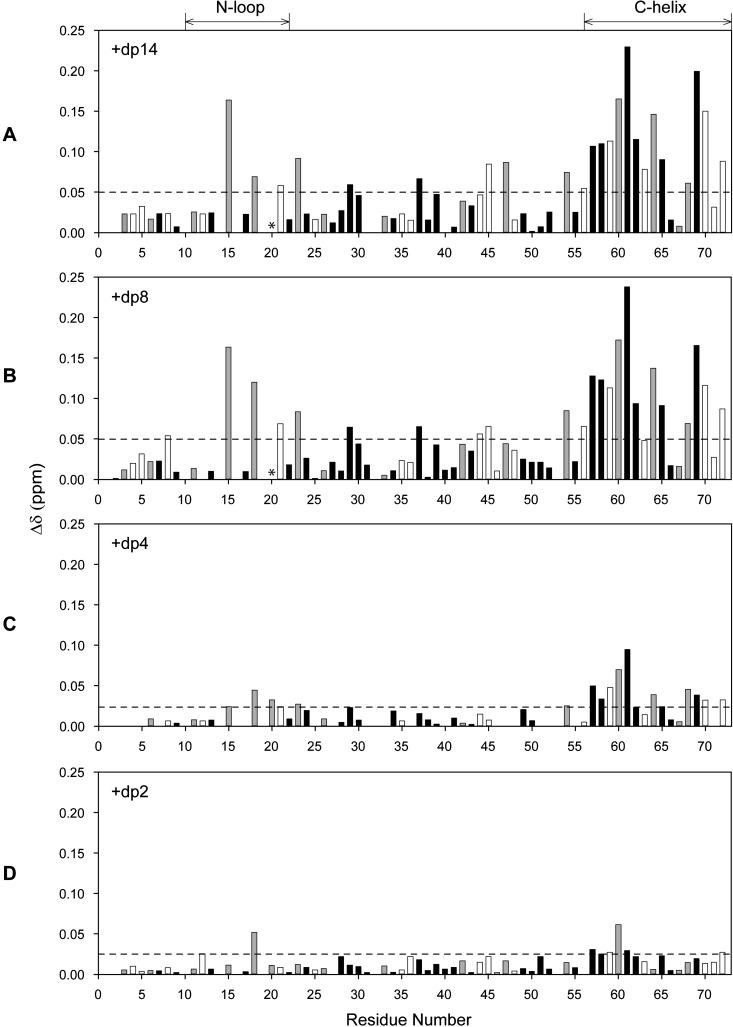
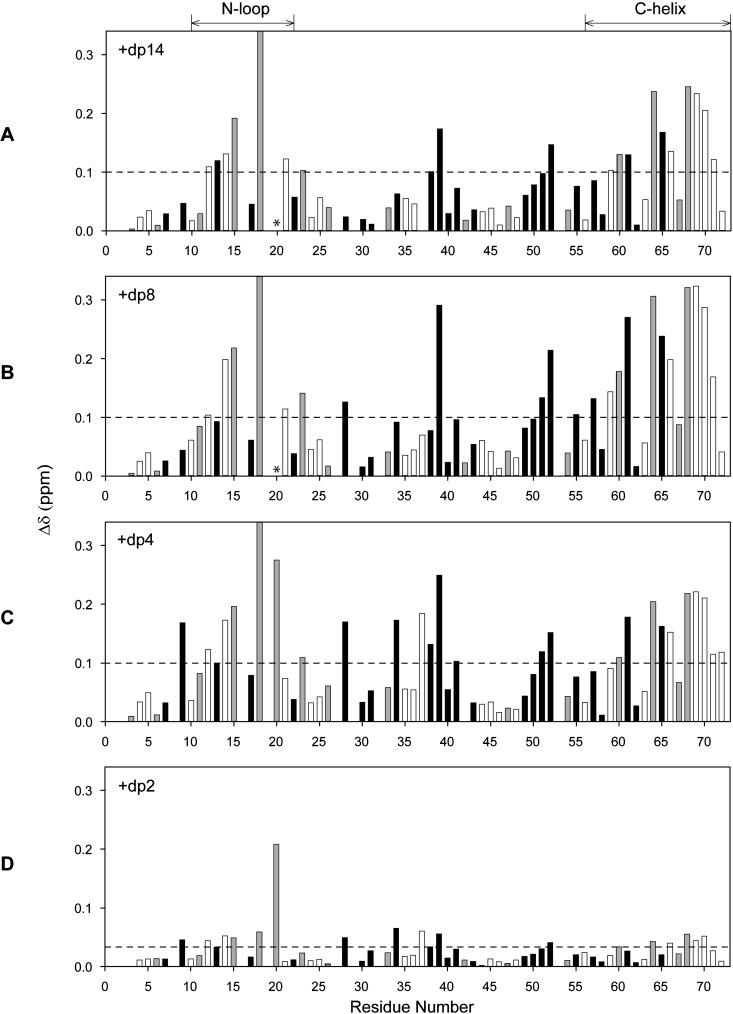
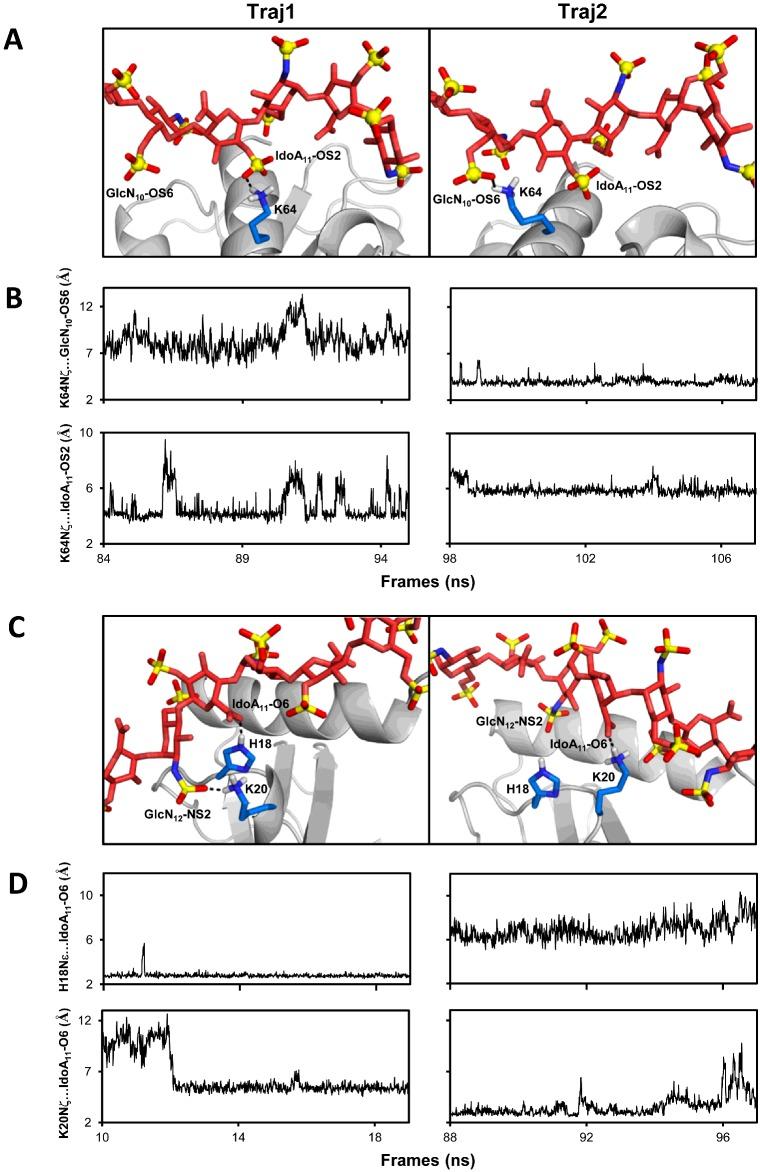
Chemokine CXCL8/interleukin-8 (IL-8) plays a crucial role in directing neutrophils and oligodendrocytes to combat infection/injury and tumour cells in metastasis development. CXCL8 exists as monomers and dimers and interaction of both forms with glycosaminoglycans (GAGs) mediate these diverse cellular processes. However, very little is known regarding the structural basis underlying CXCL8-GAG interactions. There are conflicting reports on the affinities, geometry and whether the monomer or dimer is the high-affinity GAG ligand. To resolve these issues, we characterized the binding of a series of heparin-derived oligosaccharides [heparin disaccharide (dp2), heparin tetrasaccharide (dp4), heparin octasaccharide (dp8) and heparin 14-mer (dp14)] to the wild-type (WT) dimer and a designed monomer using solution NMR spectroscopy. The pattern and extent of binding-induced chemical shift perturbation (CSP) varied between dimer and monomer and between longer and shorter oligosaccharides. NMR-based structural models show that different interaction modes coexist and that the nature of interactions varied between monomer and dimer and oligosaccharide length. MD simulations indicate that the binding interface is structurally plastic and provided residue-specific details of the dynamic nature of the binding interface. Binding studies carried out under conditions at which WT CXCL8 exists as monomers and dimers provide unambiguous evidence that the dimer is the high-affinity GAG ligand. Together, our data indicate that a set of core residues function as the major recognition/binding site, a set of peripheral residues define the various binding geometries and that the structural plasticity of the binding interface allows multiplicity of binding interactions. We conclude that structural plasticity most probably regulates in vivo CXCL8 monomer/dimer-GAG interactions and function.
趋化因子CXCL8/白细胞介素-8(IL-8)在引导中性粒细胞和少突胶质细胞对抗感染/损伤以及转移发展过程中的肿瘤细胞方面发挥着关键作用。CXCL8以单体和二聚体形式存在,这两种形式与糖胺聚糖(GAGs)的相互作用介导了这些不同的细胞过程。然而,关于CXCL8 - GAG相互作用的结构基础却知之甚少。关于亲和力、几何结构以及单体还是二聚体是高亲和力GAG配体,存在相互矛盾的报道。为了解决这些问题,我们使用溶液核磁共振光谱法对一系列肝素衍生的寡糖[肝素二糖(dp2)、肝素四糖(dp4)、肝素八糖(dp8)和肝素14聚体(dp14)]与野生型(WT)二聚体和设计的单体的结合进行了表征。结合诱导的化学位移扰动(CSP)的模式和程度在二聚体和单体之间以及较长和较短的寡糖之间有所不同。基于核磁共振的结构模型表明,不同的相互作用模式共存,并且单体和二聚体以及寡糖长度之间的相互作用性质各不相同。分子动力学模拟表明,结合界面在结构上具有可塑性,并提供了结合界面动态性质的残基特异性细节。在WT CXCL8以单体和二聚体形式存在的条件下进行的结合研究提供了明确的证据,表明二聚体是高亲和力GAG配体。总之,我们的数据表明,一组核心残基作为主要的识别/结合位点,一组外围残基定义了各种结合几何结构,并且结合界面的结构可塑性允许多种结合相互作用。我们得出结论,结构可塑性很可能调节体内CXCL8单体/二聚体 - GAG的相互作用和功能。





 Zotero 插件