
热带爪蟾TRPV3的直系同源物对热敏感。
The Xenopus tropicalis orthologue of TRPV3 is heat sensitive.
作者信息
Liu Beiying, Qin Feng
机构信息
Department of Physiology and Biophysical Sciences, State University of New York at Buffalo, Buffalo, NY 14214.
Department of Physiology and Biophysical Sciences, State University of New York at Buffalo, Buffalo, NY 14214
出版信息
J Gen Physiol. 2015 Nov;146(5):411-21. doi: 10.1085/jgp.201511454. Epub 2015 Oct 12.
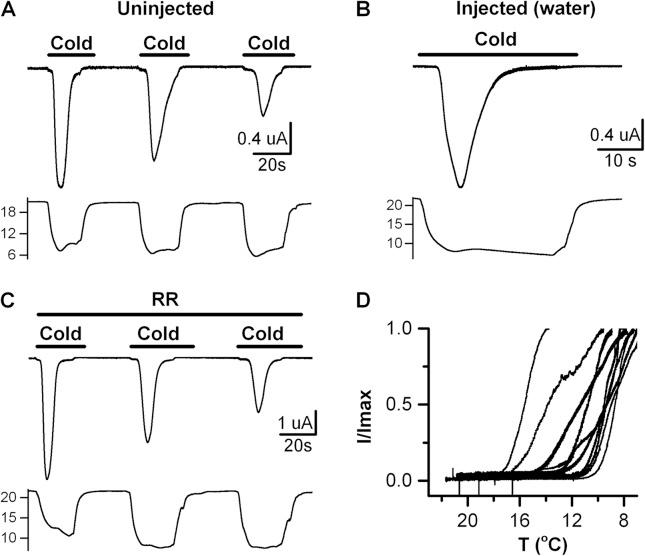
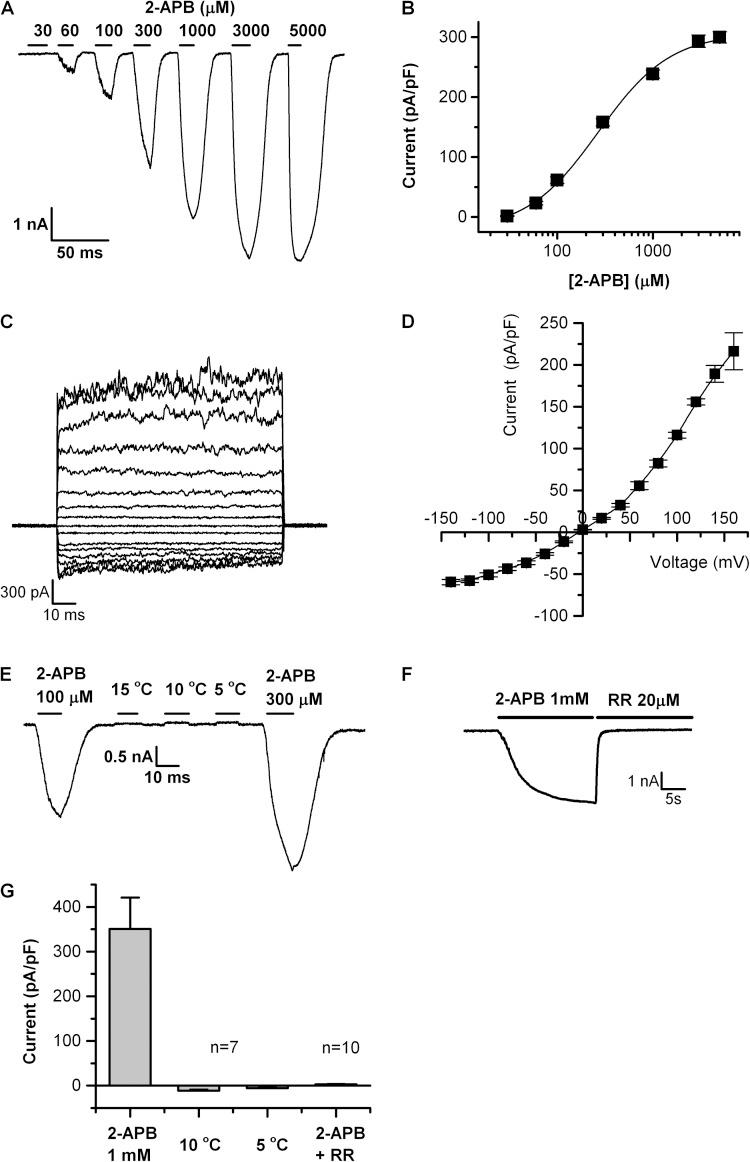
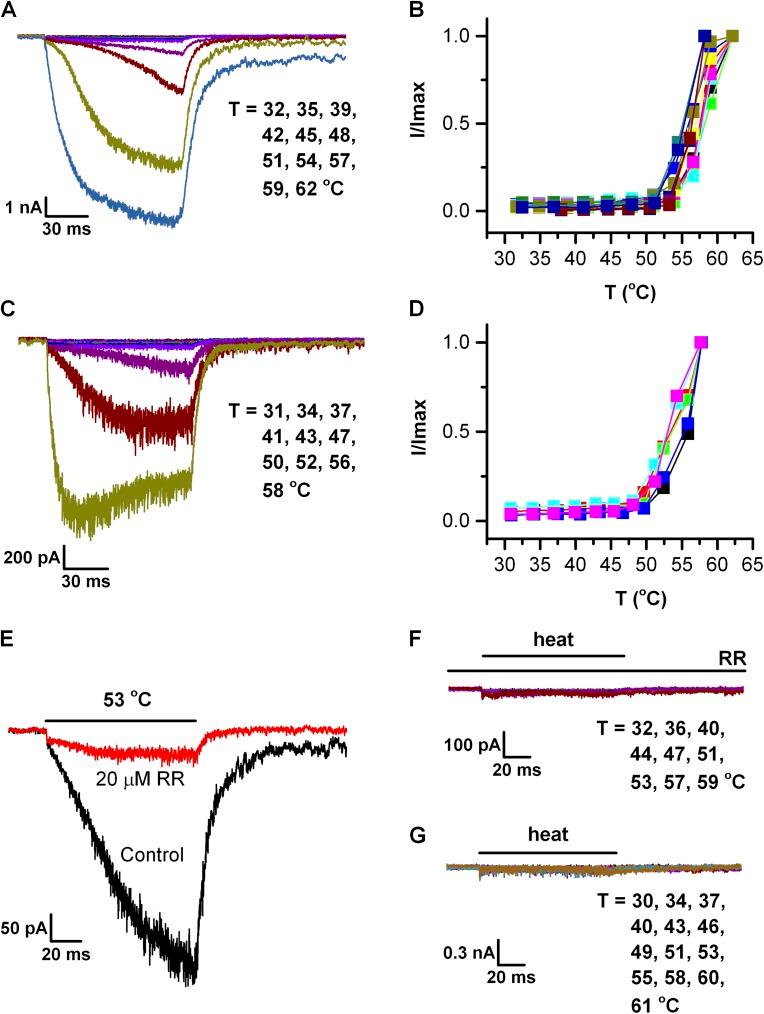
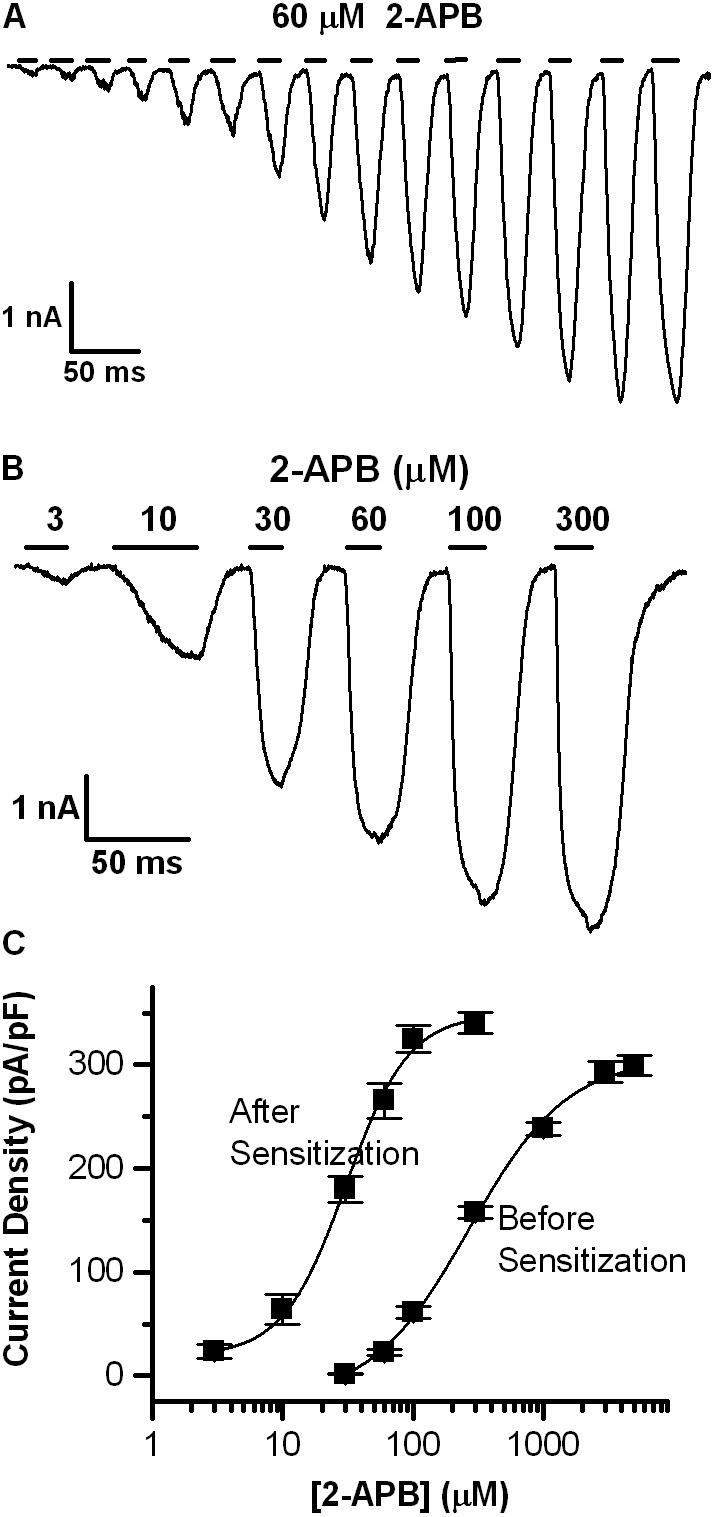
Thermosensitive members of the transient receptor potential (TRP) family of ion channels (thermal TRP channels) play a crucial role in mammalian temperature sensing. Orthologues of these channels are present in lower vertebrates and, remarkably, some thermal TRP orthologues from different species appear to mediate opposing responses to temperature. For example, whereas the mammalian TRPV3 channel is activated by heat, frog TRPV3 is reportedly activated by cold. Intrigued by the potential implications of these opposing responses to temperature for the mechanism of temperature-dependent gating, we cloned Xenopus laevis TRPV3 and functionally expressed it in both mammalian cell lines and Xenopus oocytes. We found that, when expressed in mammalian cells, the recombinant channel lacks the reported cold sensitivity; rather, it is activated by temperatures >50°C. Furthermore, when expressed in mammalian cells, the frog orthologue shows other features characteristic of mammalian TRPV3, including activation by the agonist 2-aminoethoxydiphenyl borate and an increased response with repeated stimulation. We detected both heat- and cold-activated currents in Xenopus oocytes expressing the recombinant frog TRPV3 channel. However, cold-activated currents were also apparent in control oocytes lacking recombinant TRPV3. Our data indicate that frog TRPV3 resembles its mammalian orthologues in terms of its thermosensitivity and is intrinsically activated by heat. Thus, all known vanilloid receptors are activated by heat. Our data also show that Xenopus oocytes contain endogenous receptors that are activated by cold, and suggest that cold sensitivity of TRP channels established using Xenopus oocytes as a functional expression system may need to be revisited.
瞬时受体电位(TRP)离子通道家族中的热敏成员(热TRP通道)在哺乳动物的温度感知中起着至关重要的作用。这些通道的直系同源物存在于低等脊椎动物中,而且值得注意的是,来自不同物种的一些热TRP直系同源物似乎介导对温度的相反反应。例如,哺乳动物的TRPV3通道受热激活,而据报道青蛙的TRPV3通道受冷激活。受这些对温度的相反反应对温度依赖性门控机制的潜在影响的启发,我们克隆了非洲爪蟾的TRPV3,并在哺乳动物细胞系和非洲爪蟾卵母细胞中进行了功能表达。我们发现,当在哺乳动物细胞中表达时,重组通道缺乏报道的冷敏感性;相反,它在温度>50°C时被激活。此外,当在哺乳动物细胞中表达时,青蛙的直系同源物表现出哺乳动物TRPV3的其他特征,包括被激动剂2-氨基乙氧基二苯硼酸盐激活以及重复刺激时反应增强。我们在表达重组青蛙TRPV3通道的非洲爪蟾卵母细胞中检测到了热激活电流和冷激活电流。然而,在缺乏重组TRPV3的对照卵母细胞中也明显存在冷激活电流。我们的数据表明,青蛙的TRPV3在热敏感性方面与其哺乳动物直系同源物相似,并且本质上受热激活。因此,所有已知的香草酸受体都受热激活。我们的数据还表明,非洲爪蟾卵母细胞含有被冷激活的内源性受体,并表明使用非洲爪蟾卵母细胞作为功能表达系统建立的TRP通道的冷敏感性可能需要重新审视。


 Zotero 插件