
脊髓损伤后使用动力机器人外骨骼的步态速度:系统评价与相关性研究。
Gait speed using powered robotic exoskeletons after spinal cord injury: a systematic review and correlational study.
作者信息
Louie Dennis R, Eng Janice J, Lam Tania
机构信息
University of British Columbia, Vancouver, Canada.
Rehabilitation Research Program, 4255 Laurel Street, Vancouver, BC, Canada, V5Z 2G9.
出版信息
J Neuroeng Rehabil. 2015 Oct 14;12:82. doi: 10.1186/s12984-015-0074-9.
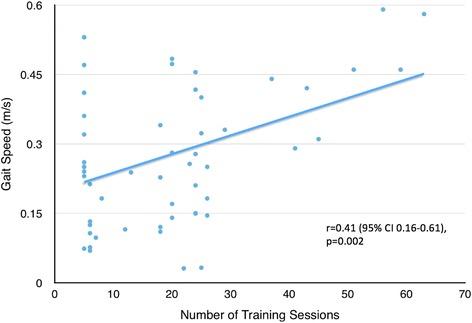
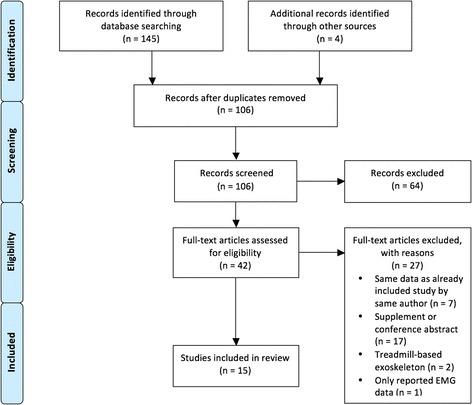
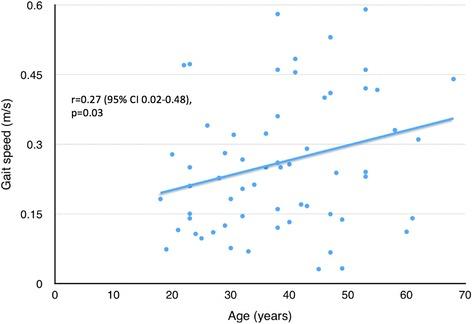
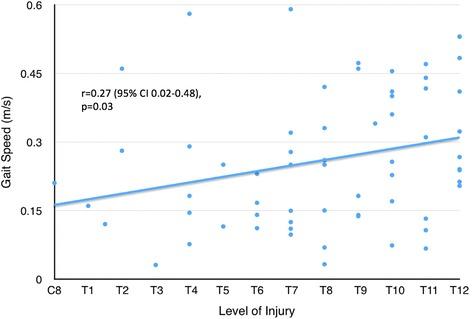
Powered robotic exoskeletons are an emerging technology of wearable orthoses that can be used as an assistive device to enable non-ambulatory individuals with spinal cord injury (SCI) to walk, or as a rehabilitation tool to improve walking ability in ambulatory individuals with SCI. No studies to date have systematically reviewed the literature on the efficacy of powered exoskeletons on restoring walking function. Our objective was to systematically review the literature to determine the gait speed attained by individuals with SCI when using a powered exoskeleton to walk, factors influencing this speed, and characteristics of studies involving a powered exoskeleton (e.g. inclusion criteria, screening, and training processes). A systematic search in computerized databases was conducted to identify articles that reported on walking outcomes when using a powered exoskeleton. Individual gait speed data from each study was extracted. Pearson correlations were performed between gait speed and 1) age, 2) years post-injury, 3) injury level, and 4) number of training sessions. Fifteen articles met inclusion criteria, 14 of which investigated the powered exoskeleton as an assistive device for non-ambulatory individuals and one which used it as a training intervention for ambulatory individuals with SCI. The mean gait speed attained by non-ambulatory participants (n = 84) while wearing a powered exoskeleton was 0.26 m/s, with the majority having a thoracic-level motor-complete injury. Twelve articles reported individual data for the non-ambulatory participants, from which a positive correlation was found between gait speed and 1) age (r = 0.27, 95 % CI 0.02-0.48, p = 0.03, 63 participants), 2) injury level (r = 0.27, 95 % CI 0.02-0.48, p = 0.03, 63 participants), and 3) training sessions (r = 0.41, 95 % CI 0.16-0.61, p = 0.002, 55 participants). In conclusion, powered exoskeletons can provide non-ambulatory individuals with thoracic-level motor-complete SCI the ability to walk at modest speeds. This speed is related to level of injury as well as training time.
动力机器人外骨骼是一种新兴的可穿戴矫形器技术,可作为辅助设备,帮助脊髓损伤(SCI)的非行走个体行走,或作为康复工具,提高SCI行走个体的行走能力。迄今为止,尚无研究系统回顾动力外骨骼恢复行走功能疗效的文献。我们的目的是系统回顾文献,以确定SCI个体使用动力外骨骼行走时达到的步态速度、影响该速度的因素以及涉及动力外骨骼的研究特征(如纳入标准、筛查和训练过程)。在计算机数据库中进行了系统检索,以识别报告使用动力外骨骼时行走结果的文章。提取了每项研究的个体步态速度数据。对步态速度与以下因素进行了Pearson相关性分析:1)年龄、2)受伤年限、3)损伤水平和4)训练次数。15篇文章符合纳入标准,其中14篇将动力外骨骼作为非行走个体的辅助设备进行研究,1篇将其作为SCI行走个体的训练干预措施进行研究。非行走参与者(n = 84)穿着动力外骨骼时达到的平均步态速度为0.26米/秒,大多数人患有胸段运动完全性损伤。12篇文章报告了非行走参与者的个体数据,从中发现步态速度与以下因素呈正相关:1)年龄(r = 0.27,95%CI 0.02 - 0.48,p = 0.03,63名参与者)、2)损伤水平(r = 0.27,95%CI 0.02 - 0.48,p = 0.03,63名参与者)和3)训练次数(r = 0.41,95%CI 0.16 - 0.61,p = 0.002,55名参与者)。总之,动力外骨骼可为患有胸段运动完全性SCI的非行走个体提供以适度速度行走的能力。该速度与损伤程度以及训练时间有关。
 Zotero 插件