
通过双重重组病毒感染鉴定的任何中枢神经系统投射神经元的突触前输入。
Presynaptic Inputs to Any CNS Projection Neuron Identified by Dual Recombinant Virus Infection.
作者信息
Bráz João M, Wang Fan, Basbaum Allan I
机构信息
Department of Anatomy, University of California San Francisco, San Francisco, CA, 94143, United States of America.
Department of Cell Biology, Duke University, Durham, NC, 27710, United States of America.
出版信息
PLoS One. 2015 Oct 15;10(10):e0140681. doi: 10.1371/journal.pone.0140681. eCollection 2015.
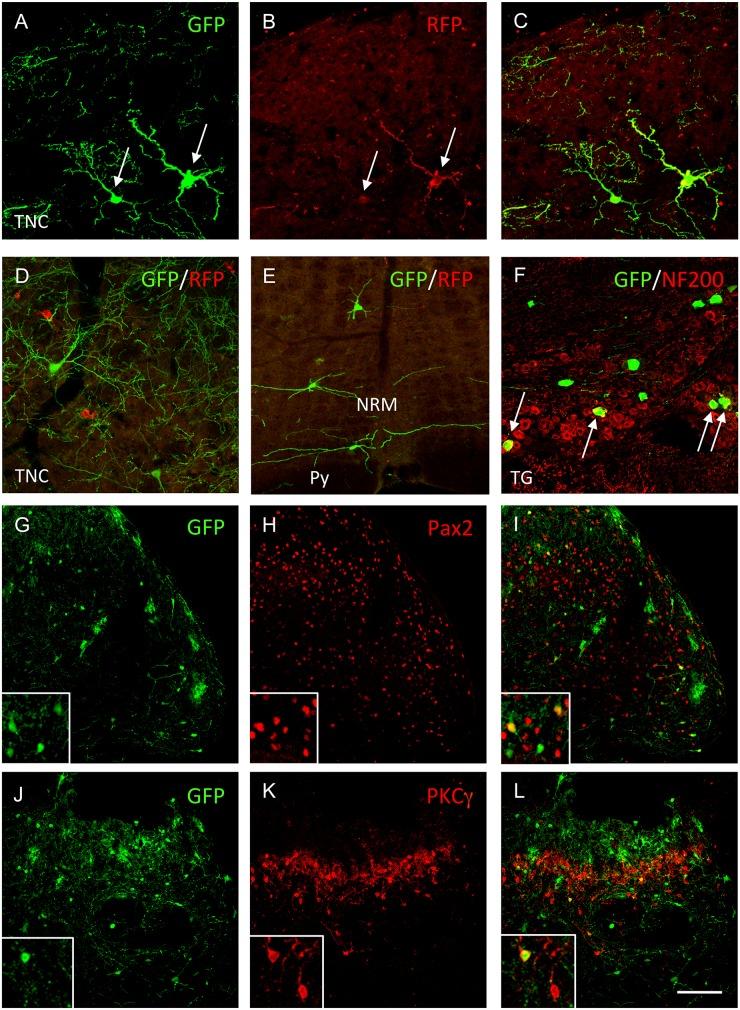
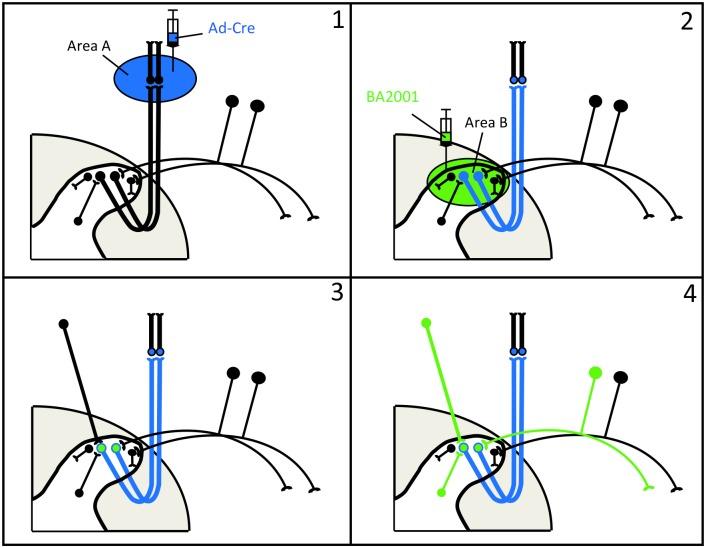
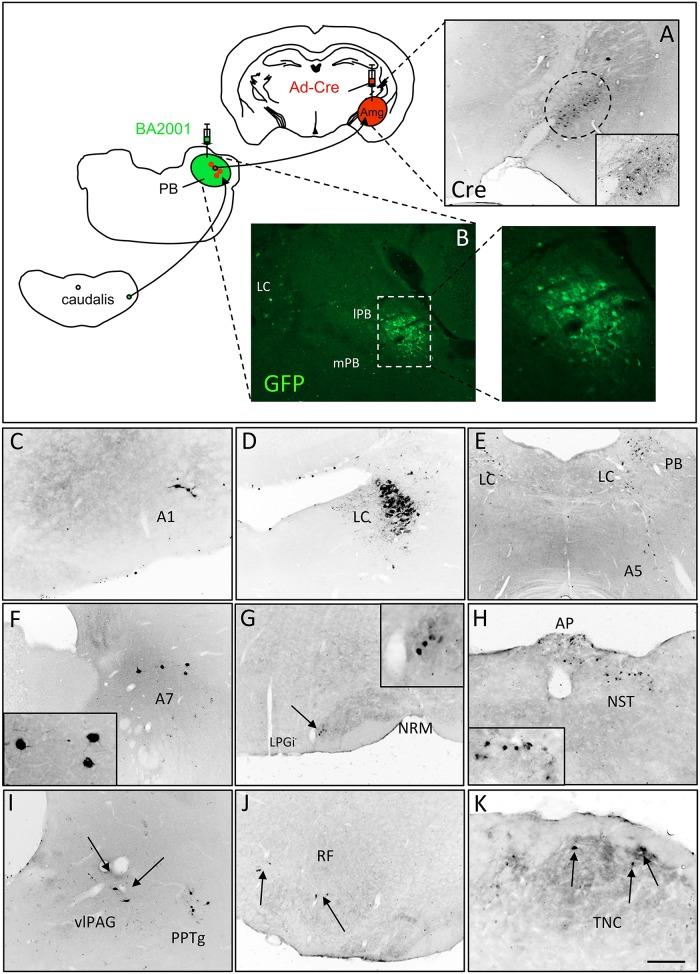
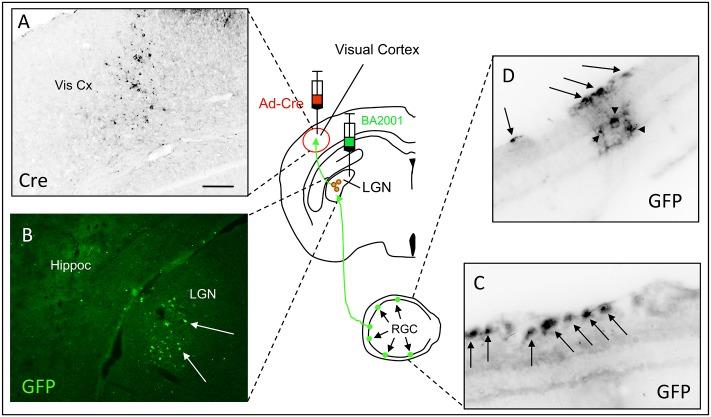
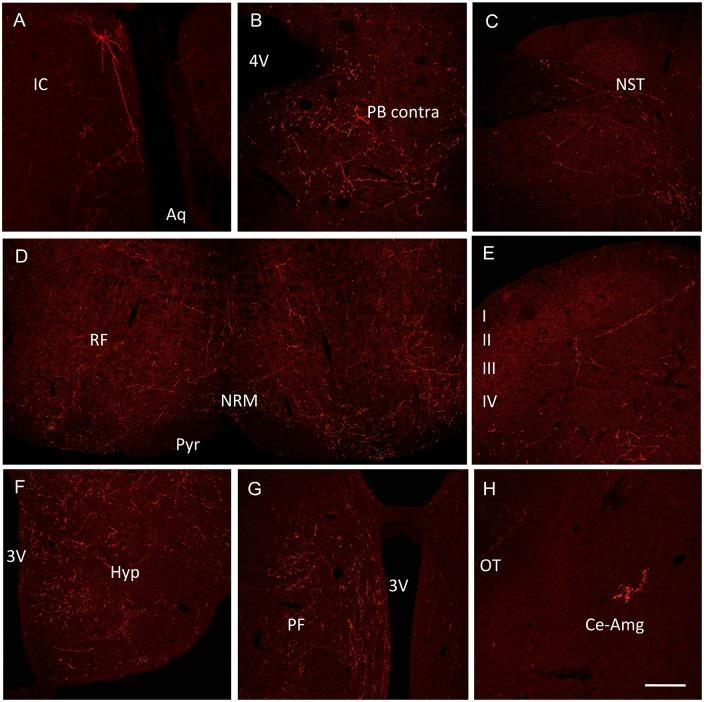
Although neuroanatomical tracing studies have defined the origin and targets of major projection neurons (PN) of the central nervous system (CNS), there is much less information about the circuits that influence these neurons. Recently, genetic approaches that use Cre recombinase-dependent viral vectors have greatly facilitated such circuit analysis, but these tracing approaches are limited by the availability of Cre-expressing mouse lines and the difficulty in restricting Cre expression to discrete regions of the CNS. Here, we illustrate an alternative approach to drive Cre expression specifically in defined subsets of CNS projection neurons, so as to map both direct and indirect presynaptic inputs to these cells. The method involves a combination of Cre-dependent transneuronal viral tracers that can be used in the adult and that does not require genetically modified mice. To trigger Cre-expression we inject a Cre-expressing adenovirus that is retrogradely transported to the projection neurons of interest. The region containing the retrogradely labeled projection neurons is next injected with Cre-dependent pseudorabies or rabies vectors, which results in labeling of poly- and monosynaptic neuronal inputs, respectively. In proof-of-concept experiments, we used this novel tracing system to study the circuits that engage projection neurons of the superficial dorsal horn of the spinal cord and trigeminal nucleus caudalis, neurons of the parabrachial nucleus of the dorsolateral pons that project to the amygdala and cortically-projecting neurons of the lateral geniculate nucleus. Importantly, because this dual viral tracing method does not require genetically derived Cre-expressing mouse lines, inputs to almost any projection system can be studied and the analysis can be performed in larger animals, such as the rat.
尽管神经解剖示踪研究已经明确了中枢神经系统(CNS)主要投射神经元(PN)的起源和靶点,但对于影响这些神经元的神经回路的了解却少得多。最近,利用依赖于Cre重组酶的病毒载体的遗传学方法极大地促进了此类神经回路分析,但这些示踪方法受到表达Cre的小鼠品系可用性的限制,以及将Cre表达限制在CNS离散区域的困难。在这里,我们阐述了一种替代方法,可在CNS投射神经元的特定亚群中特异性驱动Cre表达,以便绘制这些细胞的直接和间接突触前输入。该方法涉及一种依赖于Cre的跨神经元病毒示踪剂组合,可用于成年动物,且不需要基因改造的小鼠。为了触发Cre表达,我们注射一种表达Cre的腺病毒,该病毒逆行运输到感兴趣的投射神经元。接下来,向包含逆行标记投射神经元的区域注射依赖于Cre的伪狂犬病毒或狂犬病毒载体,分别导致多突触和单突触神经元输入的标记。在概念验证实验中,我们使用这种新型示踪系统研究了脊髓浅背角和三叉神经尾侧核的投射神经元、脑桥背外侧臂旁核投射到杏仁核的神经元以及外侧膝状体的皮质投射神经元所参与的神经回路。重要的是,由于这种双重病毒示踪方法不需要基因工程改造的表达Cre的小鼠品系,几乎可以研究任何投射系统的输入,并且可以在大鼠等较大动物中进行分析。




 Zotero 插件