
基因与系谱学联合研究发现一个可追溯至18世纪一位共同祖先的九代庞大BAP1癌症综合征家族。
Combined Genetic and Genealogic Studies Uncover a Large BAP1 Cancer Syndrome Kindred Tracing Back Nine Generations to a Common Ancestor from the 1700s.
作者信息
Carbone Michele, Flores Erin G, Emi Mitsuru, Johnson Todd A, Tsunoda Tatsuhiko, Behner Dusty, Hoffman Harriet, Hesdorffer Mary, Nasu Masaki, Napolitano Andrea, Powers Amy, Minaai Michael, Baumann Francine, Bryant-Greenwood Peter, Lauk Olivia, Kirschner Michaela B, Weder Walter, Opitz Isabelle, Pass Harvey I, Gaudino Giovanni, Pastorino Sandra, Yang Haining
机构信息
Thoracic Oncology Program, University of Hawai'i Cancer Center, Honolulu, Hawai'i, United States of America.
Laboratory for Medical Science Mathematics, RIKEN Center for Integrative Medical Sciences, Yokohama City, Kanagawa, Japan.
出版信息
PLoS Genet. 2015 Dec 18;11(12):e1005633. doi: 10.1371/journal.pgen.1005633. eCollection 2015 Dec.
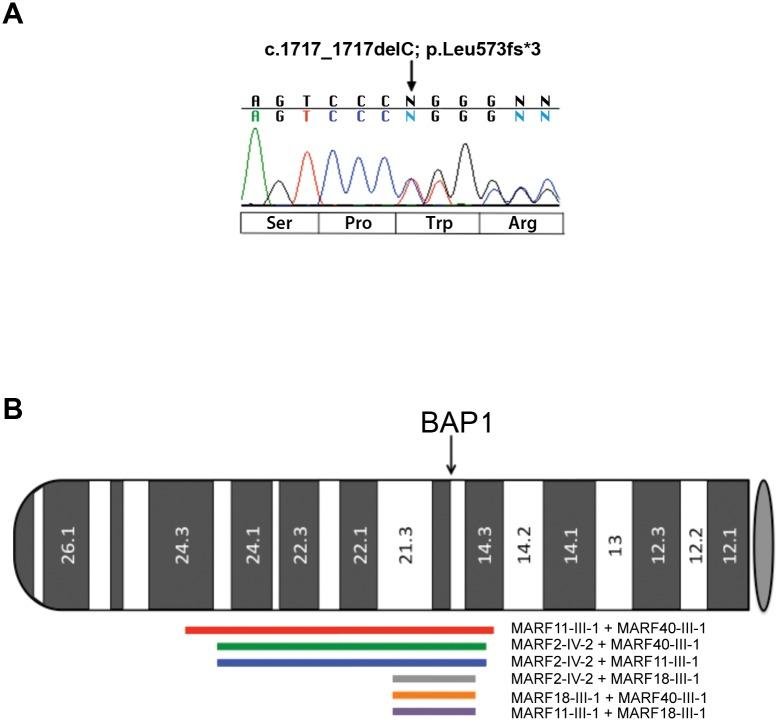
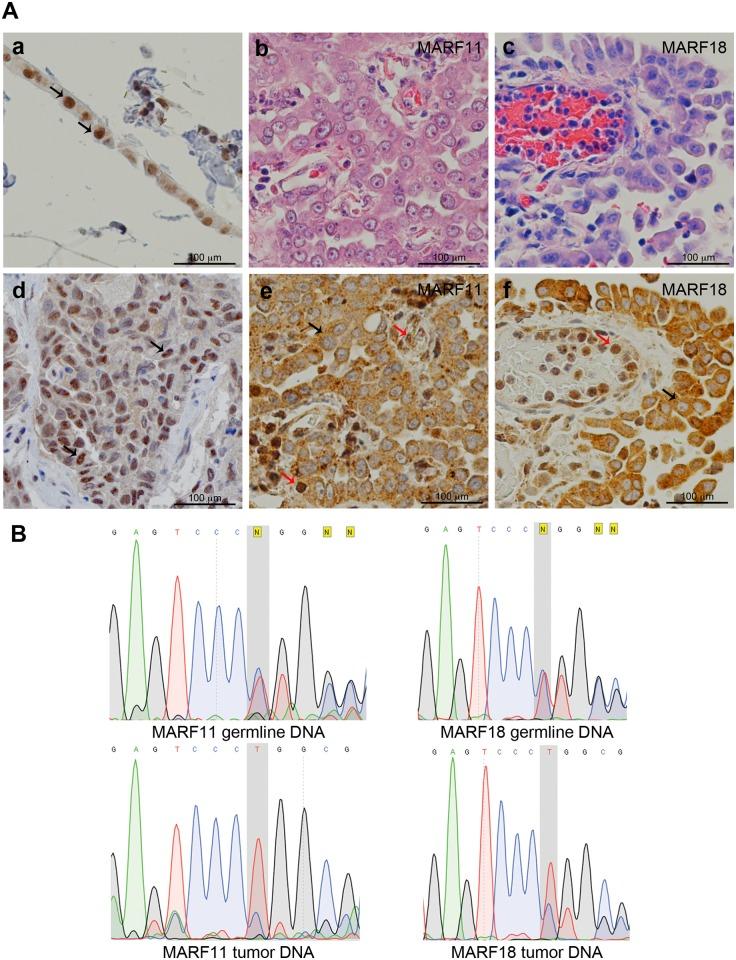
We recently discovered an inherited cancer syndrome caused by BRCA1-Associated Protein 1 (BAP1) germline mutations, with high incidence of mesothelioma, uveal melanoma and other cancers and very high penetrance by age 55. To identify families with the BAP1 cancer syndrome, we screened patients with family histories of multiple mesotheliomas and melanomas and/or multiple cancers. We identified four families that shared an identical BAP1 mutation: they lived across the US and did not appear to be related. By combining family histories, molecular genetics, and genealogical approaches, we uncovered a BAP1 cancer syndrome kindred of ~80,000 descendants with a core of 106 individuals, whose members descend from a couple born in Germany in the early 1700s who immigrated to North America. Their descendants spread throughout the country with mutation carriers affected by multiple malignancies. Our data show that, once a proband is identified, extended analyses of these kindreds, using genomic and genealogical studies to identify the most recent common ancestor, allow investigators to uncover additional branches of the family that may carry BAP1 mutations. Using this knowledge, we have identified new branches of this family carrying BAP1 mutations. We have also implemented early-detection strategies that help identify cancers at early-stage, when they can be cured (melanomas) or are more susceptible to therapy (MM and other malignancies).
我们最近发现了一种由BRCA1相关蛋白1(BAP1)种系突变引起的遗传性癌症综合征,该综合征导致间皮瘤、葡萄膜黑色素瘤和其他癌症的发病率很高,且到55岁时具有很高的外显率。为了识别患有BAP1癌症综合征的家庭,我们对有多个间皮瘤和黑色素瘤家族史和/或多种癌症家族史的患者进行了筛查。我们识别出了四个共享相同BAP1突变的家族:他们生活在美国各地,似乎并无血缘关系。通过结合家族史、分子遗传学和系谱学方法,我们发现了一个约有80000名后代的BAP1癌症综合征家族,其核心成员有106人,这些成员是一对18世纪初出生于德国、移民到北美的夫妇的后代。他们的后代遍布全国,突变携带者受到多种恶性肿瘤的影响。我们的数据表明,一旦识别出先证者,利用基因组学和系谱学研究对这些家族进行深入分析以确定最近的共同祖先,就能让研究人员发现可能携带BAP1突变的家族的其他分支。基于这一认识,我们已经识别出了这个家族中携带BAP1突变的新分支。我们还实施了早期检测策略,有助于在癌症可治愈(黑色素瘤)或更易接受治疗(恶性间皮瘤和其他恶性肿瘤)的早期阶段识别癌症。

 Zotero 插件