
基于黄酮-多糖的方剂治疗鸭病毒性肝炎的评估
Assessment of a Flavone-Polysaccharide Based Prescription for Treating Duck Virus Hepatitis.
作者信息
Du Hongxu, Zhang Shuaibing, Song Meiyun, Wang Yixuan, Zeng Ling, Chen Yun, Xiong Wen, Yang Jingjing, Yao Fangke, Wu Yi, Wang Deyun, Hu Yuanliang, Liu Jiaguo
机构信息
Institute of Traditional Chinese Veterinary Medicine, College of Veterinary Medicine, Nanjing Agricultural University, Nanjing, P R China.
出版信息
PLoS One. 2016 Jan 5;11(1):e0146046. doi: 10.1371/journal.pone.0146046. eCollection 2016.
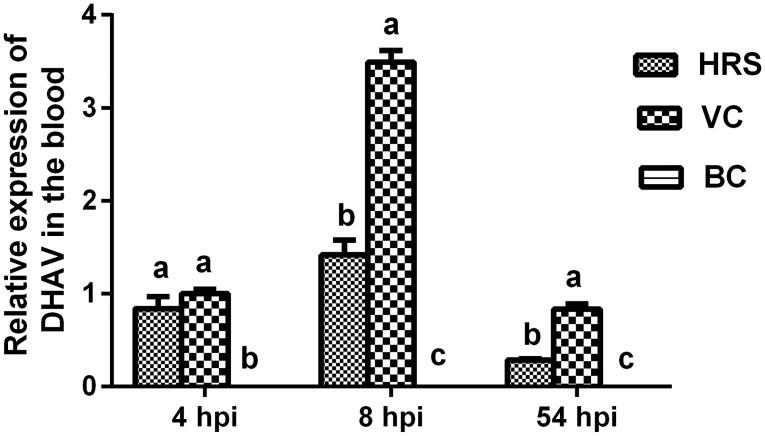
Because polysaccharide and flavone ingredients display good antiviral activity, we developed a flavone/polysaccharide-containing prescription that would be effective against duck viral hepatitis (DVH) and investigated its hepatoprotective effects. Flavones were derived from Hypericum japonicum (HJF) (entire herb of Hypericum japonicum Thunb) and Salvia plebeia (SPF) (entire herb of Salvia plebeia R. Br.), and polysaccharides were derived from Radix Rehmanniae Recens (RRRP) (dried root of Rehmannia glutinosa Libosch). This prescription combination was based on the theory of syndrome differentiation and treatment in traditional Chinese veterinary medicine. In vitro and in vivo experiments were conducted using the three single ingredients compared to the combined HRS prescription to determine their anti-duck hepatitis A viral (anti-DHAV) activity. The results showed that all experimental conditions displayed anti-DHAV activity, but the HRS prescription presented the best effect. To further investigate the hepatoprotective effect of the HRS prescription on DHAV-induced hepatic injury, we tested the mortality rate, the hepatic pathological severity score, plasma biochemical indexes of hepatic function, blood DHAV gene expression levels and peroxidation damage evaluation indexes and then analyzed correlations among these indexes. The results demonstrated that the HRS prescription significantly decreased the mortality rate, reduced the severity of hepatic injury, decreased the hepatic pathological severity score, depressed blood DHAV gene expression levels, and returned the indexes of hepatic function and peroxidation almost to a normal level. These results indicate that the HRS prescription confers an outstanding hepatoprotective effect, and we expect that it will be developed into a new candidate anti-DHAV drug.
由于多糖和黄酮成分具有良好的抗病毒活性,我们开发了一种含黄酮/多糖的方剂,以期对鸭病毒性肝炎(DVH)有效,并研究其保肝作用。黄酮来源于地耳草(HJF)(地耳草全草)和荔枝草(SPF)(荔枝草全草),多糖来源于鲜地黄(RRRP)(地黄干燥根)。该方剂组合基于中兽医学辨证论治理论。与联合使用的HRS方剂相比,使用这三种单一成分进行了体外和体内实验,以确定它们对鸭甲型肝炎病毒(抗DHAV)的活性。结果表明,所有实验条件均显示出抗DHAV活性,但HRS方剂效果最佳。为进一步研究HRS方剂对DHAV诱导的肝损伤的保肝作用,我们检测了死亡率、肝脏病理严重程度评分、肝功能血浆生化指标、血液中DHAV基因表达水平以及过氧化损伤评估指标,然后分析了这些指标之间的相关性。结果表明,HRS方剂显著降低了死亡率,减轻了肝损伤的严重程度,降低了肝脏病理严重程度评分,抑制了血液中DHAV基因表达水平,并使肝功能和过氧化指标几乎恢复到正常水平。这些结果表明,HRS方剂具有显著的保肝作用,我们期望它能被开发成为一种新型抗DHAV药物候选物。


 Zotero 插件