
结直肠癌和前列腺癌患者外周血中Y染色体缺失
Loss of Y Chromosome in Peripheral Blood of Colorectal and Prostate Cancer Patients.
作者信息
Noveski Predrag, Madjunkova Svetlana, Sukarova Stefanovska Emilija, Matevska Geshkovska Nadica, Kuzmanovska Maja, Dimovski Aleksandar, Plaseska-Karanfilska Dijana
机构信息
Research Center for Genetic Engineering and Biotechnology "Georgi D. Efremov", Macedonian Academy of Sciences and Arts, Skopje, Republic of Macedonia.
Center for Biomolecular Pharmaceutical Analysis, Faculty of Pharmacy, University Ss Cyril and Methodius, Skopje, Republic of Macedonia.
出版信息
PLoS One. 2016 Jan 8;11(1):e0146264. doi: 10.1371/journal.pone.0146264. eCollection 2016.
BACKGROUND
Although age-related loss of chromosome Y (LOY) in normal hematopoietic cells is a well-known phenomenon, the phenotypic consequences of LOY have been elusive. However, LOY has been found in association with smoking, shorter survival and higher risk of cancer. It was suggested that LOY in blood cells could become a predictive biomarker of male carcinogenesis.
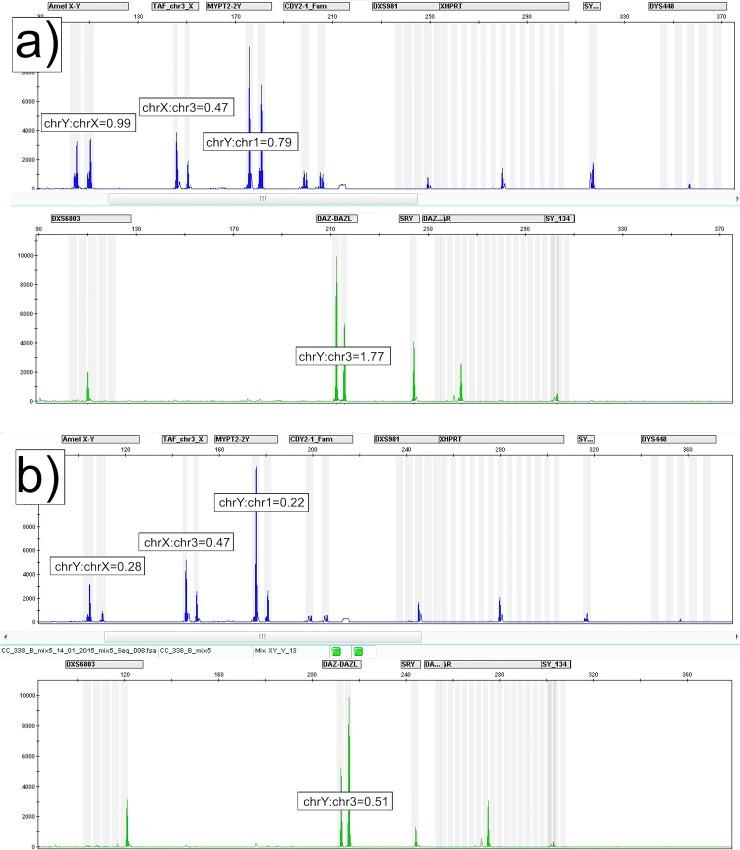
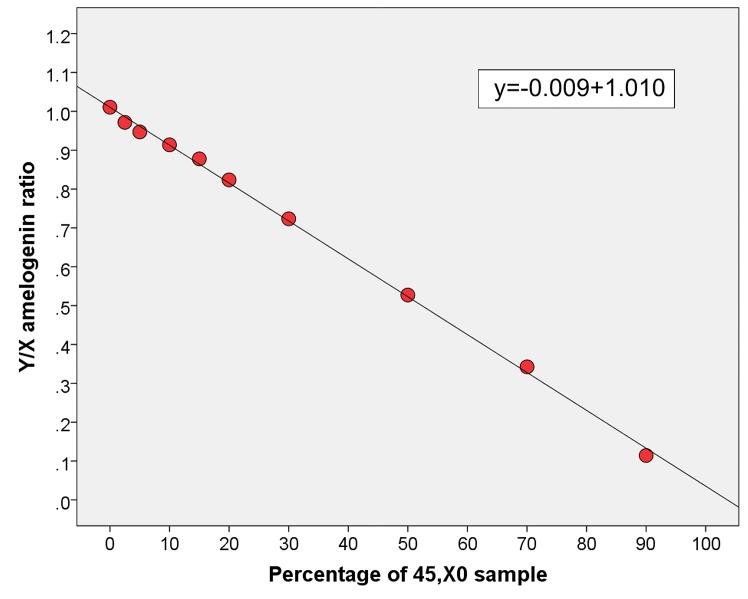
AIMS, METHODS & FINDINGS: To investigate the association of LOY in blood cells with the risk for development of colorectal (CC) and prostate cancers (PC), we have analyzed DNA samples from peripheral blood of 101 CC male patients (mean age 60.5±11.9 yrs), 70 PC patients (mean age 68.8±8.0 yrs) and 93 healthy control males (mean age 65.8±16.6 yrs). The methodology included co-amplification of homologous sequences on chromosome Y and other chromosomes using multiplex quantitative fluorescent (QF) PCR followed by automatic detection and analysis on ABI 3500 Genetic Analyzer. The mean Y/X ratio was significantly lower in the whole group of cancer patients (0.907±0.12; p = 1.17x10⁻⁹) in comparison to the controls (1.015±0.15), as well as in CC (0.884±0.15; p = 3.76x10⁻⁹) and PC patients (0.941±0.06; p = 0.00012), when analyzed separately. Multivariate logistic regression analysis adjusting for LOY and age showed that LOY is a more significant predictor of cancer presence than age, and that age probably does not contribute to the increased number of subjects with detectable LOY in cancer patients cohort.
CONCLUSION
In conclusion, our results support the recent findings of association of LOY in blood cells with carcinogenesis in males.
背景
虽然正常造血细胞中与年龄相关的Y染色体缺失(LOY)是一个众所周知的现象,但LOY的表型后果一直难以捉摸。然而,已发现LOY与吸烟、较短生存期及较高癌症风险相关。有人提出血细胞中的LOY可能成为男性致癌作用的预测生物标志物。
目的、方法与研究结果:为了研究血细胞中的LOY与结直肠癌(CC)和前列腺癌(PC)发生风险之间的关联,我们分析了101例CC男性患者(平均年龄60.5±11.9岁)、70例PC患者(平均年龄68.8±8.0岁)和93例健康对照男性(平均年龄65.8±16.6岁)外周血的DNA样本。该方法包括使用多重定量荧光(QF)PCR对Y染色体和其他染色体上的同源序列进行共扩增,随后在ABI 3500基因分析仪上进行自动检测和分析。与对照组(1.015±0.15)相比,癌症患者全组的平均Y/X比值显著降低(0.907±0.12;p = 1.17×10⁻⁹),单独分析时CC患者(0.884±0.15;p = 3.76×10⁻⁹)和PC患者(0.941±0.06;p = 0.00012)也是如此。对LOY和年龄进行校正的多因素逻辑回归分析表明,LOY比年龄更能显著预测癌症的存在,并且年龄可能对癌症患者队列中可检测到LOY的受试者数量增加没有影响。
结论
总之,我们的结果支持了最近关于血细胞中的LOY与男性致癌作用相关的研究发现。

 Zotero 插件