
秀丽隐杆线虫中通过饮食性线粒体应激反应实现的脆弱寿命延长
Fragile lifespan expansion by dietary mitohormesis in C. elegans.
作者信息
Tauffenberger Arnaud, Vaccaro Alexandra, Parker J Alex
机构信息
CRCHUM, Montréal, Québec, Canada.
Département de Pathologie et Biologie Cellulaire, Université de Montréal, Montréal, Québec, Canada.
出版信息
Aging (Albany NY). 2016 Jan;8(1):50-61. doi: 10.18632/aging.100863.
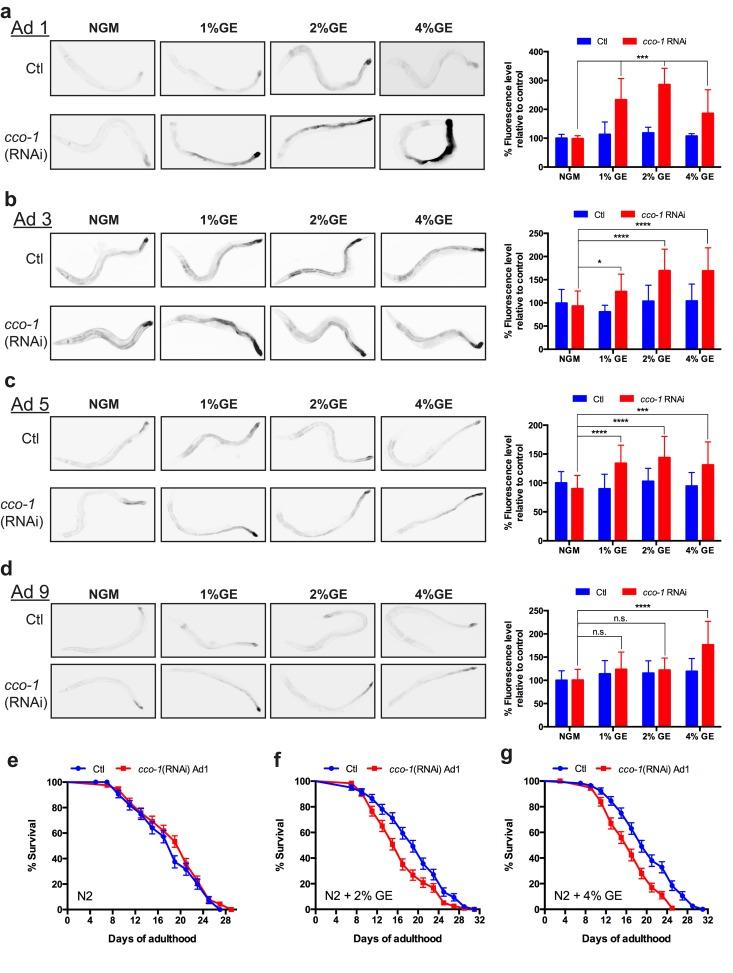
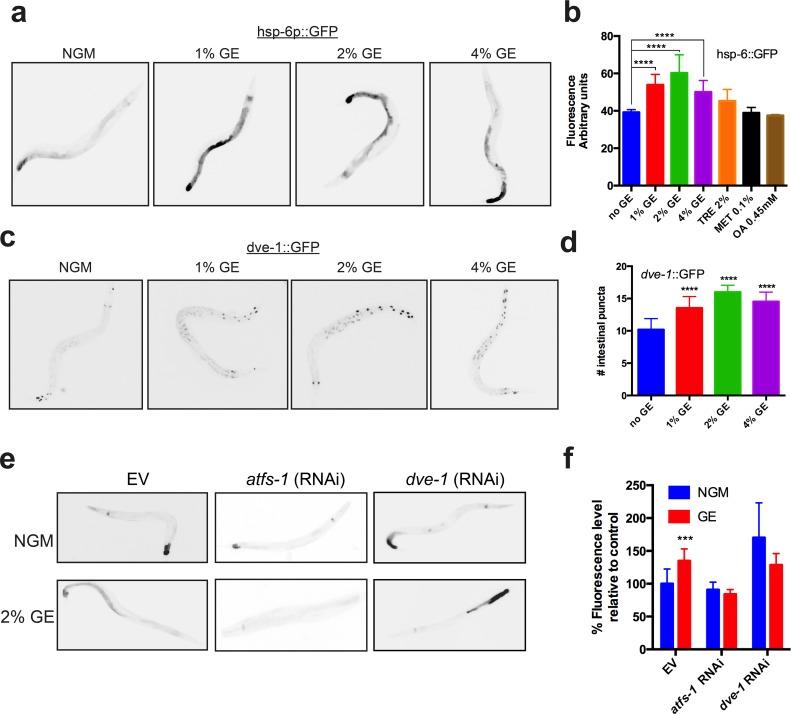
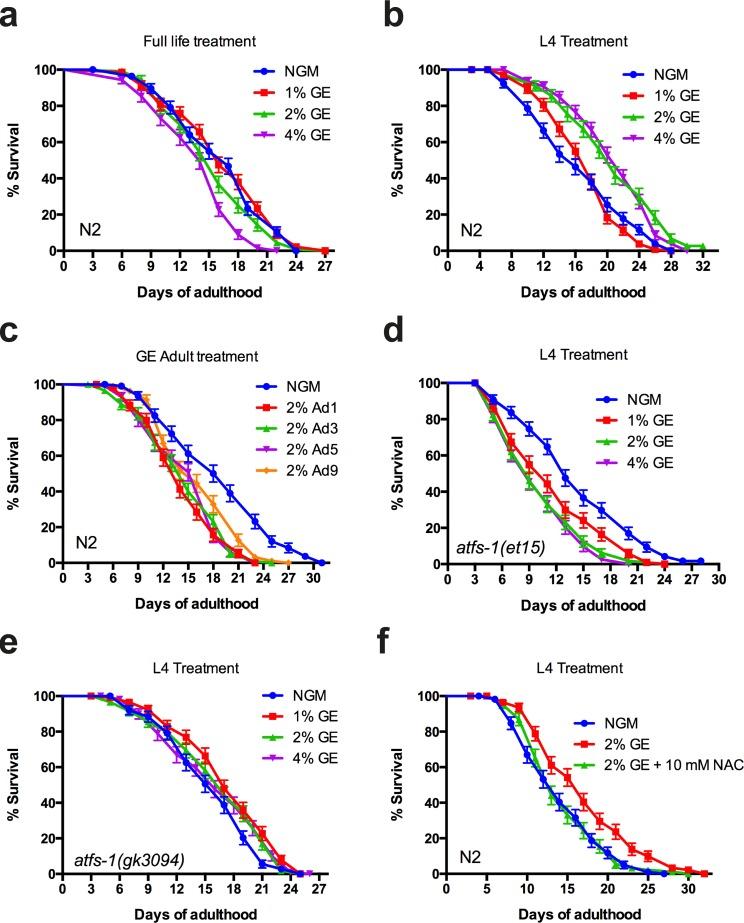
Mitochondrial function is central to longevity and an imbalance in mitonuclear protein homeostasis activates a protective response called the mitochondrial unfolded protein response (UPRmt). Toxic compounds damaging mitochondria trigger the UPRmt, but at sublethal doses these insults extend lifespan in simple animals like C. elegans. Mitochondria are the main energy suppliers in eukaryotes, but it is not known if diet influences the UPRmt. High dietary glucose reduces lifespan in worms, and we show that high dietary glucose activates the UPRmt to protect against lifespan reduction. While lifelong exposure to glucose reduces lifespan, glucose exposure restricted to developing animals extends lifespan and requires the UPRmt. However, this lifespan extension is abolished by further mitochondrial stress in adult animals. We demonstrate that dietary conditions regulate mitochondrial homeostasis, where induction of the UPRmt during development extends lifespan, but prolonged activation into adulthood reduces lifespan.
线粒体功能对长寿至关重要,线粒体与细胞核蛋白质稳态失衡会激活一种名为线粒体未折叠蛋白反应(UPRmt)的保护机制。破坏线粒体的有毒化合物会触发UPRmt,但在亚致死剂量下,这些损伤会延长线虫等简单动物的寿命。线粒体是真核生物的主要能量供应者,但饮食是否会影响UPRmt尚不清楚。高糖饮食会缩短线虫寿命,我们发现高糖饮食会激活UPRmt以防止寿命缩短。虽然终生暴露于葡萄糖会缩短寿命,但仅在发育中的动物中暴露于葡萄糖会延长寿命,且这需要UPRmt。然而,成年动物中进一步的线粒体应激会消除这种寿命延长。我们证明饮食条件可调节线粒体稳态,在发育过程中诱导UPRmt可延长寿命,但成年后长期激活则会缩短寿命。

 Zotero 插件