
羟氯喹对子宫内膜异位症模型中小鼠自噬的影响及其特征。
Effect of hydroxychloroquine and characterization of autophagy in a mouse model of endometriosis.
机构信息
Department of Cell Biology, Microbiology, and Molecular Biology, University of South Florida, Tampa, FL, USA.
Department of Integrative Biology, University of South Florida, Tampa, FL, USA.
出版信息
Cell Death Dis. 2016 Jan 14;7(1):e2059. doi: 10.1038/cddis.2015.361.
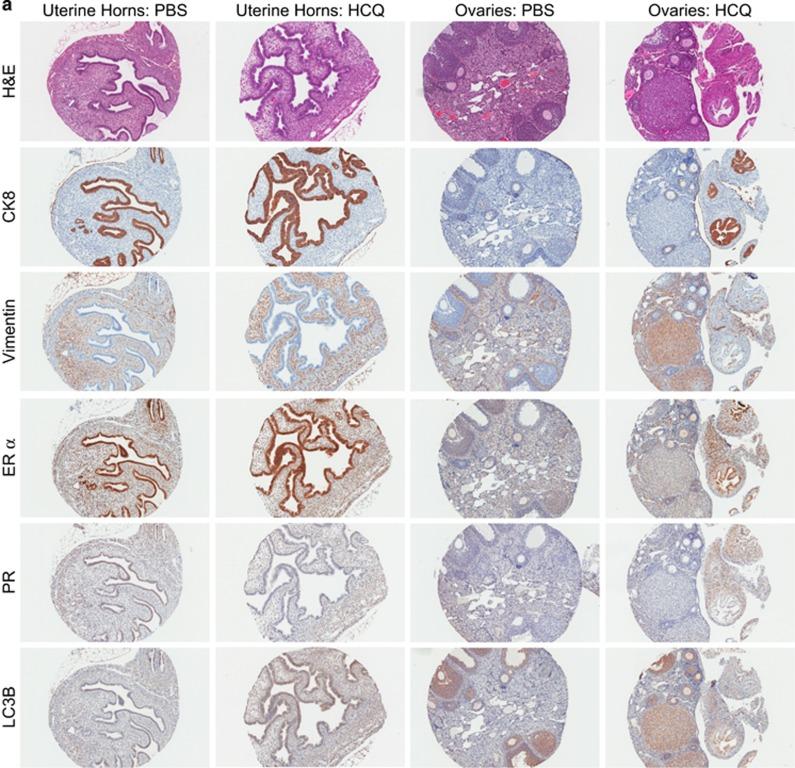
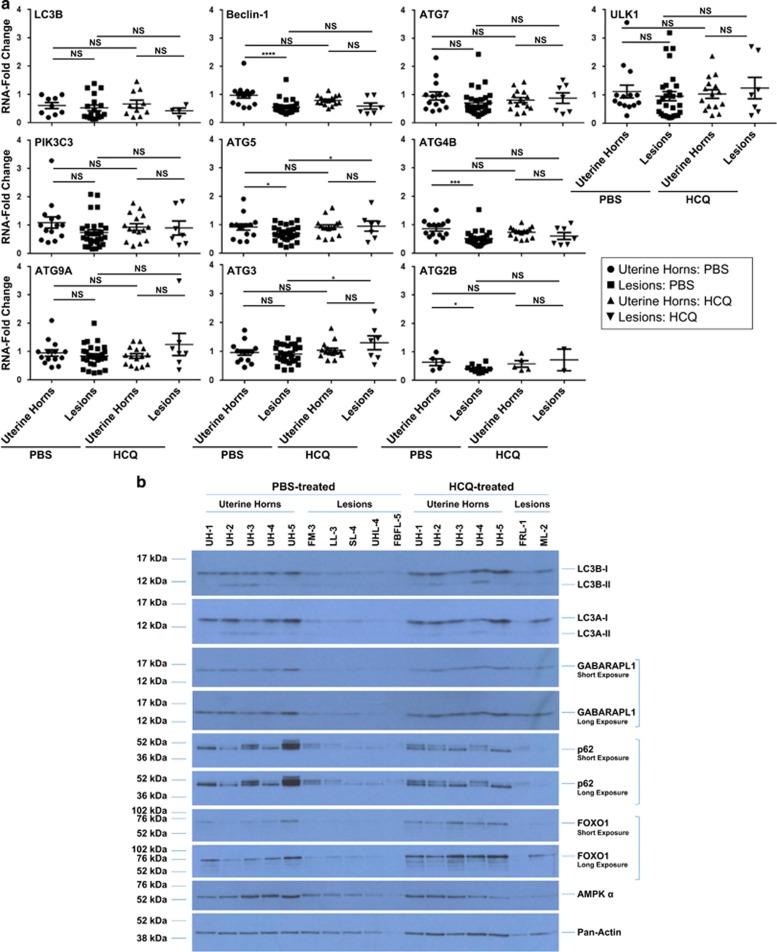
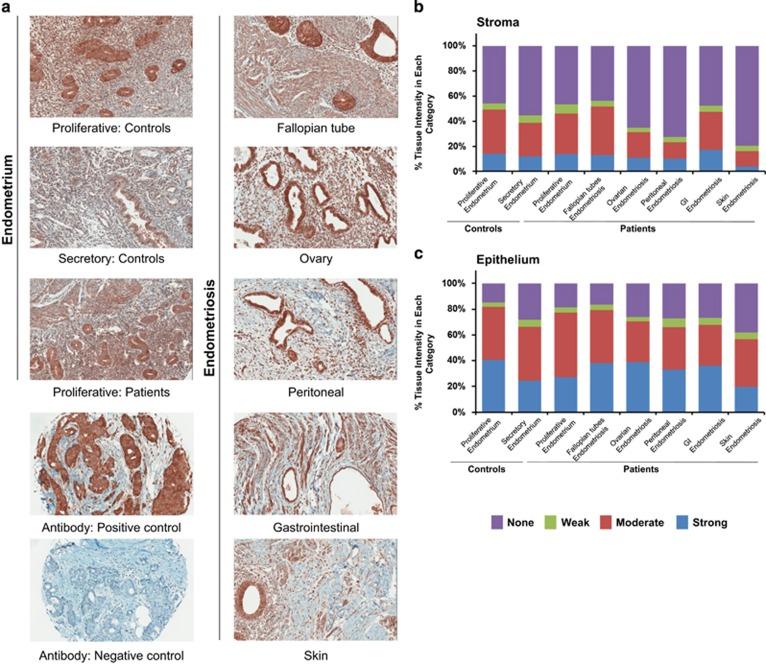
In endometriosis, the increased survival potential of shed endometrial cells (which normally undergo anoikis) is suggested to promote lesion development. One mechanism that may alter anoikis is autophagy. Using an autophagic flux inhibitor hydroxychloroquine (HCQ), we identified that it reduces the in vitro survival capacity of human endometriotic and endometrial T-HESC cells. We also identified that HCQ could decrease lesion numbers and disrupt lesion histopathology, as well as increase the levels of peritoneal macrophages and the IP-10 (10 kDa interferon-γ-induced protein) chemokine in a mouse model of endometriosis. We noted that RNA levels of a subset of autophagic markers were reduced in lesions relative to uterine horns from endometriosis-induced (untreated) mice. In addition, the RNA levels of autophagic markers were decreased in uterine horns of endometriosis-induced mice compared with those from controls. However, we noted that protein expression of LC3B (microtubule-associated protein 1 light-chain 3β; an autophagic marker) was increased in uterine horns of endometriosis-induced mice compared with uterine horns of controls. By immunohistochemical staining of a human endometriosis-focused tissue microarray, we observed LC3B expression predominantly in epithelial relative to stromal cells in both eutopic and ectopic endometria. Via transmission electron microscopy, cells from eutopic endometria of endometriosis-induced mice contained more lipid droplets (rather than autophagosomes) compared with uterine horns from controls. Collectively, our findings indicate that the autophagic pathway is dysregulated in both ectopic and eutopic endometrium in a murine model of endometriosis and that HCQ has potential as a therapeutic agent for women afflicted with endometriosis.
在子宫内膜异位症中,脱落的子宫内膜细胞(通常会发生细胞凋亡)的存活能力增加,这被认为促进了病变的发展。一种可能改变细胞凋亡的机制是自噬。我们使用自噬通量抑制剂羟氯喹 (HCQ) 发现,它降低了人子宫内膜异位症和子宫内膜 T-HESC 细胞的体外存活能力。我们还发现,HCQ 可以减少病变数量并破坏病变组织病理学,同时增加腹腔巨噬细胞的水平和 IP-10(10 kDa 干扰素-γ诱导蛋白)趋化因子在子宫内膜异位症的小鼠模型中。我们注意到,与子宫内膜异位症诱导(未治疗)小鼠的子宫角相比,病变中一组自噬标志物的 RNA 水平降低。此外,与对照组相比,子宫内膜异位症诱导小鼠的子宫角中自噬标志物的 RNA 水平降低。然而,我们注意到,与对照组相比,子宫内膜异位症诱导小鼠的子宫角中 LC3B(微管相关蛋白 1 轻链 3β;自噬标志物)的蛋白表达增加。通过对人类子宫内膜异位症重点组织微阵列进行免疫组织化学染色,我们观察到 LC3B 表达主要在子宫内膜异位症的内位和异位子宫内膜的上皮细胞中,而不是在基质细胞中。通过透射电子显微镜观察,与对照组相比,子宫内膜异位症诱导小鼠的内位子宫内膜中的细胞含有更多的脂滴(而不是自噬体)。综上所述,我们的研究结果表明,在子宫内膜异位症的小鼠模型中,异位和内位子宫内膜中的自噬途径都失调了,HCQ 有作为治疗子宫内膜异位症女性的潜在治疗剂的潜力。




 Zotero 插件