
长链非编码RNA HOTAIR的表达与膀胱癌的疾病进展相关,并存在于膀胱癌患者的尿液外泌体中。
Expression of the Long Non-Coding RNA HOTAIR Correlates with Disease Progression in Bladder Cancer and Is Contained in Bladder Cancer Patient Urinary Exosomes.
作者信息
Berrondo Claudia, Flax Jonathan, Kucherov Victor, Siebert Aisha, Osinski Thomas, Rosenberg Alex, Fucile Christopher, Richheimer Samuel, Beckham Carla J
机构信息
University of Rochester Department of Urology, Strong Memorial Hospital Rochester, New York, United States of America.
University of Rochester School of Medicine and Dentistry, Rochester, New York, United States of America.
出版信息
PLoS One. 2016 Jan 22;11(1):e0147236. doi: 10.1371/journal.pone.0147236. eCollection 2016.
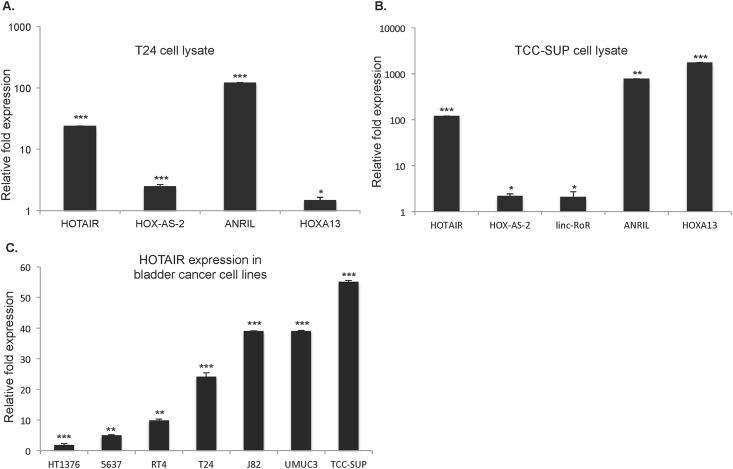
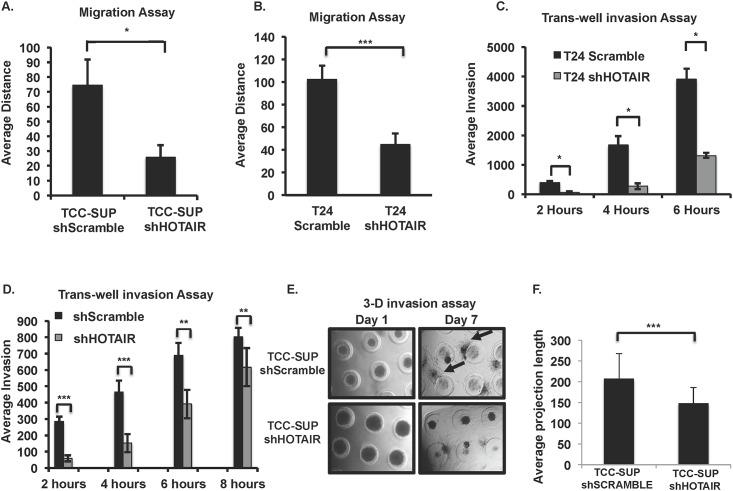
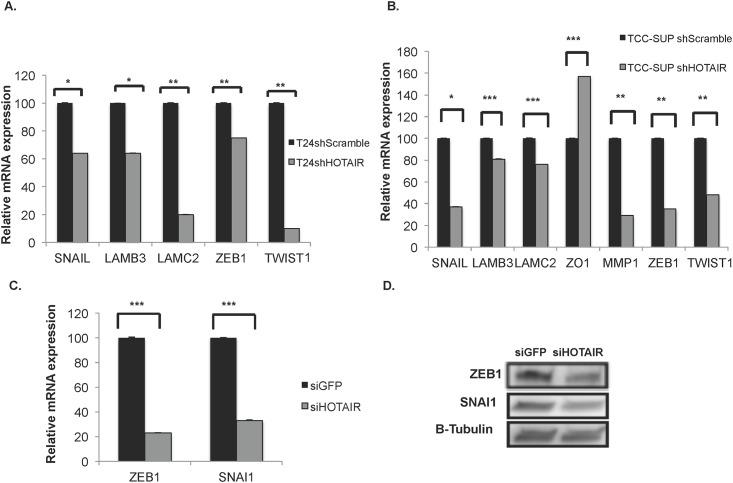
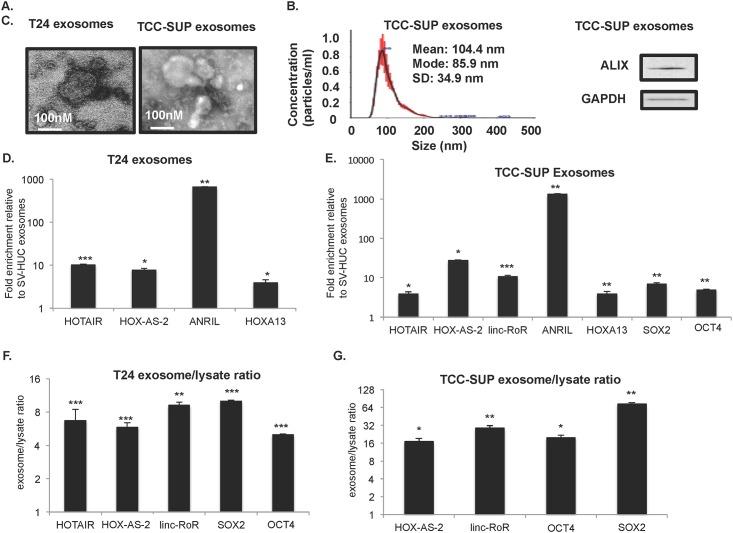
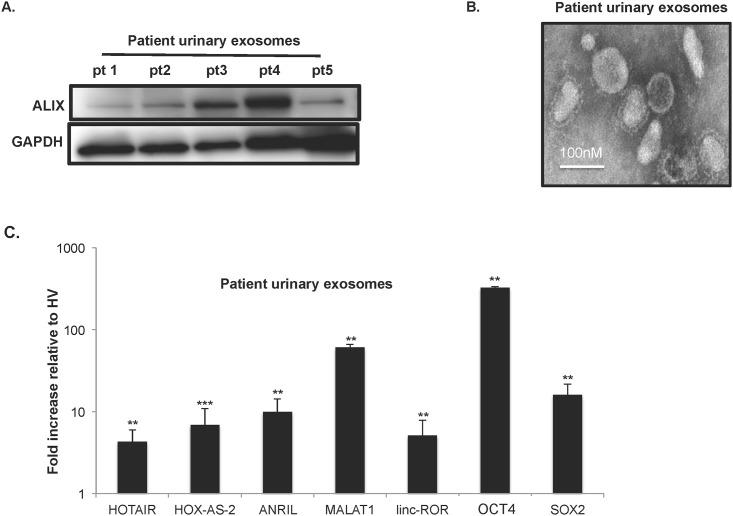
Exosomes are 30-150nM membrane-bound secreted vesicles that are readily isolated from biological fluids such as urine (UEs). Exosomes contain proteins, micro RNA (miRNA), messenger RNA (mRNA), and long non-coding RNA (lncRNA) from their cells of origin. Although miRNA, protein and lncRNA have been isolated from serum as potential biomarkers for benign and malignant disease, it is unknown if lncRNAs in UEs from urothelial bladder cancer (UBC) patients can serve as biomarkers. lncRNAs are > 200 nucleotide long transcripts that do not encode protein and play critical roles in tumor biology. As the number of recognized tumor-associated lncRNAs continues to increase, there is a parallel need to include lncRNAs into biomarker discovery and therapeutic target algorithms. The lncRNA HOX transcript antisense RNA (HOTAIR) has been shown to facilitate tumor initiation and progression and is associated with poor prognosis in several cancers. The importance of HOTAIR in cancer biology has sparked interest in using HOTAIR as a biomarker and potential therapeutic target. Here we show HOTAIR and several tumor-associated lncRNAs are enriched in UEs from UBC patients with high-grade muscle-invasive disease (HGMI pT2-pT4). Knockdown of HOTAIR in UBC cell lines reduces in vitro migration and invasion. Importantly, loss of HOTAIR expression in UBC cell lines alters expression of epithelial-to-mesenchyme transition (EMT) genes including SNAI1, TWIST1, ZEB1, ZO1, MMP1 LAMB3, and LAMC2. Finally, we used RNA-sequencing to identify four additional lncRNAs enriched in UBC patient UEs. These data, suggest that UE-derived lncRNA may potentially serve as biomarkers and therapeutic targets.
外泌体是30 - 150纳米的膜结合分泌囊泡,很容易从生物体液如尿液(尿外泌体)中分离出来。外泌体包含来自其起源细胞的蛋白质、微小RNA(miRNA)、信使RNA(mRNA)和长链非编码RNA(lncRNA)。尽管已经从血清中分离出miRNA、蛋白质和lncRNA作为良性和恶性疾病的潜在生物标志物,但尚不清楚膀胱尿路上皮癌(UBC)患者尿外泌体中的lncRNA是否可作为生物标志物。lncRNA是长度超过200个核苷酸的转录本,不编码蛋白质,但在肿瘤生物学中发挥关键作用。随着已识别的肿瘤相关lncRNA数量不断增加,同时也需要将lncRNA纳入生物标志物发现和治疗靶点算法中。lncRNA HOX转录本反义RNA(HOTAIR)已被证明促进肿瘤起始和进展,并与多种癌症的不良预后相关。HOTAIR在癌症生物学中的重要性引发了将其作为生物标志物和潜在治疗靶点的兴趣。在此我们表明,HOTAIR和几种肿瘤相关lncRNA在患有高级别肌层浸润性疾病(HGMI pT2 - pT4)的UBC患者的尿外泌体中富集。在UBC细胞系中敲低HOTAIR可降低体外迁移和侵袭能力。重要的是,UBC细胞系中HOTAIR表达缺失会改变上皮 - 间质转化(EMT)基因的表达,包括SNAI1、TWIST1、ZEB1、ZO1、MMP1、LAMB3和LAMC2。最后,我们使用RNA测序来鉴定在UBC患者尿外泌体中富集的另外四种lncRNA。这些数据表明,尿外泌体来源的lncRNA可能潜在地作为生物标志物和治疗靶点。


 Zotero 插件