
用于在大肠杆菌中生产重组毒性肽的载体蛋白的合理设计
Rational Design of a Carrier Protein for the Production of Recombinant Toxic Peptides in Escherichia coli.
作者信息
Pane Katia, Durante Lorenzo, Pizzo Elio, Varcamonti Mario, Zanfardino Anna, Sgambati Valeria, Di Maro Antimo, Carpentieri Andrea, Izzo Viviana, Di Donato Alberto, Cafaro Valeria, Notomista Eugenio
机构信息
Department of Biology, Università degli Studi di Napoli Federico II, Napoli, Italy.
Department of Environmental, Biological and Pharmaceutical Sciences and Technologies, Seconda Università di Napoli, Caserta, Italy.
出版信息
PLoS One. 2016 Jan 25;11(1):e0146552. doi: 10.1371/journal.pone.0146552. eCollection 2016.
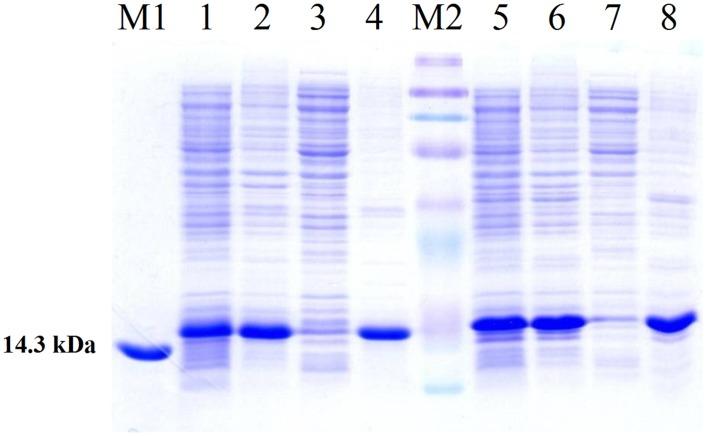
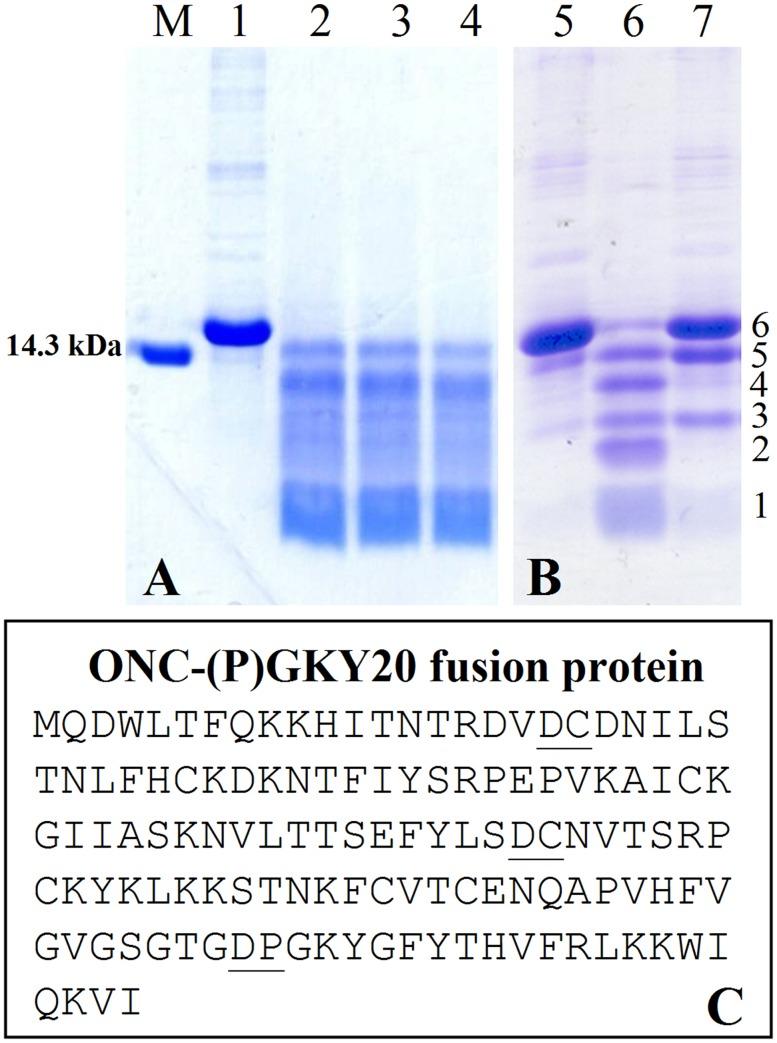
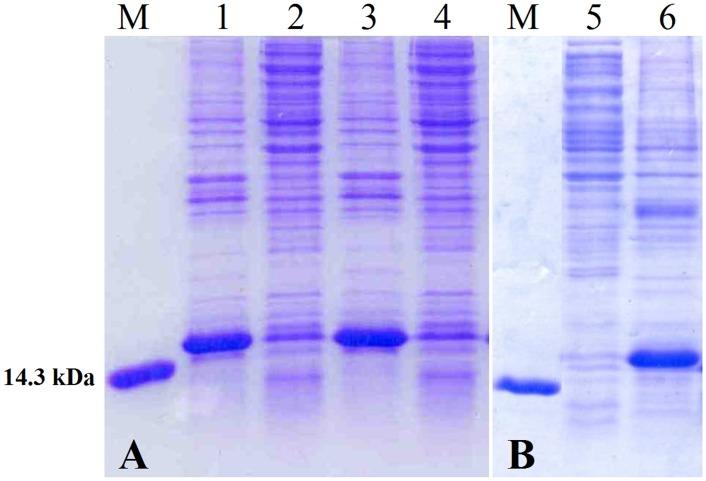
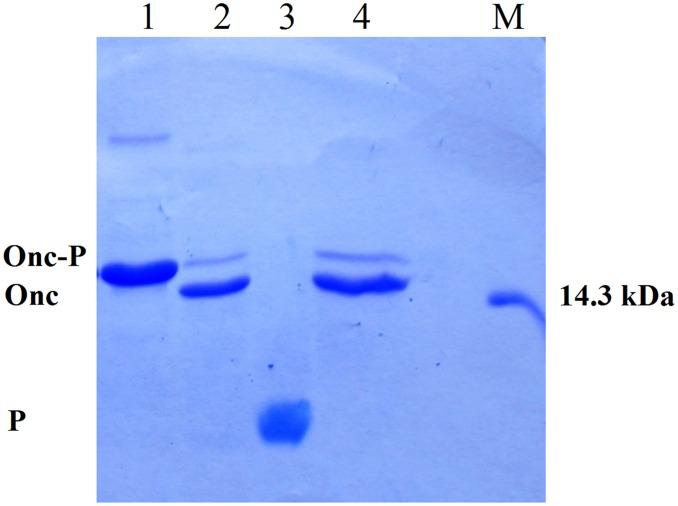
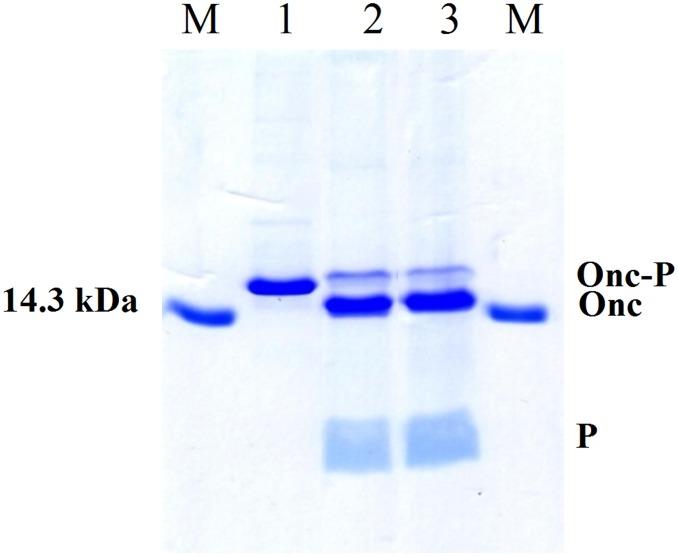
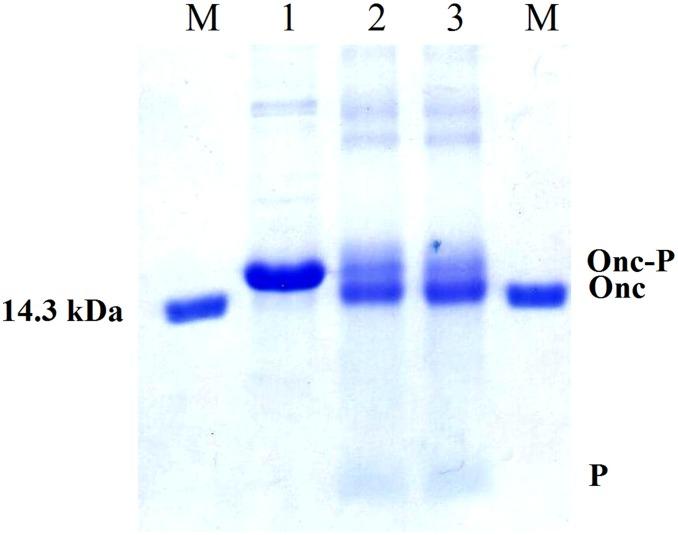
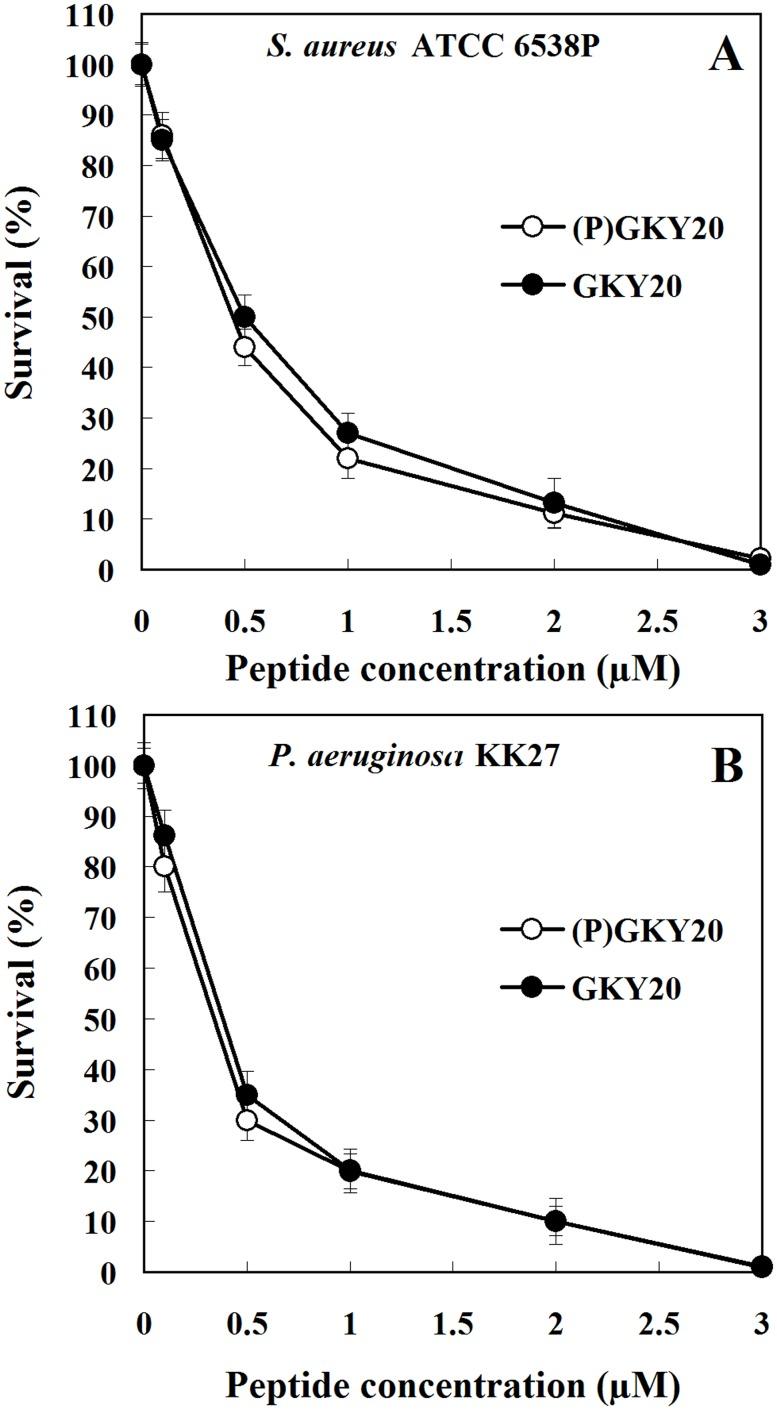
Commercial uses of bioactive peptides require low cost, effective methods for their production. We developed a new carrier protein for high yield production of recombinant peptides in Escherichia coli very well suited for the production of toxic peptides like antimicrobial peptides. GKY20, a short antimicrobial peptide derived from the C-terminus of human thrombin, was fused to the C-terminus of Onconase, a small ribonuclease (104 amino acids), which efficiently drove the peptide into inclusion bodies with very high expression levels (about 200-250 mg/L). After purification of the fusion protein by immobilized metal ion affinity chromatography, peptide was obtained by chemical cleavage in diluted acetic acid of an acid labile Asp-Pro sequence with more than 95% efficiency. To improve peptide purification, Onconase was mutated to eliminate all acid labile sequences thus reducing the release of unwanted peptides during the acid cleavage. Mutations were chosen to preserve the differential solubility of Onconase as function of pH, which allows its selective precipitation at neutral pH after the cleavage. The improved carrier allowed the production of 15-18 mg of recombinant peptide per liter of culture with 96-98% purity without the need of further chromatographic steps after the acid cleavage. The antimicrobial activity of the recombinant peptide, with an additional proline at the N-terminus, was tested on Gram-negative and Gram-positive strains and was found to be identical to that measured for synthetic GKY20. This finding suggests that N-terminal proline residue does not change the antimicrobial properties of recombinant (P)GKY20. The improved carrier, which does not contain cysteine and methionine residues, Asp-Pro and Asn-Gly sequences, is well suited for the production of peptides using any of the most popular chemical cleavage methods.
生物活性肽的商业用途需要低成本、有效的生产方法。我们开发了一种新的载体蛋白,用于在大肠杆菌中高产重组肽,非常适合生产抗菌肽等有毒肽。GKY20是一种源自人凝血酶C末端的短抗菌肽,与一种小核糖核酸酶Onconase(104个氨基酸)的C末端融合,它能以非常高的表达水平(约200-250mg/L)有效地将该肽驱动到包涵体中。通过固定化金属离子亲和色谱法纯化融合蛋白后,通过在稀醋酸中化学裂解酸不稳定的Asp-Pro序列获得肽,效率超过95%。为了改进肽的纯化,对Onconase进行了突变,以消除所有酸不稳定序列,从而减少酸裂解过程中不需要的肽的释放。选择突变以保留Onconase作为pH函数的不同溶解度,这使得它在裂解后在中性pH下能够选择性沉淀。改进后的载体每升培养物可生产15-18mg纯度为96-98%的重组肽,酸裂解后无需进一步的色谱步骤。对N末端带有额外脯氨酸的重组肽的抗菌活性在革兰氏阴性和革兰氏阳性菌株上进行了测试,发现与合成GKY20测得的活性相同。这一发现表明,N末端脯氨酸残基不会改变重组(P)GKY




 Zotero 插件