
运动诱导的线粒体p53修复突变小鼠的线粒体DNA突变。
Exercise-induced mitochondrial p53 repairs mtDNA mutations in mutator mice.
作者信息
Safdar Adeel, Khrapko Konstantin, Flynn James M, Saleem Ayesha, De Lisio Michael, Johnston Adam P W, Kratysberg Yevgenya, Samjoo Imtiaz A, Kitaoka Yu, Ogborn Daniel I, Little Jonathan P, Raha Sandeep, Parise Gianni, Akhtar Mahmood, Hettinga Bart P, Rowe Glenn C, Arany Zoltan, Prolla Tomas A, Tarnopolsky Mark A
机构信息
Department of Kinesiology, McMaster University, Hamilton, ON L8N 3Z5 Canada ; Department of Pediatrics, McMaster University, Hamilton, ON L8N 3Z5 Canada ; Department of Medicine, McMaster University, Hamilton, ON L8N 3Z5 Canada.
Northeastern University, Boston, MA 02115 USA.
出版信息
Skelet Muscle. 2016 Jan 31;6:7. doi: 10.1186/s13395-016-0075-9. eCollection 2016.
BACKGROUND
Human genetic disorders and transgenic mouse models have shown that mitochondrial DNA (mtDNA) mutations and telomere dysfunction instigate the aging process. Epidemiologically, exercise is associated with greater life expectancy and reduced risk of chronic diseases. While the beneficial effects of exercise are well established, the molecular mechanisms instigating these observations remain unclear.
RESULTS
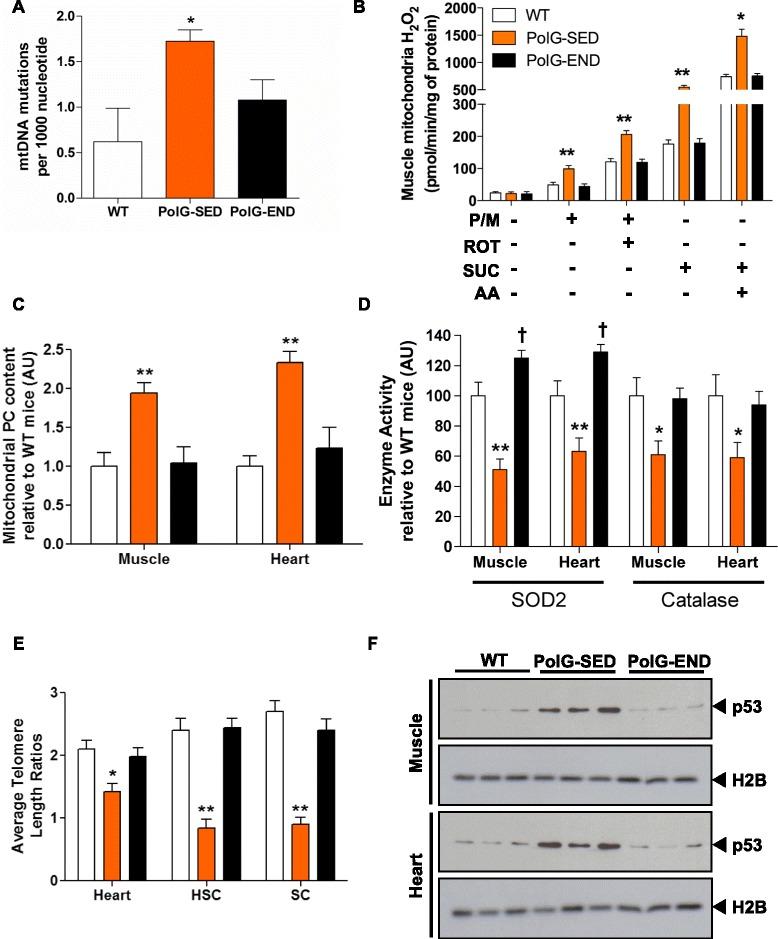
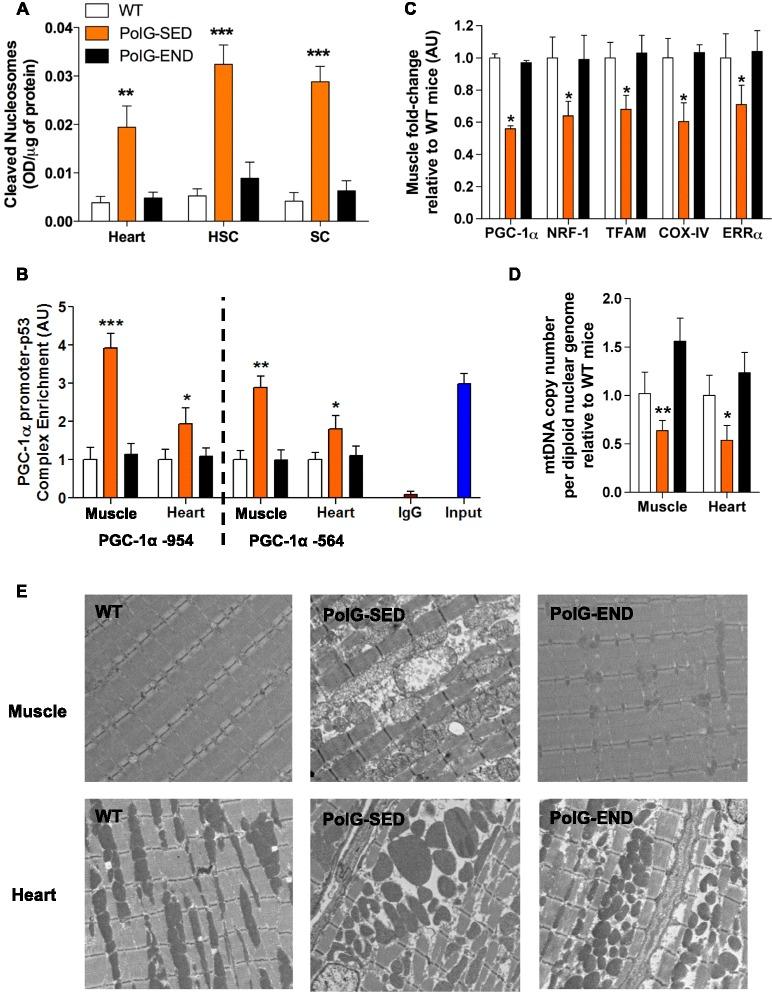
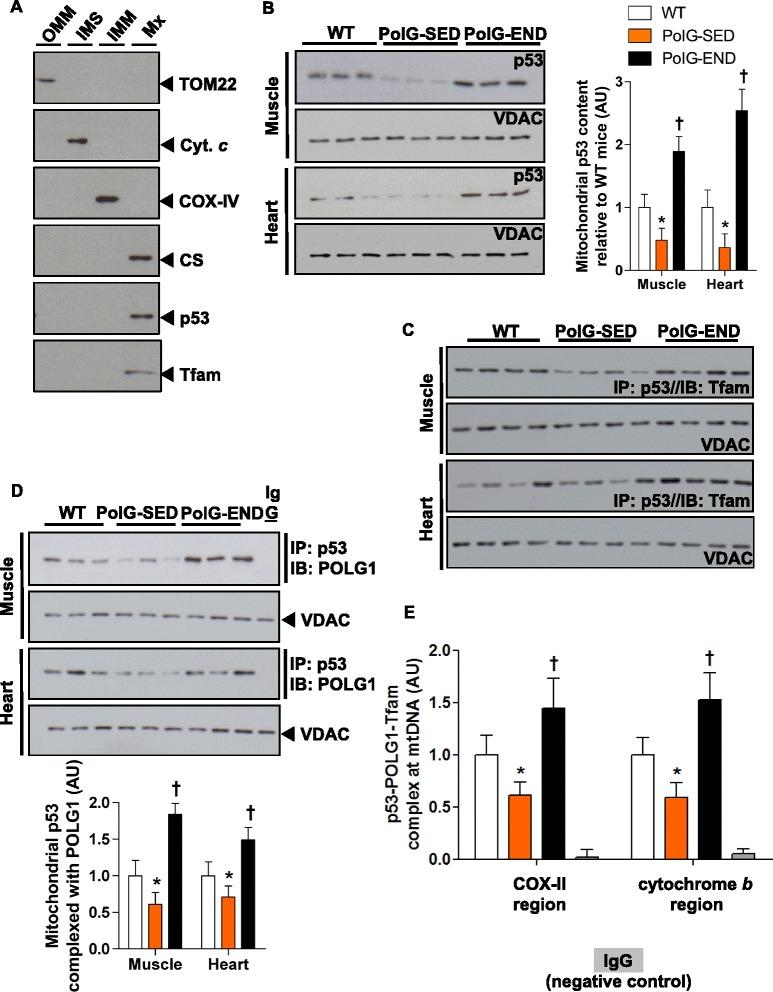
Endurance exercise reduces mtDNA mutation burden, alleviates multisystem pathology, and increases lifespan of the mutator mice, with proofreading deficient mitochondrial polymerase gamma (POLG1). We report evidence for a POLG1-independent mtDNA repair pathway mediated by exercise, a surprising notion as POLG1 is canonically considered to be the sole mtDNA repair enzyme. Here, we show that the tumor suppressor protein p53 translocates to mitochondria and facilitates mtDNA mutation repair and mitochondrial biogenesis in response to endurance exercise. Indeed, in mutator mice with muscle-specific deletion of p53, exercise failed to prevent mtDNA mutations, induce mitochondrial biogenesis, preserve mitochondrial morphology, reverse sarcopenia, or mitigate premature mortality.
CONCLUSIONS
Our data establish a new role for p53 in exercise-mediated maintenance of the mtDNA genome and present mitochondrially targeted p53 as a novel therapeutic modality for diseases of mitochondrial etiology.
背景
人类遗传疾病和转基因小鼠模型表明,线粒体DNA(mtDNA)突变和端粒功能障碍会引发衰老过程。从流行病学角度来看,运动与更长的预期寿命和更低的慢性病风险相关。虽然运动的有益效果已得到充分证实,但其引发这些现象的分子机制仍不清楚。
结果
耐力运动可减轻mtDNA突变负担,缓解多系统病理状况,并延长具有校对缺陷型线粒体聚合酶γ(POLG1)的突变小鼠的寿命。我们报告了由运动介导的不依赖POLG1的mtDNA修复途径的证据,这一观点令人惊讶,因为传统上认为POLG1是唯一的mtDNA修复酶。在这里,我们表明肿瘤抑制蛋白p53会转移到线粒体,并促进mtDNA突变修复和线粒体生物合成以应对耐力运动。事实上,在肌肉特异性缺失p53的突变小鼠中,运动无法预防mtDNA突变、诱导线粒体生物合成、维持线粒体形态、逆转肌肉减少症或减轻过早死亡。
结论
我们的数据确立了p53在运动介导的mtDNA基因组维持中的新作用,并提出线粒体靶向p53作为线粒体病因疾病的一种新型治疗方式。

 Zotero 插件