
种植体周围炎的管理:2010 - 2015年系统评价
Management of peri-implantitis: a systematic review, 2010-2015.
作者信息
Mahato Nisha, Wu Xiaohong, Wang Lu
机构信息
Department of Prosthodontics, Stomatological Hospital of Chongqing Medical University, No. 426 Songshi Bei Road, Yubei District Chongqing, 401147 People's Republic of China.
Department of Prosthodontics, Stomatological Hospital of Chongqing Medical University, No. 426 Songshi Bei Road, Yubei District Chongqing, 401147 People's Republic of China ; Chongqing Key Laboratory for Oral Diseases and Biomedical Sciences, No. 426 Songshi Bei Road, Yubei District Chongqing, 401147 People's Republic of China ; Chongqing Municipal Key Laboratory of Oral Biomedical Engineering of Higher Education, No. 426 Songshi Bei Road, Yubei District Chongqing, 401147 People's Republic of China.
出版信息
Springerplus. 2016 Feb 1;5:105. doi: 10.1186/s40064-016-1735-2. eCollection 2016.
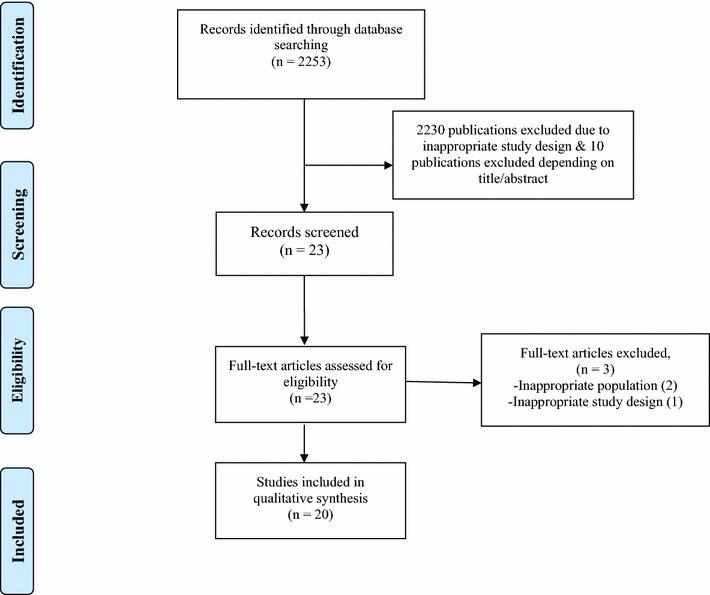
Peri-implantitis or Periimplantitis is characterized as an inflammatory reaction that affects the hard and soft tissue, which results in loss of supporting bone and pocket formation surrounding the functioning osseointegrated implant. This review aimed to evaluate the effectiveness of surgical and non-surgical treatment of peri-implantitis. The data sources used was PubMed. Searches of this database were restricted to English language publications from January 2010 to June 2015. All Randomized Controlled Trials describing the treatments of peri-implantitis of human studies with a follow up of at least 6 months were included. Eligibility and quality were assessed and two reviewers extracted the data. Data extraction comprised of type, intensity provider, and location of the intervention. A total of 20 publications were included (10 involving surgical and 10 involving non-surgical mechanical procedure). The non-surgical approach involves the mechanical surface debridement using carbon or titanium currettes, laser light, and antibiotics whereas, surgical approach involves implantoplasty, elevation of mucoperiosteal flap and removal of peri-inflammatory granulation tissue followed by surface decontamination and bone grafting. This study reveals that non-surgical therapy tends to remove only the local irritant from the peri-implantitis surface with or without some additional adjunctive therapies agents or device. Hence, non-surgical therapy is not helpful in osseous defect. Surgical therapy in combination with osseous resective or regenerative approach removes the residual sub-gingival deposits additionally reducing the peri-implantitis pocket. Although there is no specific recommendation for the treatment of peri-implantitis, surgical therapy in combination with osseous resective or regenerative approach showed the positive outcome.
种植体周围炎的特征是一种影响软硬组织的炎症反应,会导致支持骨丧失以及在功能正常的骨结合种植体周围形成牙周袋。本综述旨在评估种植体周围炎手术治疗和非手术治疗的有效性。所使用的数据来源是PubMed。对该数据库的检索仅限于2010年1月至2015年6月的英文出版物。纳入所有描述人类种植体周围炎治疗且随访至少6个月的随机对照试验。评估了研究的合格性和质量,两名评价者提取了数据。数据提取包括干预的类型、强度、实施者和部位。共纳入20篇出版物(10篇涉及手术治疗,10篇涉及非手术机械治疗)。非手术方法包括使用碳或钛刮治器、激光和抗生素进行机械性表面清创,而手术方法包括种植体成形术、黏骨膜瓣掀起和去除炎症周围肉芽组织,随后进行表面去污和骨移植。本研究表明,非手术治疗往往仅能去除种植体周围炎表面的局部刺激物,无论是否采用一些额外的辅助治疗药物或器械。因此,非手术治疗对骨缺损无效。手术治疗结合骨切除或骨再生方法可去除残留的龈下沉积物,进一步减小种植体周围炎牙周袋。尽管对于种植体周围炎的治疗尚无具体推荐,但手术治疗结合骨切除或骨再生方法显示出了积极的效果。
 Zotero 插件