Laboratory of Control and Systems Biology, Department of Electrical Engineering, National Tsing Hua University, Hsinchu 30013, Taiwan.
Int J Mol Sci. 2016 Feb 27;17(3):305. doi: 10.3390/ijms17030305.
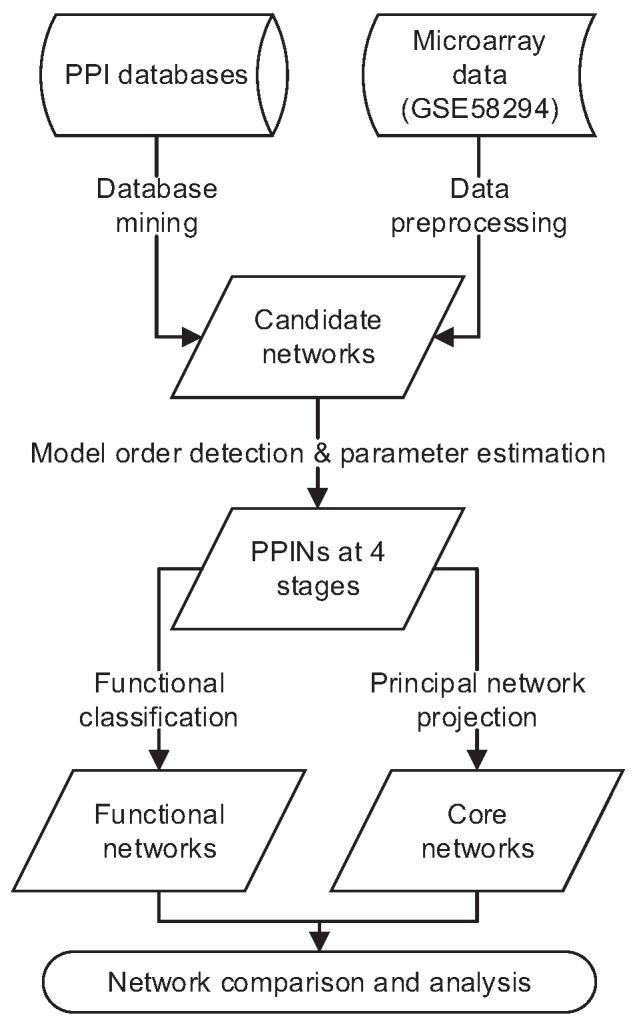
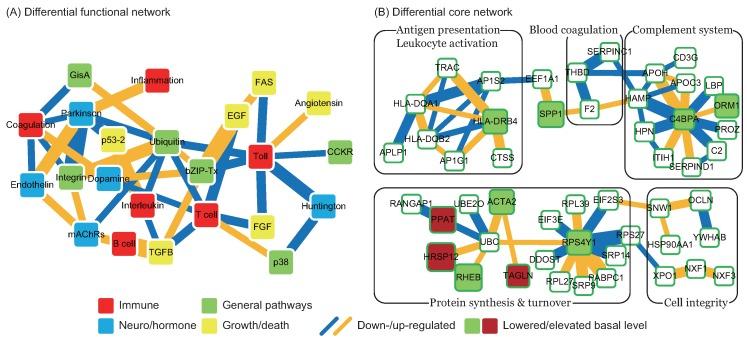
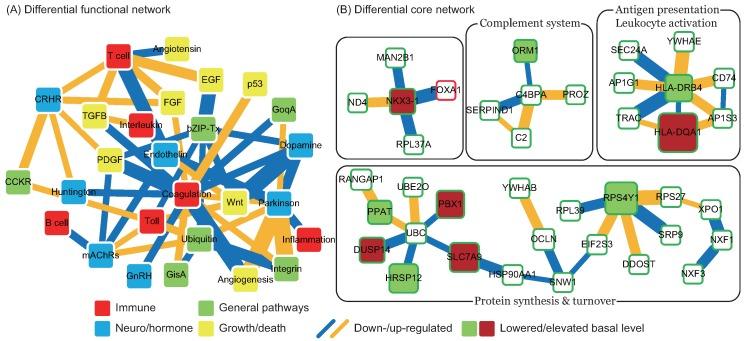
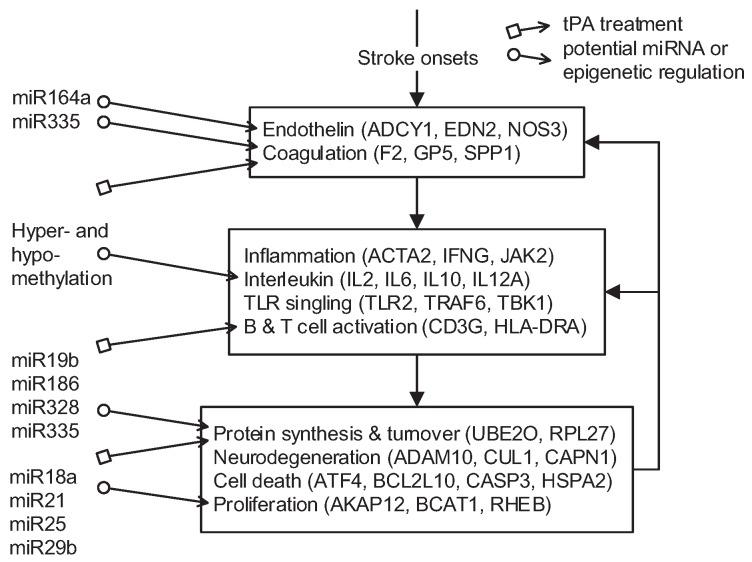
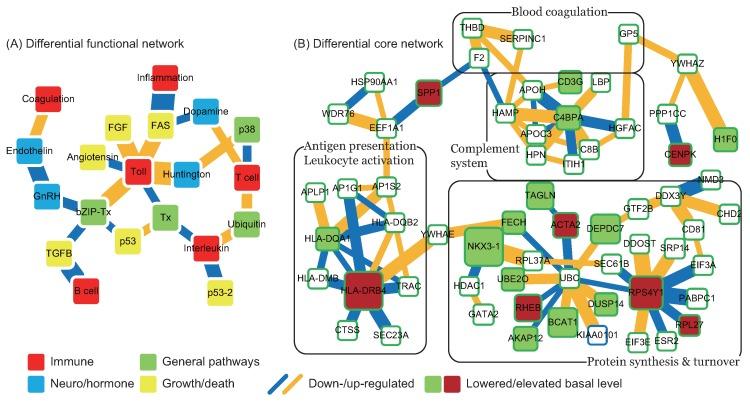
While inflammation has generally been regarded as a negative factor in stroke recovery, this viewpoint has recently been challenged by demonstrating that inflammation is a necessary and sufficient factor for regeneration in the zebrafish brain injury model. This close relationship with inflammation suggests that a re-examination of the immune system's role in strokes is necessary. We used a systems biology approach to investigate the role of immune-related functions via their interactions with other molecular functions in early cardioembolic stroke. Based on protein interaction models and on microarray data from the blood of stroke subjects and healthy controls, networks were constructed to delineate molecular interactions at four early stages (pre-stroke, 3 h, 5 h and 24 h after stroke onset) of cardioembolic stroke. A comparative analysis of functional networks identified interactions of immune-related functions with other molecular functions, including growth factors, neuro/hormone and housekeeping functions. These provide a potential pathomechanism for early stroke pathophysiology. In addition, several potential targets of miRNA and methylation regulations were derived based on basal level changes observed in the core networks and literature. The results provide a more comprehensive understanding of stroke progression mechanisms from an immune perspective and shed light on acute stroke treatments.
虽然炎症通常被认为是中风恢复的负面因素,但最近的研究表明,在斑马鱼脑损伤模型中,炎症是再生所必需且充分的因素,这一观点对这一观点提出了挑战。这种与炎症的密切关系表明,有必要重新审视免疫系统在中风中的作用。我们采用系统生物学的方法,通过与其他分子功能的相互作用,研究免疫相关功能在早期心源性中风中的作用。基于蛋白质相互作用模型和中风患者及健康对照者血液的微阵列数据,构建了网络以描绘心源性中风四个早期阶段(中风前、中风后 3 小时、5 小时和 24 小时)的分子相互作用。对功能网络的比较分析确定了免疫相关功能与其他分子功能(包括生长因子、神经/激素和管家功能)的相互作用。这些为早期中风病理生理学提供了潜在的发病机制。此外,还根据核心网络和文献中观察到的基础水平变化,得出了几个 miRNA 和甲基化调节的潜在靶点。这些结果从免疫角度更全面地理解了中风进展的机制,并为急性中风治疗提供了思路。

 Zotero 插件