
黎巴嫩的黎波里学童中隐孢子虫、贾第虫、芽囊原虫和结肠内阿米巴肠道原生动物感染的患病率及危险因素
Prevalence and Risk Factors for Intestinal Protozoan Infections with Cryptosporidium, Giardia, Blastocystis and Dientamoeba among Schoolchildren in Tripoli, Lebanon.
作者信息
Osman Marwan, El Safadi Dima, Cian Amandine, Benamrouz Sadia, Nourrisson Céline, Poirier Philippe, Pereira Bruno, Razakandrainibe Romy, Pinon Anthony, Lambert Céline, Wawrzyniak Ivan, Dabboussi Fouad, Delbac Frederic, Favennec Loïc, Hamze Monzer, Viscogliosi Eric, Certad Gabriela
机构信息
Institut Pasteur de Lille, Centre d’Infection et d’Immunitè de Lille (CIIL), UMR CNRS 8204, Inserm U1019, Université de Lille, Biologie et Diversitè des Pathogènes Eucaryotes Emergents (BDPEE), Lille, France.
Centre AZM pour la recherche en biotechnologies et ses applications, Universitè Libanaise, Laboratoire de Microbiologie Santè et Environnement (LMSE), Tripoli, Lebanon.
出版信息
PLoS Negl Trop Dis. 2016 Mar 14;10(3):e0004496. doi: 10.1371/journal.pntd.0004496. eCollection 2016 Mar.
BACKGROUND
Intestinal protozoan infections are confirmed as major causes of diarrhea, particularly in children, and represent a significant, but often neglected, threat to public health. No recent data were available in Lebanon concerning the molecular epidemiology of protozoan infections in children, a vulnerable population at high risk of infection.
METHODOLOGY AND PRINCIPAL FINDINGS
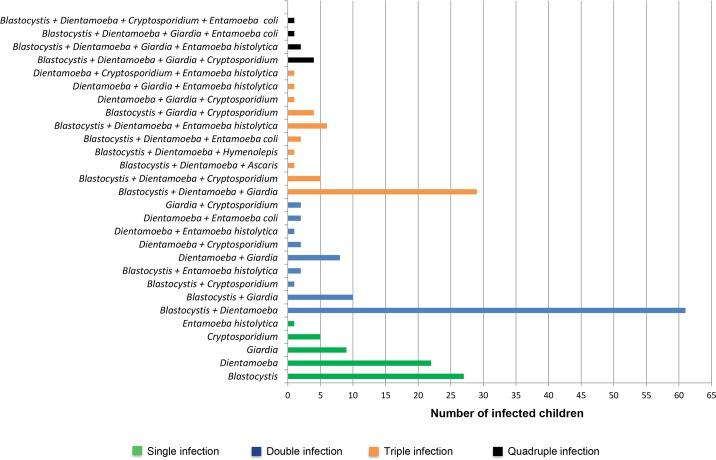
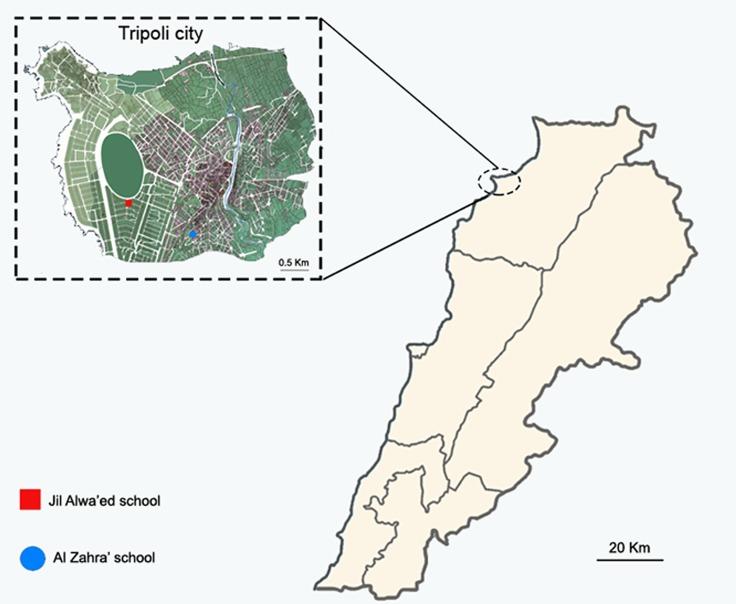
In order to improve our understanding of the epidemiology of intestinal pathogenic protozoa, a cross-sectional study was conducted in a general pediatric population including both symptomatic and asymptomatic subjects. After obtaining informed consent from the parents or legal guardians, stool samples were collected in January 2013 from 249 children in 2 schools in Tripoli, Lebanon. Information obtained from a standard questionnaire included demographic characteristics, current symptoms, socioeconomic status, source of drinking water, and personal hygiene habits. After fecal examination by both microscopy and molecular tools, the overall prevalence of parasitic infections was recorded as 85%. Blastocystis spp. presented the highest infection rate (63%), followed by Dientamoeba fragilis (60.6%), Giardia duodenalis (28.5%) and Cryptosporidium spp. (10.4%). PCR was also performed to identify species and genotypes of Cryptosporidium, subtypes of Blastocystis, and assemblages of Giardia. Statistical analysis using a logistic regression model showed that contact with family members presenting gastrointestinal disorders was the primary risk factor for transmission of these protozoa.
CONCLUSIONS
This is the first study performed in Lebanon reporting the prevalence and the clinical and molecular epidemiological data associated with intestinal protozoan infections among schoolchildren in Tripoli. A high prevalence of protozoan parasites was found, with Blastocystis spp. being the most predominant protozoans. Although only 50% of children reported digestive symptoms, asymptomatic infection was observed, and these children may act as unidentified carriers. This survey provides necessary information for designing prevention and control strategies to reduce the burden of these protozoan infections, especially in children.
背景
肠道原生动物感染已被确认为腹泻的主要病因,尤其是在儿童中,并且对公共卫生构成重大但往往被忽视的威胁。黎巴嫩近期没有关于儿童原生动物感染分子流行病学的数据,儿童是感染风险很高的弱势群体。
方法和主要发现
为了更好地了解肠道致病性原生动物的流行病学,在包括有症状和无症状受试者的普通儿科人群中进行了一项横断面研究。在获得父母或法定监护人的知情同意后,2013年1月从黎巴嫩的黎波里2所学校的249名儿童中收集了粪便样本。从标准问卷中获得的信息包括人口统计学特征、当前症状、社会经济状况、饮用水来源和个人卫生习惯。经过显微镜检查和分子检测后,记录到寄生虫感染的总体患病率为85%。芽囊原虫的感染率最高(63%),其次是脆弱双核阿米巴(60.6%)、十二指肠贾第虫(28.5%)和隐孢子虫(10.4%)。还进行了聚合酶链反应以鉴定隐孢子虫的种类和基因型、芽囊原虫的亚型以及贾第虫的组合。使用逻辑回归模型进行的统计分析表明,与患有胃肠道疾病的家庭成员接触是这些原生动物传播的主要危险因素。
结论
这是在黎巴嫩进行的第一项研究,报告了的黎波里学童肠道原生动物感染的患病率以及相关的临床和分子流行病学数据。发现原生动物寄生虫的患病率很高,芽囊原虫是最主要的原生动物。尽管只有50%的儿童报告有消化症状,但观察到了无症状感染,这些儿童可能是未被识别的携带者。这项调查为设计预防和控制策略以减轻这些原生动物感染的负担提供了必要信息,尤其是在儿童中。
 Zotero 插件