
通过转基因烟草植株中的缺失分析对玉米II型H⁺ - 焦磷酸酶基因盐度和渗透胁迫诱导型启动子进行分离与功能验证
Isolation and Functional Validation of Salinity and Osmotic Stress Inducible Promoter from the Maize Type-II H+-Pyrophosphatase Gene by Deletion Analysis in Transgenic Tobacco Plants.
作者信息
Hou Jiajia, Jiang Pingping, Qi Shoumei, Zhang Ke, He Qiuxia, Xu Changzheng, Ding Zhaohua, Zhang Kewei, Li Kunpeng
机构信息
The Key Laboratory of Plant Cell Engineering and Germplasm Innovation, Ministry of Education, School of Life Science, Shandong University, Shanda South Road 27, Jinan, Shandong, 250100, China.
Biology Institute of Shandong Academy of Sciences, Jinan, Shandong, China.
出版信息
PLoS One. 2016 Apr 21;11(4):e0154041. doi: 10.1371/journal.pone.0154041. eCollection 2016.
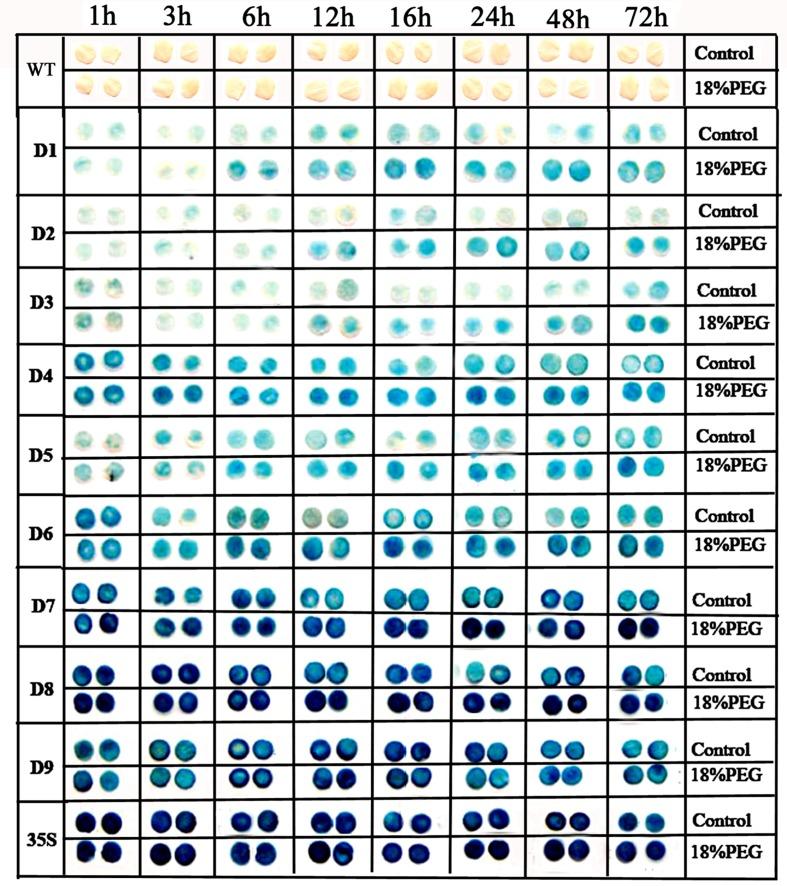
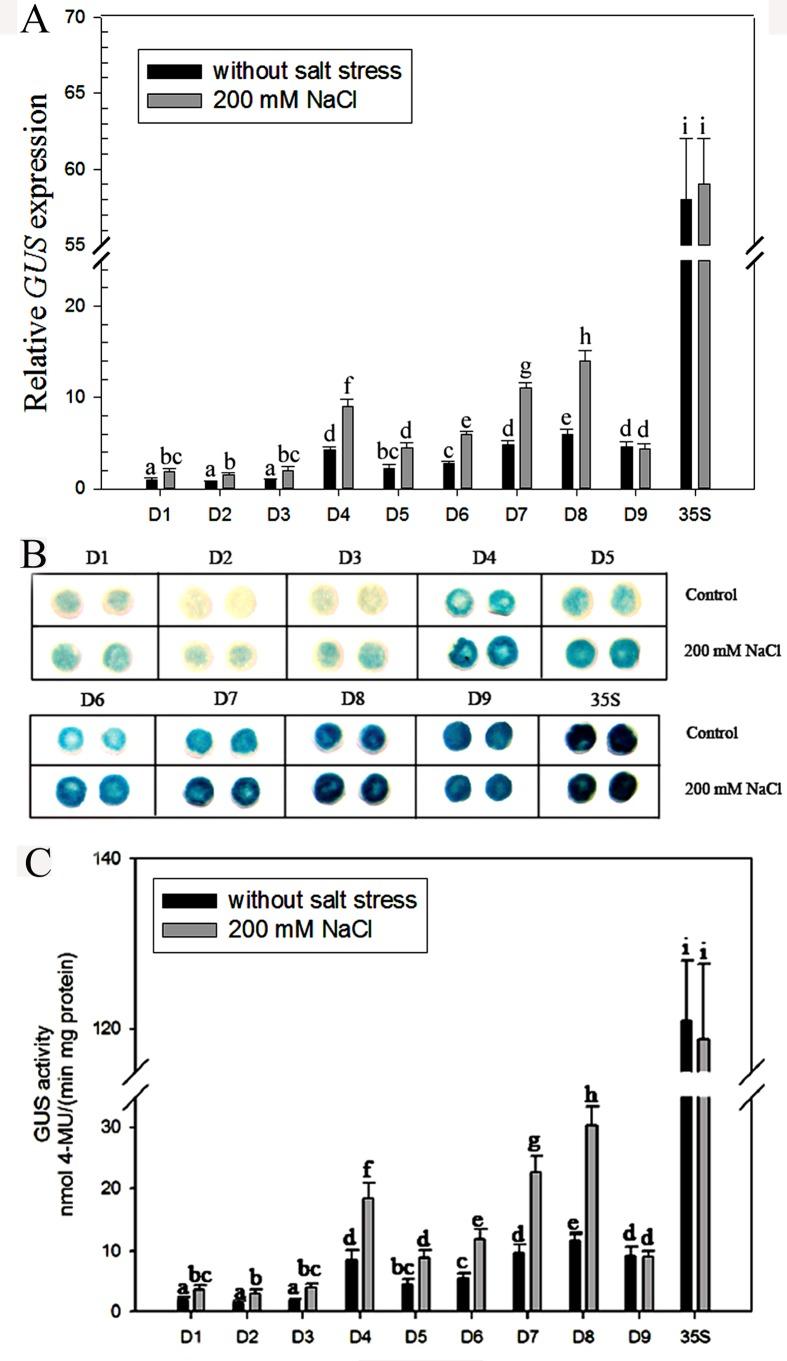
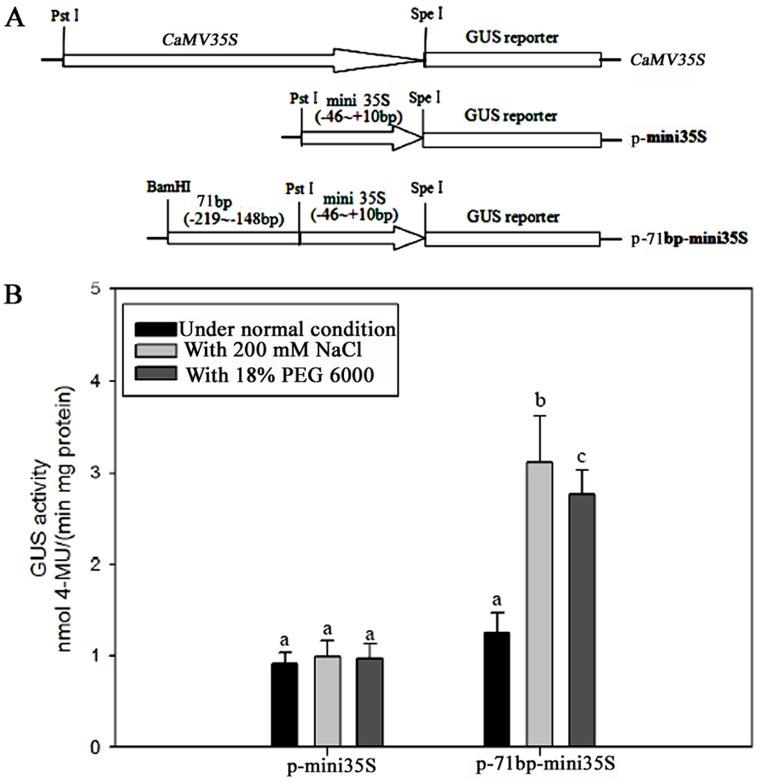
Salinity and drought severely affect both plant growth and productivity, making the isolation and characterization of salinity- or drought-inducible promoters suitable for genetic improvement of crop resistance highly desirable. In this study, a 1468-bp sequence upstream of the translation initiation codon ATG of the promoter for ZmGAPP (maize Type-II H+-pyrophosphatase gene) was cloned. Nine 5´ deletion fragments (D1-D9) of different lengths of the ZmGAPP promoter were fused with the GUS reporter and translocated into tobacco. The deletion analysis showed that fragments D1-D8 responded well to NaCl and PEG stresses, whereas fragment D9 and CaMV 35S did not. The D8 segment (219 bp; -219 to -1 bp) exhibited the highest promoter activity of all tissues, with the exception of petals among the D1-D9 transgenic tobacco, which corresponds to about 10% and 25% of CaMV 35S under normal and NaCl or PEG stress conditions, respectively. As such, the D8 segment may confer strong gene expression in a salinity and osmotic stress inducible manner. A 71-bp segment (-219 to -148 bp) was considered as the key region regulating ZmGAPP response to NaCl or PEG stress, as transient transformation assays demonstrated that the 71-bp sequence was sufficient for the salinity or osmotic stress response. These results enhance our understanding of the molecular mechanisms regulating ZmGAPP expression, and that the D8 promoter would be an ideal candidate for moderating expression of drought and salinity response genes in transgenic plants.
盐度和干旱严重影响植物生长和生产力,因此分离和鉴定适合用于作物抗性基因改良的盐度或干旱诱导型启动子非常必要。在本研究中,克隆了ZmGAPP(玉米II型H⁺-焦磷酸酶基因)启动子翻译起始密码子ATG上游1468 bp的序列。将ZmGAPP启动子不同长度的9个5´缺失片段(D1-D9)与GUS报告基因融合,并导入烟草。缺失分析表明,片段D1-D8对NaCl和PEG胁迫反应良好,而片段D9和CaMV 35S则无反应。在D1-D9转基因烟草中,除花瓣外,D8片段(219 bp;-219至-1 bp)在所有组织中表现出最高的启动子活性,在正常条件下以及NaCl或PEG胁迫条件下,其活性分别约为CaMV 35S的10%和25%。因此,D8片段可能以盐度和渗透胁迫诱导的方式赋予强基因表达。一个71 bp的片段(-219至-148 bp)被认为是调节ZmGAPP对NaCl或PEG胁迫反应的关键区域,因为瞬时转化试验表明该71 bp序列足以介导盐度或渗透胁迫反应。这些结果加深了我们对调节ZmGAPP表达分子机制的理解,并且D8启动子将是调控转基因植物中干旱和盐度反应基因表达的理想候选者。



 Zotero 插件