
人蜕膜基质细胞作为着床微环境的组成部分及母体免疫的调节者
Human Decidual Stromal Cells as a Component of the Implantation Niche and a Modulator of Maternal Immunity.
作者信息
Vinketova Kameliya, Mourdjeva Milena, Oreshkova Tsvetelina
机构信息
Department of Molecular Immunology, Institute of Biology and Immunology of Reproduction, Bulgarian Academy of Sciences, 73 Tsarigradsko Shose, 1113 Sofia, Bulgaria.
出版信息
J Pregnancy. 2016;2016:8689436. doi: 10.1155/2016/8689436. Epub 2016 Apr 28.
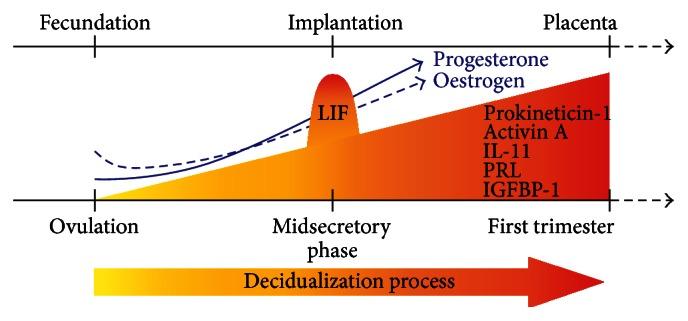
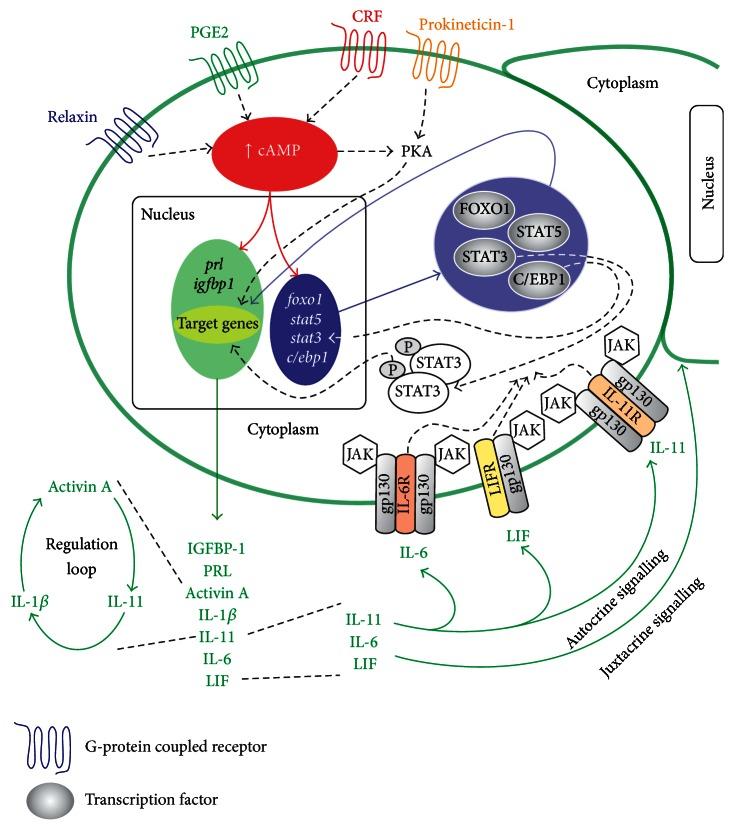
The human decidua is a specialized tissue characterized by embryo-receptive properties. It is formed during the secretory phase of menstrual cycle from uterine mucosa termed endometrium. The decidua is composed of glands, immune cells, blood and lymph vessels, and decidual stromal cells (DSCs). In the process of decidualization, which is controlled by oestrogen and progesterone, DSCs acquire specific functions related to recognition, selection, and acceptance of the allogeneic embryo, as well as to development of maternal immune tolerance. In this review we discuss the relationship between the decidualization of DSCs and pathological obstetrical and gynaecological conditions. Moreover, the critical influence of DSCs on local immune cells populations as well as their relationship to the onset and maintenance of immune tolerance is described.
人蜕膜是一种具有胚胎接受特性的特殊组织。它在月经周期的分泌期由称为子宫内膜的子宫黏膜形成。蜕膜由腺体、免疫细胞、血液和淋巴管以及蜕膜基质细胞(DSCs)组成。在由雌激素和孕酮控制的蜕膜化过程中,DSCs获得与识别、选择和接受同种异体胚胎以及母体免疫耐受发展相关的特定功能。在本综述中,我们讨论了DSCs的蜕膜化与妇产科病理状况之间的关系。此外,还描述了DSCs对局部免疫细胞群体的关键影响及其与免疫耐受的发生和维持的关系。


 Zotero 插件