
生长抑制因子3的植物同源结构域识别组蛋白H3K4me3的机制
Mechanism of Histone H3K4me3 Recognition by the Plant Homeodomain of Inhibitor of Growth 3.
作者信息
Kim Sophia, Natesan Senthil, Cornilescu Gabriel, Carlson Samuel, Tonelli Marco, McClurg Urszula L, Binda Olivier, Robson Craig N, Markley John L, Balaz Stefan, Glass Karen C
机构信息
From the Department of Pharmaceutical Sciences, Albany College of Pharmacy and Health Sciences, Colchester, Vermont 05446.
the National Magnetic Resonance Facility at Madison and Department of Biochemistry, University of Wisconsin-Madison, Madison, Wisconsin 53706, and.
出版信息
J Biol Chem. 2016 Aug 26;291(35):18326-41. doi: 10.1074/jbc.M115.690651. Epub 2016 Jun 8.
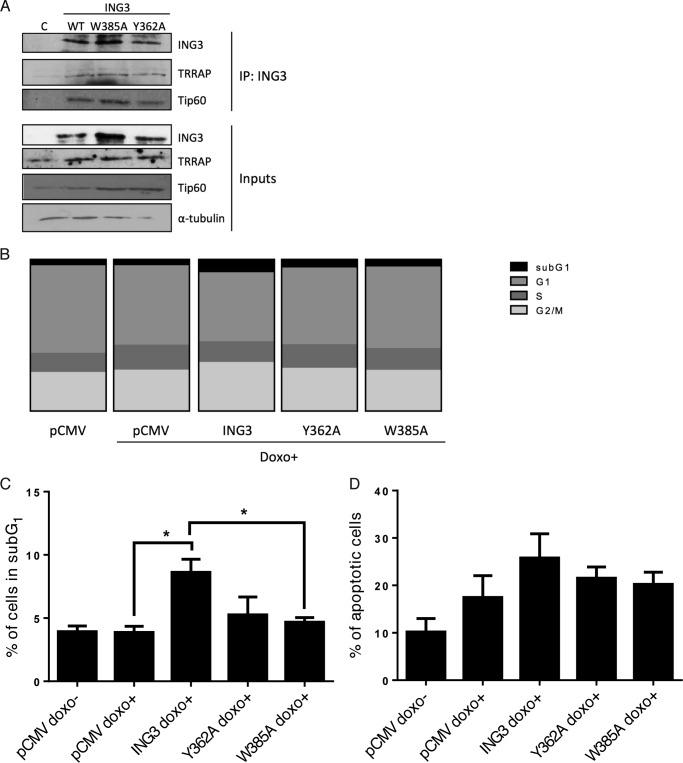
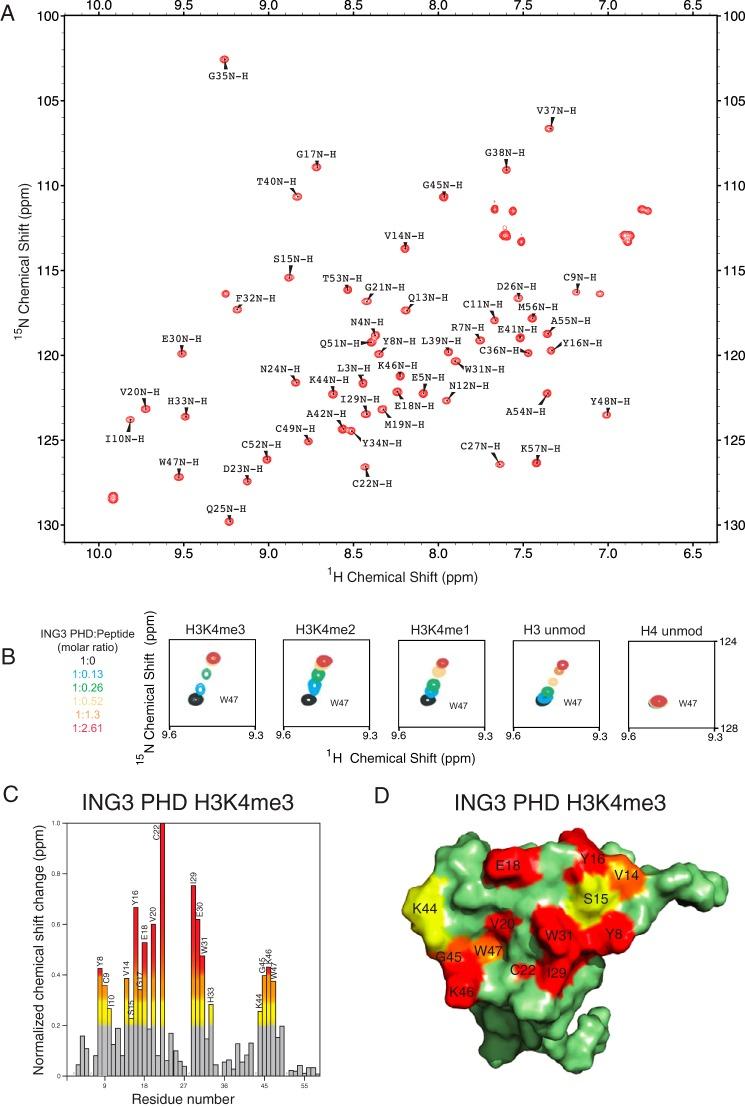
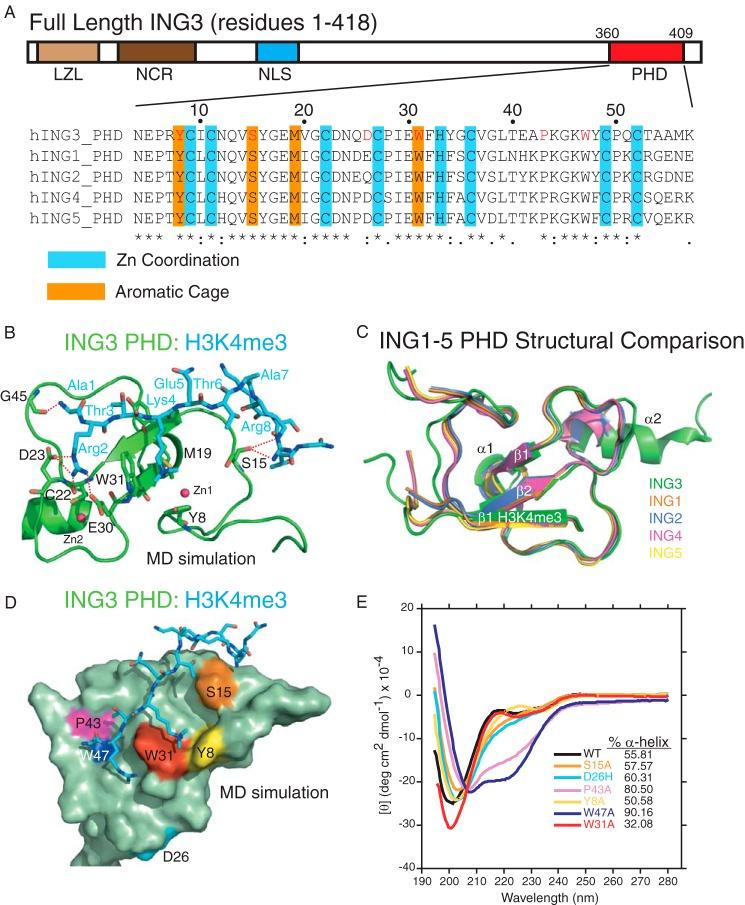
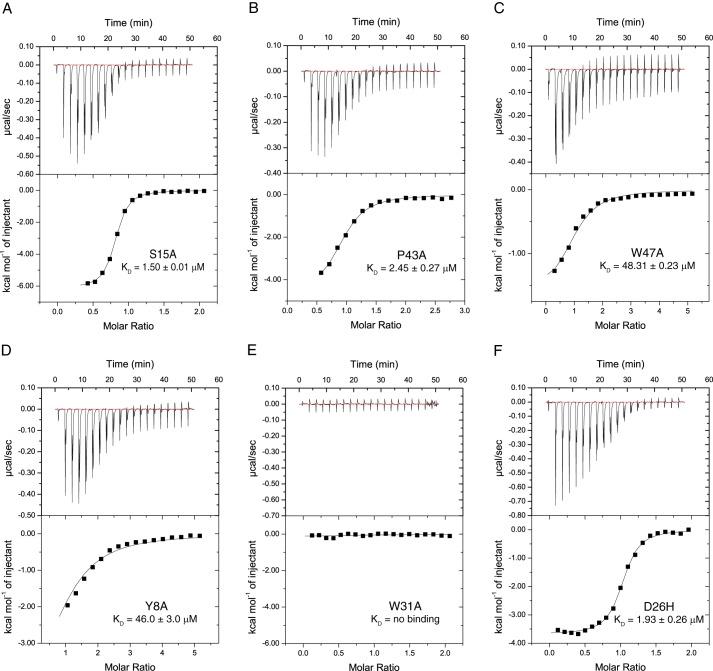
Aberrant access to genetic information disrupts cellular homeostasis and can lead to cancer development. One molecular mechanism that regulates access to genetic information includes recognition of histone modifications, which is carried out by protein modules that interact with chromatin and serve as landing pads for enzymatic activities that regulate gene expression. The ING3 tumor suppressor protein contains a plant homeodomain (PHD) that reads the epigenetic code via recognition of histone H3 tri-methylated at lysine 4 (H3K4me3), and this domain is lost or mutated in various human cancers. However, the molecular mechanisms targeting ING3 to histones and the role of this interaction in the cell remain elusive. Thus, we employed biochemical and structural biology approaches to investigate the interaction of the ING3 PHD finger (ING3PHD) with the active transcription mark H3K4me3. Our results demonstrate that association of the ING3PHD with H3K4me3 is in the sub-micromolar range (KD ranging between 0.63 and 0.93 μm) and is about 200-fold stronger than with the unmodified histone H3. NMR and computational studies revealed an aromatic cage composed of Tyr-362, Ser-369, and Trp-385 that accommodate the tri-methylated side chain of H3K4. Mutational analysis confirmed the critical importance of Tyr-362 and Trp-385 in mediating the ING3PHD-H3K4me3 interaction. Finally, the biological relevance of ING3PHD-H3K4me3 binding was demonstrated by the failure of ING3PHD mutant proteins to enhance ING3-mediated DNA damage-dependent cell death. Together, our results reveal the molecular mechanism of H3K4me3 selection by the ING3PHD and suggest that this interaction is important for mediating ING3 tumor suppressive activities.
异常获取遗传信息会破坏细胞内稳态,并可能导致癌症发生。一种调节遗传信息获取的分子机制包括对组蛋白修饰的识别,这是由与染色质相互作用的蛋白质模块完成的,这些模块作为调节基因表达的酶活性的着陆平台。ING3肿瘤抑制蛋白包含一个植物同源结构域(PHD),它通过识别赖氨酸4处三甲基化的组蛋白H3(H3K4me3)来读取表观遗传密码,并且该结构域在多种人类癌症中缺失或发生突变。然而,将ING3靶向组蛋白的分子机制以及这种相互作用在细胞中的作用仍然不清楚。因此,我们采用生物化学和结构生物学方法来研究ING3 PHD指结构域(ING3PHD)与活性转录标记H3K4me3之间的相互作用。我们的结果表明,ING3PHD与H3K4me3的结合亲和力处于亚微摩尔范围(KD在0.63至0.93μm之间),比与未修饰的组蛋白H3的结合力强约200倍。核磁共振和计算研究揭示了一个由Tyr-362、Ser-369和Trp-385组成的芳香笼,它容纳H3K4的三甲基化侧链。突变分析证实了Tyr-362和Trp-385在介导ING3PHD-H3K4me3相互作用中的关键重要性。最后,ING3PHD突变蛋白无法增强ING3介导的DNA损伤依赖性细胞死亡,证明了ING3PHD-H3K4me3结合的生物学相关性。总之,我们的结果揭示了ING3PHD选择H3K4me3的分子机制,并表明这种相互作用对于介导ING3的肿瘤抑制活性很重要。

 Zotero 插件