
从长期保存的马样本中提取循环小RNA的优化方法。
Optimized methods for extracting circulating small RNAs from long-term stored equine samples.
作者信息
Unger Lucia, Fouché Nathalie, Leeb Tosso, Gerber Vincent, Pacholewska Alicja
机构信息
Department of Clinical Veterinary Medicine, Swiss Institute of Equine Medicine, Vetsuisse Faculty, University of Bern and Agroscope, Länggassstrasse 124, 3012, Bern, Switzerland.
Department of Clinical Research and Veterinary Public Health, Institute of Genetics, Vetsuisse Faculty, University of Bern, Bremgartenstrasse 109A, 3012, Bern, Switzerland.
出版信息
Acta Vet Scand. 2016 Jun 29;58(1):44. doi: 10.1186/s13028-016-0224-5.
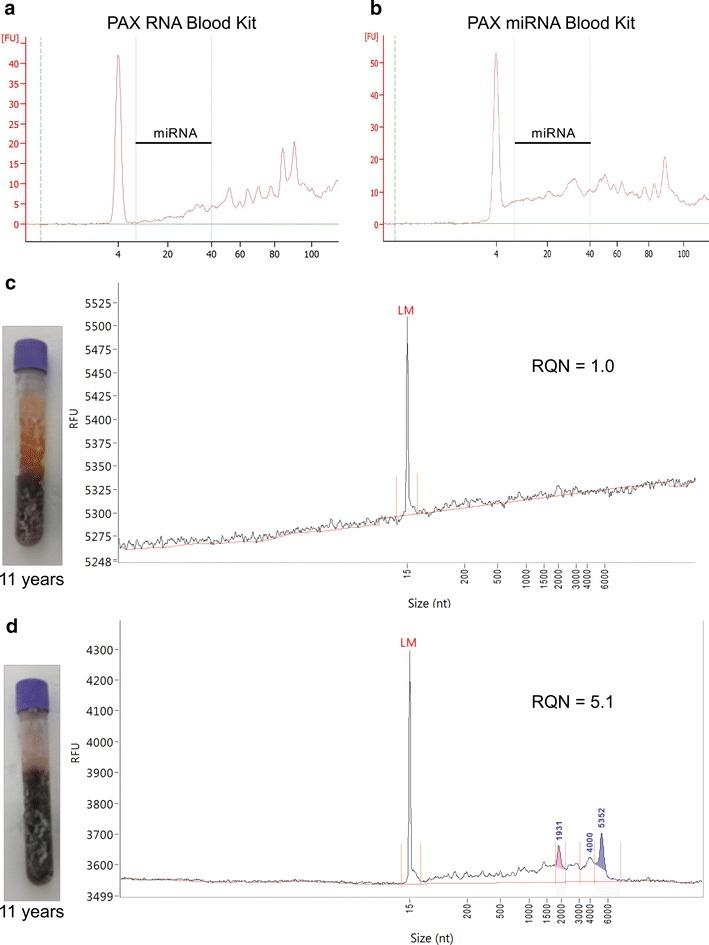
Circulating miRNAs in body fluids, particularly serum, are promising candidates for future routine biomarker profiling in various pathologic conditions in human and veterinary medicine. However, reliable standardized methods for miRNA extraction from equine serum and fresh or archived whole blood are sorely lacking. We systematically compared various miRNA extraction methods from serum and whole blood after short and long-term storage without addition of RNA stabilizing additives prior to freezing. Time of storage at room temperature prior to freezing did not affect miRNA quality in serum. Furthermore, we showed that miRNA of NGS-sufficient quality can be recovered from blood samples after >10 years of storage at -80 °C. This allows retrospective analyses of miRNAs from archived samples.
体液中的循环微小RNA(miRNA),尤其是血清中的miRNA,有望成为未来人类和兽医学各种病理状况下常规生物标志物分析的候选对象。然而,目前严重缺乏从马血清以及新鲜或存档全血中提取miRNA的可靠标准化方法。我们系统地比较了在冷冻前不添加RNA稳定添加剂的情况下,短期和长期储存后从血清和全血中提取miRNA的各种方法。冷冻前在室温下的储存时间不影响血清中miRNA的质量。此外,我们还表明,在-80°C下储存超过10年后,仍可从血样中回收质量足以用于下一代测序(NGS)的miRNA。这使得能够对存档样本中的miRNA进行回顾性分析。

 Zotero 插件