
患有肉样瘤消退和进展的马匹全血中miRNA差异表达的差异。
Differences in miRNA differential expression in whole blood between horses with sarcoid regression and progression.
作者信息
Unger Lucia, Jagannathan Vidhya, Pacholewska Alicja, Leeb Tosso, Gerber Vinzenz
机构信息
Swiss Institute of Equine Medicine, Department of Clinical Veterinary Medicine, Vetsuisse Faculty, University of Bern, Bern, Switzerland.
Institute of Genetics, Vetsuisse Faculty, University of Bern, Bern, Switzerland.
出版信息
J Vet Intern Med. 2019 Jan;33(1):241-250. doi: 10.1111/jvim.15375. Epub 2018 Dec 2.
BACKGROUND
Currently no methods are available to predict the clinical outcome of individual horses with equine sarcoid (ES) disease.
OBJECTIVE
To investigate if whole blood microRNA (miRNA) profiles can predict the long-term development of ES tumors.
ANIMALS
Five horses with regression and 5 with progression of ES lesions monitored over 5-7 years and 5 control horses free of ES for at least 5 years.
METHODS
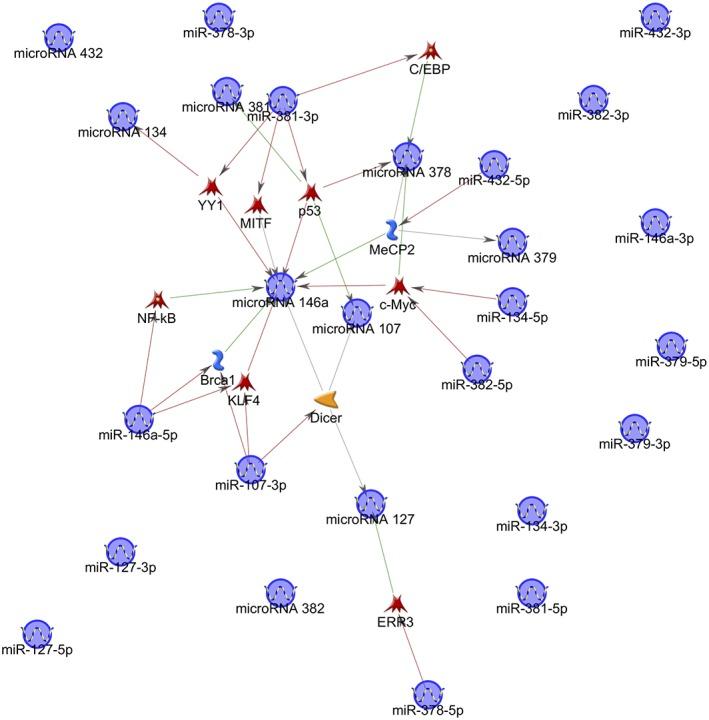
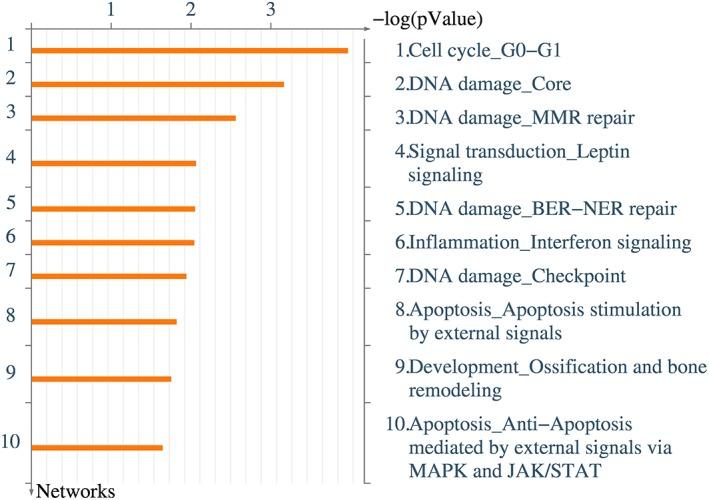
For this cohort study, RNA extracted from whole blood samples from the regression, progression, and control groups was used for high throughput sequencing. Known and novel miRNAs were identified using miRDeep2 and differential expression analysis was carried out by the DESeq2 algorithm. Target gene and pathway prediction as well as enrichment and network analyses were conducted using TarBase, mirPath, and metaCore from GeneGo.
RESULTS
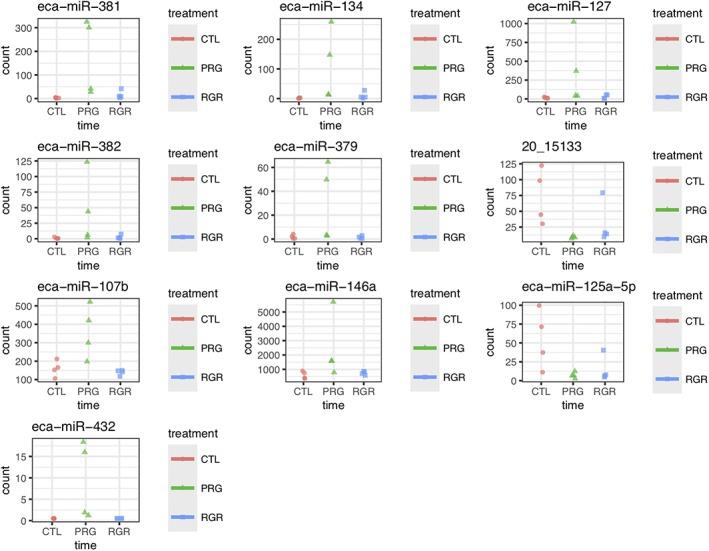
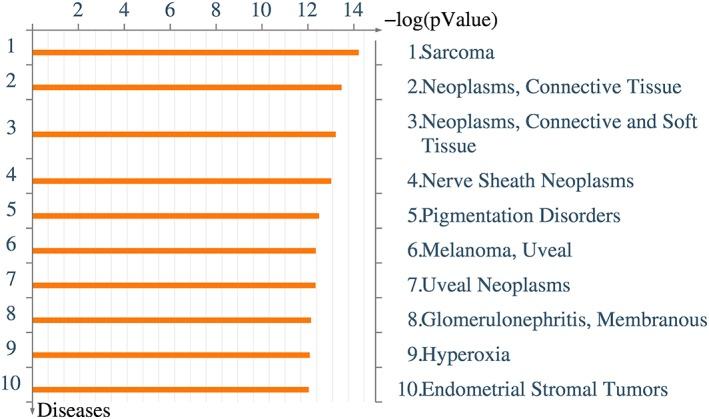
Fourteen miRNAs were differentially expressed between regression and progression groups after accounting for the control condition: 4 miRNAs (28.6%) were upregulated and 10 miRNAs (71.4%) were downregulated with >2-fold change. Seven of the 10 downregulated miRNAs are encoded in an miRNA cluster on equine chromosome 24, homologous to the well-known 14q32 cluster in humans. Their target genes show enrichment for pathways involved in viral carcinogenesis.
CONCLUSIONS AND CLINICAL IMPORTANCE
Whole blood miRNA expression profiles are associated with long-term ES growth in horses and warrant further validation as prognostic biomarkers in a larger study cohort. Deregulation of miRNAs on equine chromosome 24 might represent a trigger for ES development.
背景
目前尚无方法可预测患有马肉瘤(ES)疾病的个体马匹的临床结局。
目的
研究全血微小RNA(miRNA)谱是否可预测ES肿瘤的长期发展。
动物
5匹ES病变呈消退趋势的马、5匹ES病变呈进展趋势的马,监测5 - 7年,以及5匹至少5年无ES的对照马。
方法
在这项队列研究中,从消退组、进展组和对照组的全血样本中提取的RNA用于高通量测序。使用miRDeep2鉴定已知和新的miRNA,并通过DESeq2算法进行差异表达分析。使用来自GeneGo的TarBase、mirPath和metaCore进行靶基因和通路预测以及富集和网络分析。
结果
在考虑对照条件后,消退组和进展组之间有14种miRNA差异表达:4种miRNA(28.6%)上调,10种miRNA(71.4%)下调,变化倍数>两倍。10种下调的miRNA中有7种在马24号染色体上的一个miRNA簇中编码,与人类著名的14q32簇同源。它们的靶基因在病毒致癌相关通路中显示富集。
结论及临床意义
全血miRNA表达谱与马ES的长期生长相关,在更大的研究队列中作为预后生物标志物值得进一步验证。马24号染色体上miRNA的失调可能是ES发展的一个触发因素。


 Zotero 插件