
超越亲代:祖父和曾祖父对地位获得的影响。
Beyond the Parental Generation: The Influence of Grandfathers and Great-grandfathers on Status Attainment.
作者信息
Knigge Antonie
机构信息
Department of Sociology/ICS, Utrecht University, Padualaan 14, 3584 CH, Utrecht, The Netherlands.
出版信息
Demography. 2016 Aug;53(4):1219-44. doi: 10.1007/s13524-016-0486-6.
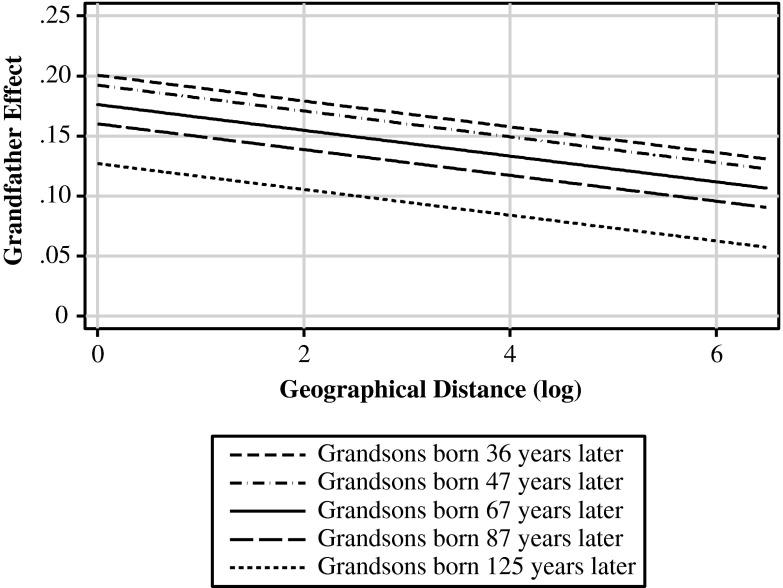
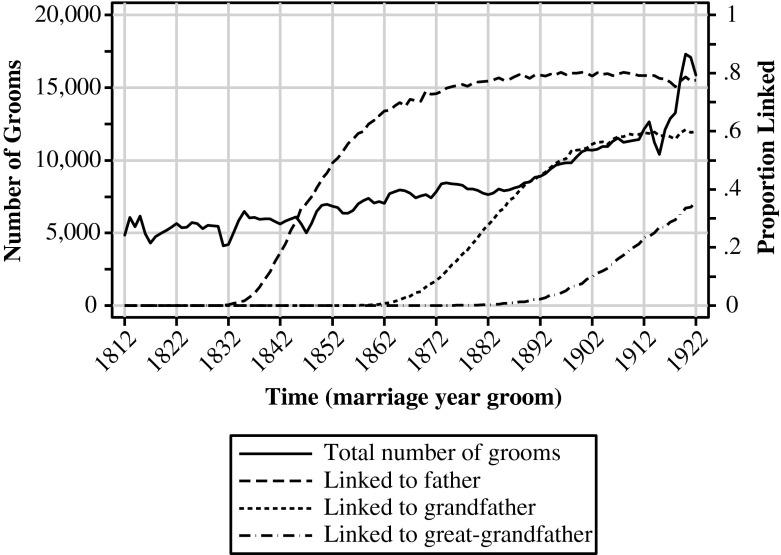
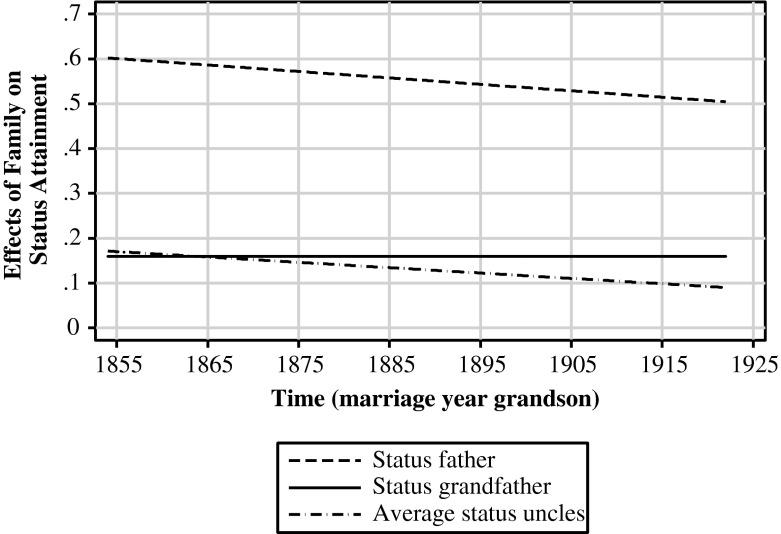
Studies on intergenerational social mobility usually examine the extent to which social positions of one generation determine the social positions of the next. This study investigates whether the persistence of inequality can be expected to stretch over more than two generations. Using a multigenerational version of GENLIAS, a large-scale database containing information from digitized Dutch marriage certificates during 1812-1922, this study describes and explains the influence of grandfathers and great-grandfathers on the occupational status attainment of 119,662 men in the Netherlands during industrialization. Multilevel regression models show that both grandfather's and great-grandfather's status influence the status attainment of men, after fathers and uncles are taken into account. Whereas the influence of the father and uncles decreases over time, that of the grandfather and great-grandfather remains stable. The results further suggest that grandfathers influence their grandsons through contact but also without being in contact with them. Although the gain in terms of explained variance from using a multigenerational model is moderate, leaving out the influence of the extended family considerably misrepresents the influence of the family on status attainment.
关于代际社会流动的研究通常考察一代人的社会地位在多大程度上决定下一代人的社会地位。本研究调查了不平等的持续性是否有望延续到两代以上。本研究使用了GENLIAS的多代版本,这是一个大规模数据库,包含1812年至1922年期间荷兰数字化婚姻证书的信息,描述并解释了工业化时期荷兰119,662名男性的祖父和曾祖父对其职业地位获得的影响。多层回归模型显示,在考虑了父亲和叔叔的因素后,祖父和曾祖父的地位都会影响男性的地位获得。虽然父亲和叔叔的影响会随着时间推移而减弱,但祖父和曾祖父的影响保持稳定。结果还表明,祖父不仅通过接触影响孙子,而且在不与他们接触的情况下也会产生影响。虽然使用多代模型在解释方差方面的增益适中,但忽略大家庭的影响会极大地误判家庭对地位获得的影响。
 Zotero 插件