
脊髓毒蕈碱能和5-羟色胺能受体在奥沙利铂诱导的神经性疼痛大鼠中电针抗痛觉过敏效应中的作用
Involvement of spinal muscarinic and serotonergic receptors in the anti-allodynic effect of electroacupuncture in rats with oxaliplatin-induced neuropathic pain.
作者信息
Lee Ji Hwan, Go Donghyun, Kim Woojin, Lee Giseog, Bae Hyojeong, Quan Fu Shi, Kim Sun Kwang
机构信息
Department of Science in Korean Medicine, Graduate School, Kyung Hee University, Seoul 02447, Korea.
Department of East-West Medicine, Graduate School, Kyung Hee University, Seoul 02447, Korea.
出版信息
Korean J Physiol Pharmacol. 2016 Jul;20(4):407-14. doi: 10.4196/kjpp.2016.20.4.407. Epub 2016 Jun 23.
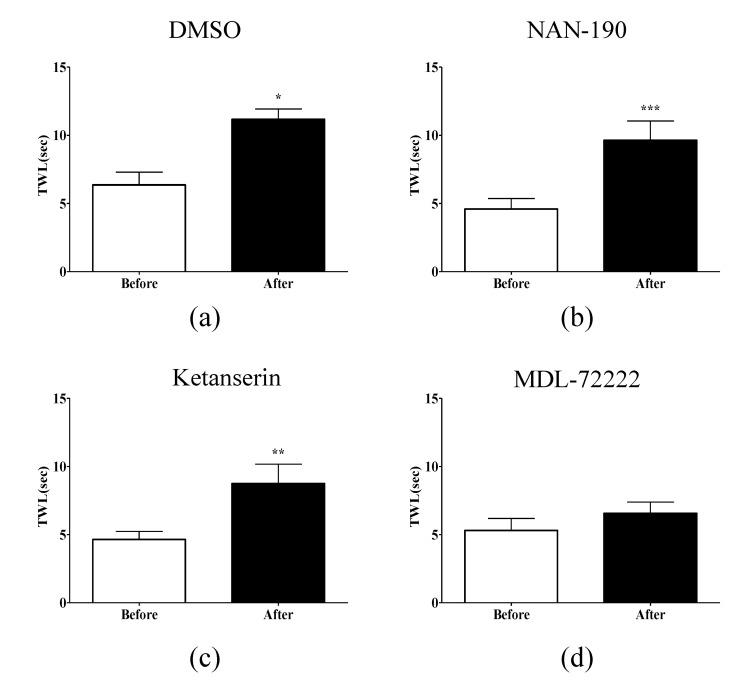
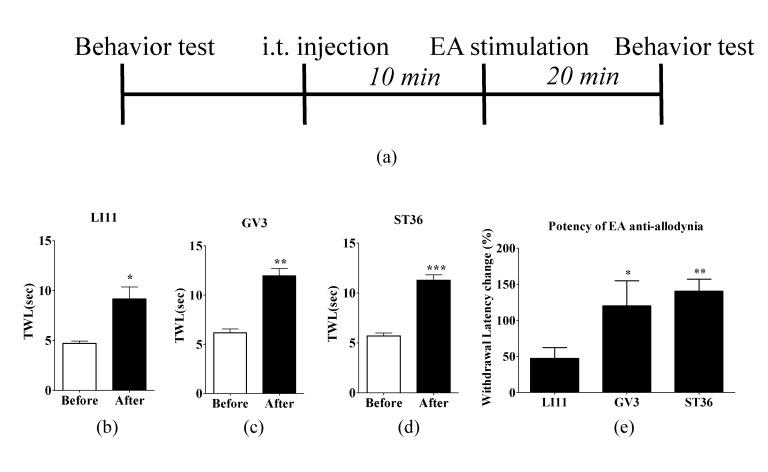
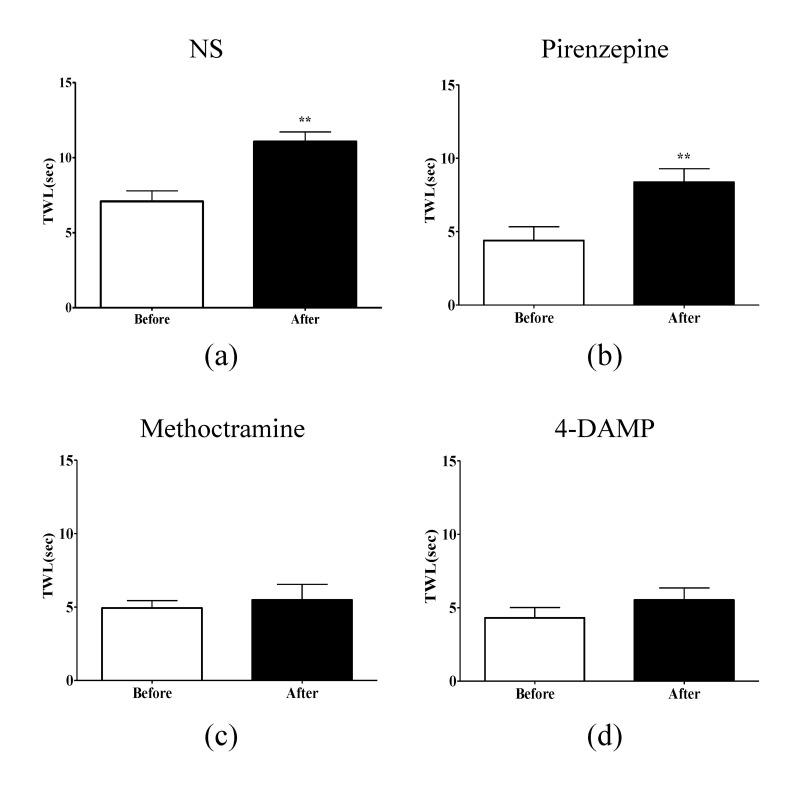
This study was performed to investigate whether the spinal cholinergic and serotonergic analgesic systems mediate the relieving effect of electroacupuncture (EA) on oxaliplatin-induced neuropathic cold allodynia in rats. The cold allodynia induced by an oxaliplatin injection (6 mg/kg, i.p.) was evaluated by immersing the rat's tail into cold water (4℃) and measuring the withdrawal latency. EA stimulation (2 Hz, 0.3-ms pulse duration, 0.2~0.3 mA) at the acupoint ST36, GV3, or LI11 all showed a significant anti-allodynic effect, which was stronger at ST36. The analgesic effect of EA at ST36 was blocked by intraperitoneal injection of muscarinic acetylcholine receptor antagonist (atropine, 1 mg/kg), but not by nicotinic (mecamylamine, 2 mg/kg) receptor antagonist. Furthermore, intrathecal administration of M2 (methoctramine, 10 µg) and M3 (4-DAMP, 10 µg) receptor antagonist, but not M1 (pirenzepine, 10 µg) receptor antagonist, blocked the effect. Also, spinal administration of 5-HT3 (MDL-72222, 12 µg) receptor antagonist, but not 5-HT1A (NAN-190, 15 µg) or 5-HT2A (ketanserin, 30 µg) receptor antagonist, prevented the anti-allodynic effect of EA. These results suggest that EA may have a signifi cant analgesic action against oxaliplatin-induced neuropathic pain, which is mediated by spinal cholinergic (M2, M3) and serotonergic (5-HT3) receptors.
本研究旨在探讨脊髓胆碱能和5-羟色胺能镇痛系统是否介导电针(EA)对大鼠奥沙利铂诱导的神经性冷觉异常性疼痛的缓解作用。通过将大鼠尾巴浸入冷水(4℃)并测量缩尾潜伏期,评估奥沙利铂注射(6 mg/kg,腹腔注射)诱导的冷觉异常性疼痛。在穴位足三里(ST36)、督脉3(GV3)或手三里(LI11)进行EA刺激(2 Hz,0.3 ms脉冲持续时间,0.2~0.3 mA)均显示出显著的抗痛觉过敏作用,其中在ST36处作用更强。腹腔注射毒蕈碱型乙酰胆碱受体拮抗剂(阿托品,1 mg/kg)可阻断EA在ST36处的镇痛作用,但烟碱型受体拮抗剂(美加明,2 mg/kg)则不能。此外,鞘内注射M2(甲溴东莨菪碱,10 μg)和M3(4-二甲基氨基吡啶,10 μg)受体拮抗剂可阻断该作用,但M1(哌仑西平,10 μg)受体拮抗剂则不能。同样,脊髓注射5-HT3(MDL-72222,12 μg)受体拮抗剂可阻止EA的抗痛觉过敏作用,但5-HT1A(NAN-190,15 μg)或5-HT2A(酮色林,30 μg)受体拮抗剂则不能。这些结果表明,EA可能对奥沙利铂诱导的神经性疼痛具有显著的镇痛作用,该作用由脊髓胆碱能(M2、M3)和5-羟色胺能(5-HT3)受体介导。

 Zotero 插件