
低视力康复对年龄相关性黄斑变性患者阅读速度和抑郁的影响:一项荟萃分析
The Effects of Low-Vision Rehabilitation on Reading Speed and Depression in Age Related Macular Degeneration: A Meta-Analysis.
作者信息
Hamade Noura, Hodge William G, Rakibuz-Zaman Muhammad, Malvankar-Mehta Monali S
机构信息
Department of Epidemiology and Biostatistics, Schulich School of Medicine and Dentistry, University of Western Ontario, London, ON, Canada.
Department of Ophthalmology, Schulich School of Medicine and Dentistry, University of Western Ontario, London, ON, Canada.
出版信息
PLoS One. 2016 Jul 14;11(7):e0159254. doi: 10.1371/journal.pone.0159254. eCollection 2016.
IMPORTANCE
Age related macular degeneration (AMD) is a progressive eye disease that, as of 2015, has affected 11 million people in the U.S. and 1.5 million in Canada causing central vision blindness. By 2050, this number is expected to double to 22 million. Eccentric vision is the target of low-vision rehabilitation aids and programs for patients with AMD, which are thought to improve functional performance by improving reading speed and depression.
OBJECTIVE
This study evaluates the effect of various low-vision rehabilitation strategies on reading speed and depression in patients 55 and older with AMD.
DATA SOURCES
Computer databases including MEDLINE (OVID), EMBASE (OVID), BIOSIS Previews (Thomson-Reuters), CINAHL (EBSCO), Health Economic Evaluations Database (HEED), ISI Web of Science (Thomson-Reuters) and the Cochrane Library (Wiley) were searched from the year 2000 to January 2015.
STUDY SELECTION
Included papers were research studies with a sample size of 20 eyes or greater focused on AMD in adults aged 55 or older with low vision (20/60 or lower).
DATA EXTRACTION AND SYNTHESIS
Two independent reviewers screened and extracted relevant data from the included articles. Standardized mean difference (SMD) was chosen as an effect size to perform meta-analysis using STATA. Fixed- and random-effect models were developed based on heterogeneity.
MAIN OUTCOMES
Reading Speed and Depression Scores.
RESULTS
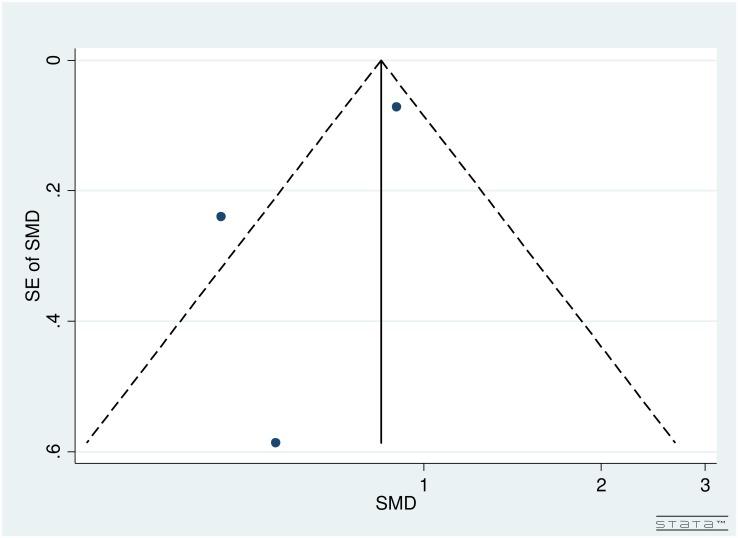
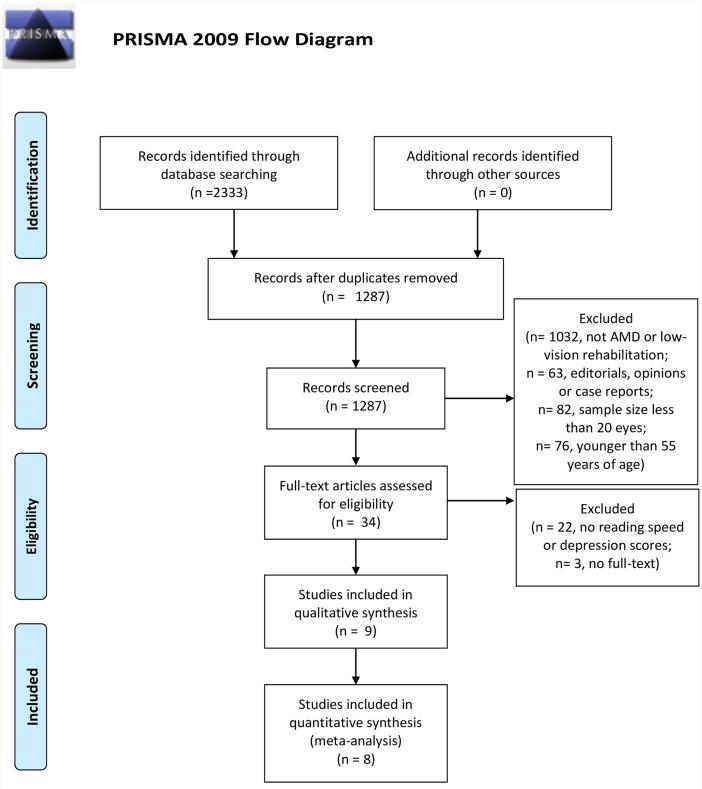
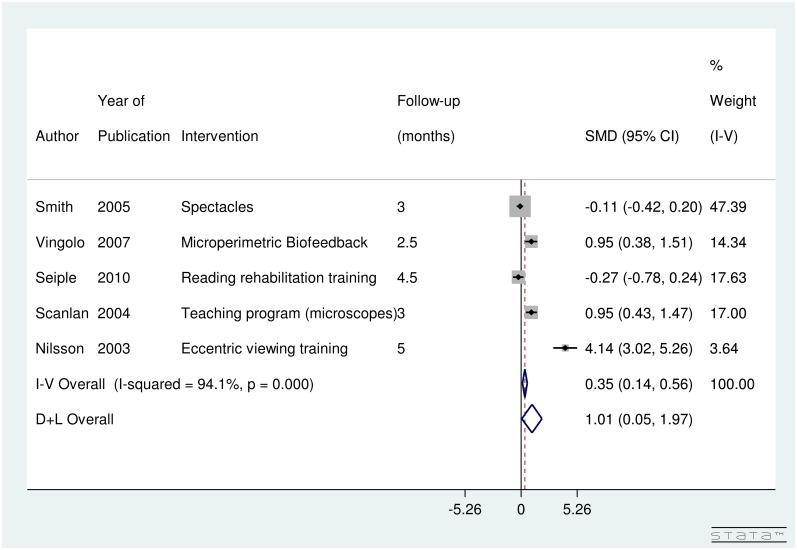
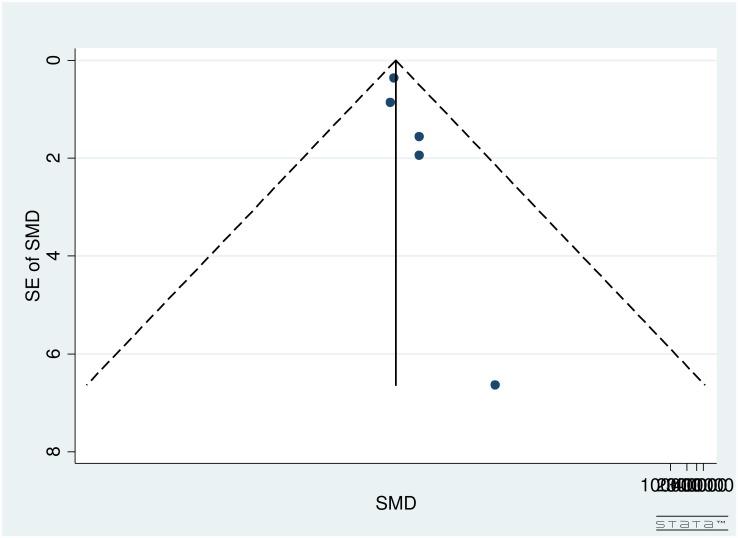
A total of 9 studies (885 subjects) were included. Overall, a significant improvement in reading speed was found with a SMD of 1.01 [95% CI: 0.05 to 1.97]. Low-vision rehabilitation strategies including micro-perimetric biofeedback, microscopes teaching program significantly improved reading speed. Eccentric viewing training showed the maximum improvement in reading speed. In addition, a non-significant improvement in depression scores was found with a SMD of -0.44 [95% CI: -0.96 to 0.09].
CONCLUSION
A considerable amount of research is required in the area of low-vision rehabilitation strategies for patients with AMD. Based on current research, low-vision rehabilitation aids improve reading speed. However, they do not have a significant effect on depression scores in those 55 and older with AMD.
重要性
年龄相关性黄斑变性(AMD)是一种进行性眼病,截至2015年,在美国已影响1100万人,在加拿大影响150万人,可导致中心视力失明。到2050年,这一数字预计将翻倍至2200万。周边视力是AMD患者低视力康复辅助工具和项目的目标,这些工具和项目被认为可通过提高阅读速度和缓解抑郁来改善功能表现。
目的
本研究评估各种低视力康复策略对55岁及以上AMD患者阅读速度和抑郁的影响。
数据来源
检索了计算机数据库,包括MEDLINE(OVID)、EMBASE(OVID)、BIOSIS Previews(汤森路透)、CINAHL(EBSCO)、卫生经济评估数据库(HEED)、科学引文索引(汤森路透)和考克兰图书馆(威利),检索时间为2000年至2015年1月。
研究选择
纳入的论文为样本量20只眼或更多、聚焦于55岁及以上患有低视力(20/60或更低)的成人AMD患者的研究。
数据提取与综合
两名独立评审员从纳入的文章中筛选并提取相关数据。选择标准化均数差(SMD)作为效应量,使用STATA进行荟萃分析。基于异质性建立固定效应模型和随机效应模型。
主要结局
阅读速度和抑郁评分。
结果
共纳入9项研究(885名受试者)。总体而言,阅读速度有显著改善,标准化均数差为1.01 [95%可信区间:0.05至1.97]。包括微视野生物反馈、显微镜教学项目在内的低视力康复策略显著提高了阅读速度。周边视训练在阅读速度方面显示出最大改善。此外,抑郁评分有非显著改善,标准化均数差为-0.44 [95%可信区间:-0.96至0.09]。
结论
在AMD患者低视力康复策略领域需要大量研究。基于目前的研究,低视力康复辅助工具可提高阅读速度。然而,它们对55岁及以上AMD患者的抑郁评分没有显著影响。

 Zotero 插件