
端粒酶的治疗靶点
Therapeutic Targeting of Telomerase.
作者信息
Jäger Kathrin, Walter Michael
机构信息
Institute of Laboratory Medicine, Clinical Chemistry and Pathobiochemistry, Charité-Universitätsmedizin Berlin, Augustenburger Platz 1, Berlin 13353, Germany.
Labor Berlin-Charité Vivantes Services GmbH, Sylter Str. 2, Berlin 13353, Germany.
出版信息
Genes (Basel). 2016 Jul 21;7(7):39. doi: 10.3390/genes7070039.
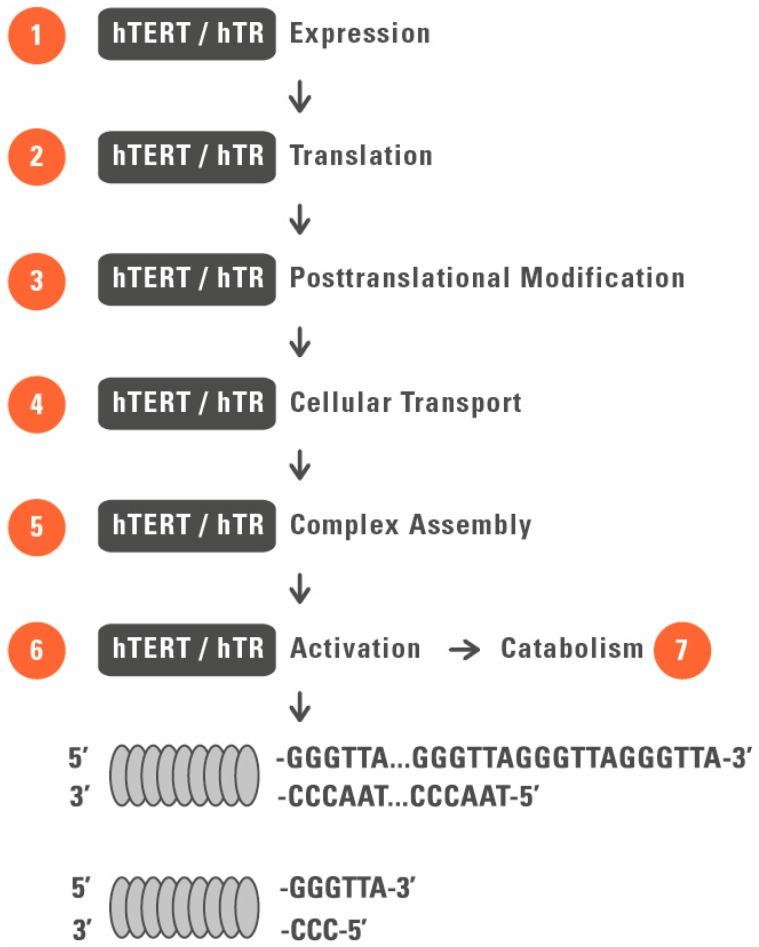
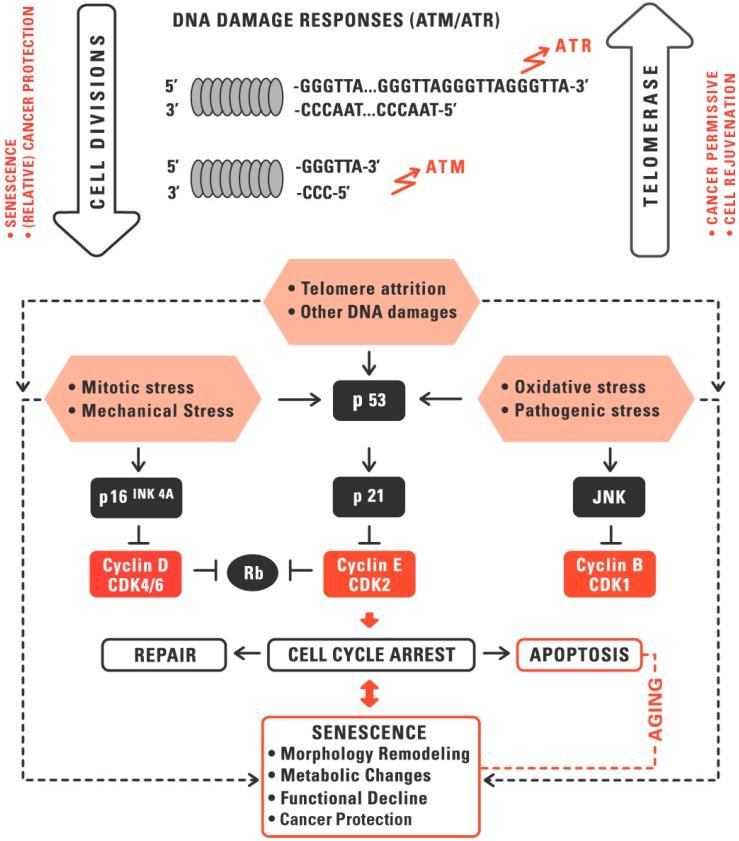
Telomere length and cell function can be preserved by the human reverse transcriptase telomerase (hTERT), which synthesizes the new telomeric DNA from a RNA template, but is normally restricted to cells needing a high proliferative capacity, such as stem cells. Consequently, telomerase-based therapies to elongate short telomeres are developed, some of which have successfully reached the stage I in clinical trials. Telomerase is also permissive for tumorigenesis and 90% of all malignant tumors use telomerase to obtain immortality. Thus, reversal of telomerase upregulation in tumor cells is a potential strategy to treat cancer. Natural and small-molecule telomerase inhibitors, immunotherapeutic approaches, oligonucleotide inhibitors, and telomerase-directed gene therapy are useful treatment strategies. Telomerase is more widely expressed than any other tumor marker. The low expression in normal tissues, together with the longer telomeres in normal stem cells versus cancer cells, provides some degree of specificity with low risk of toxicity. However, long term telomerase inhibition may elicit negative effects in highly-proliferative cells which need telomerase for survival, and it may interfere with telomere-independent physiological functions. Moreover, only a few hTERT molecules are required to overcome senescence in cancer cells, and telomerase inhibition requires proliferating cells over a sufficient number of population doublings to induce tumor suppressive senescence. These limitations may explain the moderate success rates in many clinical studies. Despite extensive studies, only one vaccine and one telomerase antagonist are routinely used in clinical work. For complete eradication of all subpopulations of cancer cells a simultaneous targeting of several mechanisms will likely be needed. Possible technical improvements have been proposed including the development of more specific inhibitors, methods to increase the efficacy of vaccination methods, and personalized approaches. Telomerase activation and cell rejuvenation is successfully used in regenerative medicine for tissue engineering and reconstructive surgery. However, there are also a number of pitfalls in the treatment with telomerase activating procedures for the whole organism and for longer periods of time. Extended cell lifespan may accumulate rare genetic and epigenetic aberrations that can contribute to malignant transformation. Therefore, novel vector systems have been developed for a 'mild' integration of telomerase into the host genome and loss of the vector in rapidly-proliferating cells. It is currently unclear if this technique can also be used in human beings to treat chronic diseases, such as atherosclerosis.
人类逆转录酶端粒酶(hTERT)可维持端粒长度和细胞功能,该酶能以RNA为模板合成新的端粒DNA,但通常仅在需要高增殖能力的细胞中表达,如干细胞。因此,人们开发了基于端粒酶的疗法来延长短端粒,其中一些疗法已成功进入临床试验的I期。端粒酶也与肿瘤发生有关,90%的恶性肿瘤利用端粒酶获得永生。因此,逆转肿瘤细胞中端粒酶的上调是一种潜在的癌症治疗策略。天然和小分子端粒酶抑制剂、免疫治疗方法、寡核苷酸抑制剂以及端粒酶导向的基因治疗都是有用的治疗策略。端粒酶的表达比任何其他肿瘤标志物都更广泛。其在正常组织中的低表达,以及正常干细胞与癌细胞相比更长的端粒,提供了一定程度的特异性,且毒性风险较低。然而,长期抑制端粒酶可能会对需要端粒酶来维持生存的高增殖细胞产生负面影响,并且可能会干扰与端粒无关的生理功能。此外,癌细胞中只需少量hTERT分子就能克服衰老,而抑制端粒酶需要增殖细胞经过足够数量的群体倍增才能诱导肿瘤抑制性衰老。这些局限性可能解释了许多临床研究中的中等成功率。尽管进行了广泛研究,但临床工作中常规使用的只有一种疫苗和一种端粒酶拮抗剂。为了彻底根除所有癌细胞亚群,可能需要同时针对多种机制。已经提出了一些可能的技术改进方法,包括开发更特异的抑制剂、提高疫苗接种方法疗效的方法以及个性化方法。端粒酶激活和细胞 rejuvenation 已成功应用于组织工程和重建手术的再生医学中。然而,对整个生物体进行长时间的端粒酶激活治疗也存在许多陷阱。延长的细胞寿命可能会积累罕见的遗传和表观遗传异常,这些异常可能导致恶性转化。因此,已经开发了新的载体系统,用于将端粒酶“温和”整合到宿主基因组中,并使其在快速增殖细胞中丢失载体。目前尚不清楚该技术是否也可用于人类治疗慢性疾病,如动脉粥样硬化。
 Zotero 插件