
使用微通道乳化和数值模拟连续合成载药纳米颗粒:被动混合的影响
Continuous synthesis of drug-loaded nanoparticles using microchannel emulsification and numerical modeling: effect of passive mixing.
作者信息
Ortiz de Solorzano Isabel, Uson Laura, Larrea Ane, Miana Mario, Sebastian Victor, Arruebo Manuel
机构信息
Department of Chemical Engineering and Environmental Technologies, Institute of Nanoscience of Aragon (INA), University of Zaragoza; CIBER de Bioingeniería, Biomateriales y Nanomedicina (CIBER-BBN), Centro de Investigación Biomédica en Red, Madrid.
ITAINNOVA, Instituto Tecnológico de Aragón, Materials & Components, Zaragoza, Spain.
出版信息
Int J Nanomedicine. 2016 Jul 25;11:3397-416. doi: 10.2147/IJN.S108812. eCollection 2016.
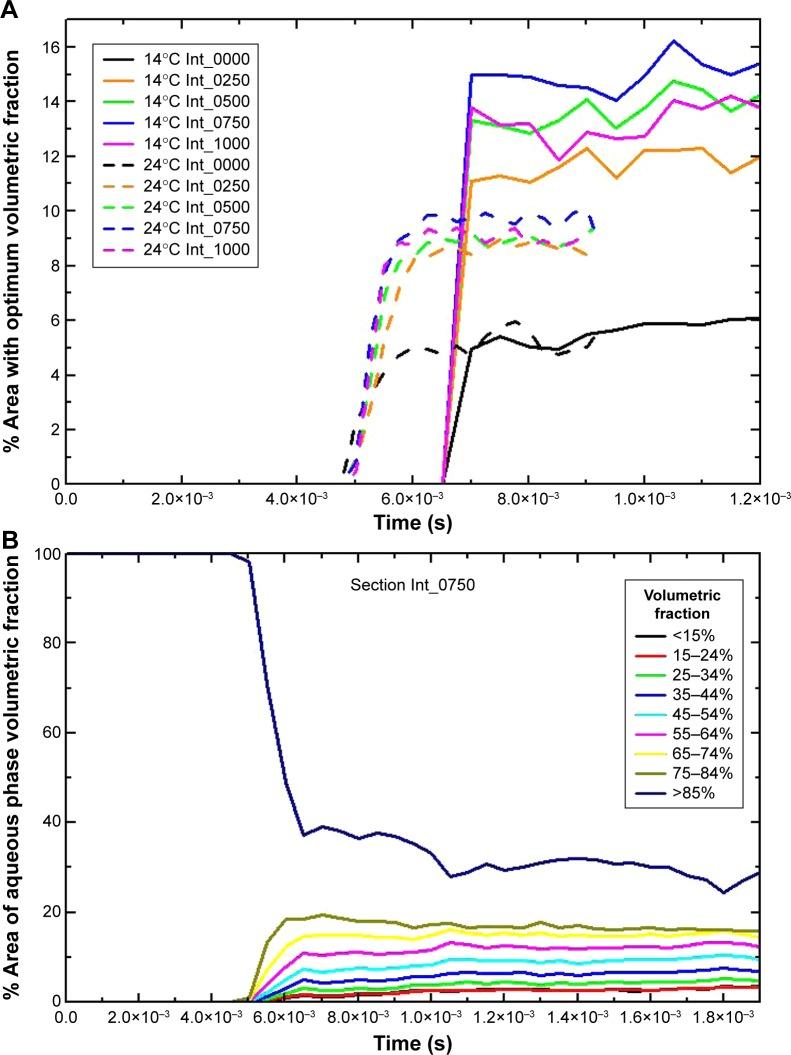
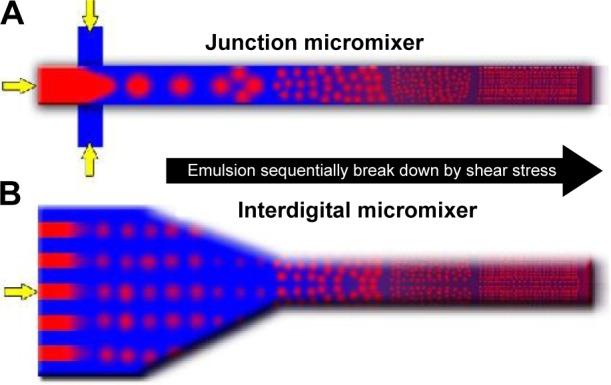
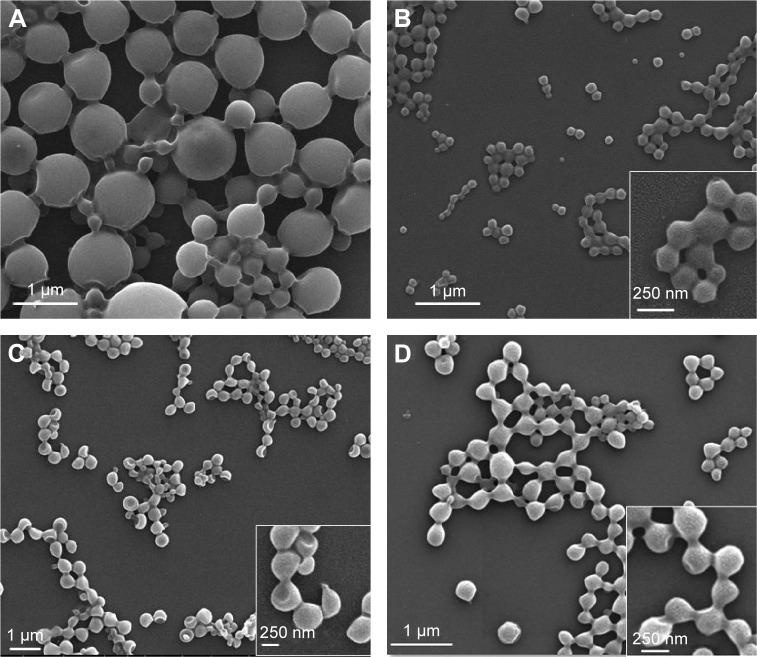
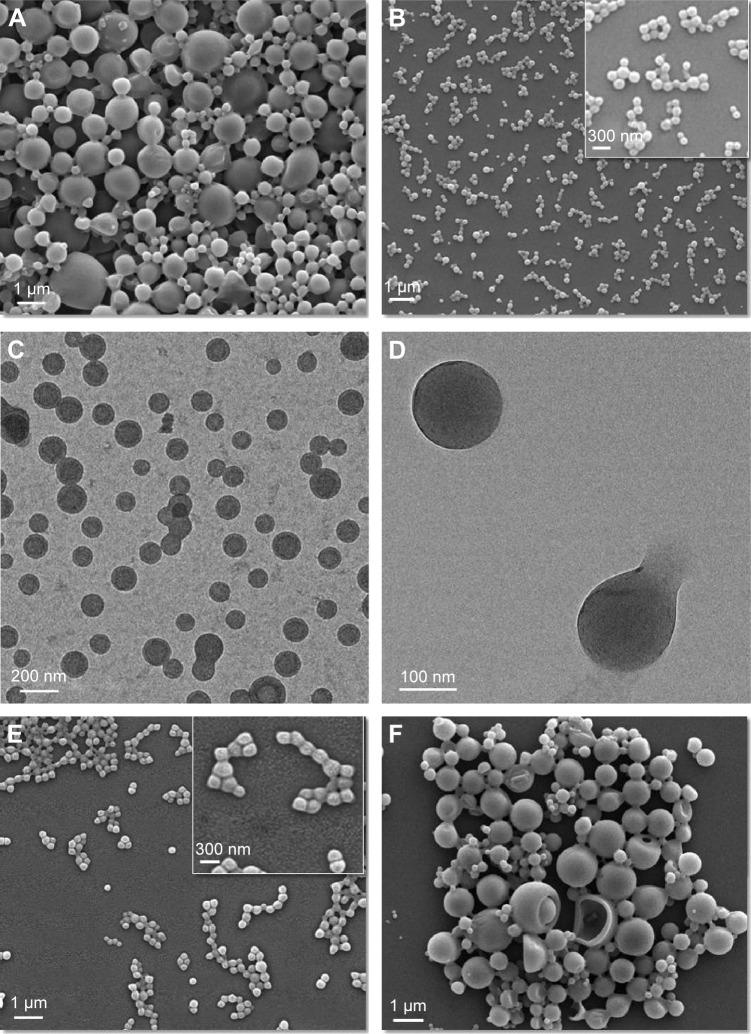
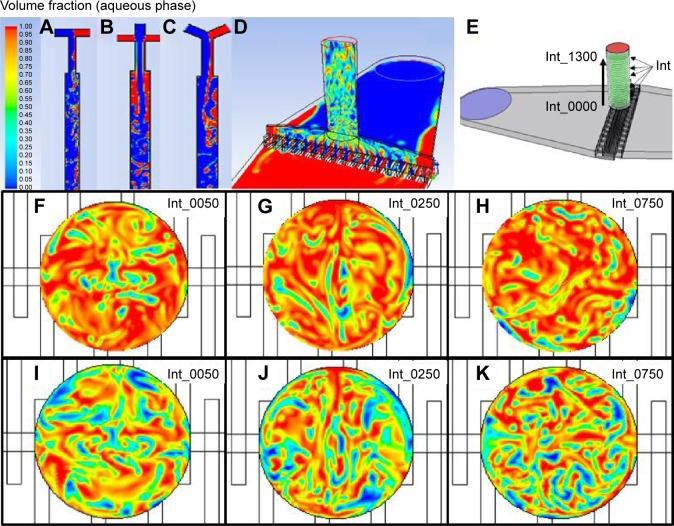
By using interdigital microfluidic reactors, monodisperse poly(d,l lactic-co-glycolic acid) nanoparticles (NPs) can be produced in a continuous manner and at a large scale (~10 g/h). An optimized synthesis protocol was obtained by selecting the appropriated passive mixer and fluid flow conditions to produce monodisperse NPs. A reduced NP polydispersity was obtained when using the microfluidic platform compared with the one obtained with NPs produced in a conventional discontinuous batch reactor. Cyclosporin, an immunosuppressant drug, was used as a model to validate the efficiency of the microfluidic platform to produce drug-loaded monodisperse poly(d,l lactic-co-glycolic acid) NPs. The influence of the mixer geometries and temperatures were analyzed, and the experimental results were corroborated by using computational fluid dynamic three-dimensional simulations. Flow patterns, mixing times, and mixing efficiencies were calculated, and the model supported with experimental results. The progress of mixing in the interdigital mixer was quantified by using the volume fractions of the organic and aqueous phases used during the emulsification-evaporation process. The developed model and methods were applied to determine the required time for achieving a complete mixing in each microreactor at different fluid flow conditions, temperatures, and mixing rates.
通过使用叉指式微流体反应器,可以连续大规模地生产单分散聚(d,l 乳酸-乙醇酸共聚物)纳米颗粒(NPs)(约10 g/h)。通过选择合适的被动混合器和流体流动条件来获得优化的合成方案,以生产单分散的纳米颗粒。与在传统的间断分批反应器中生产的纳米颗粒相比,使用微流体平台时纳米颗粒的多分散性降低。环孢素,一种免疫抑制剂药物,被用作模型来验证微流体平台生产载药单分散聚(d,l 乳酸-乙醇酸共聚物)纳米颗粒的效率。分析了混合器几何形状和温度的影响,并通过计算流体动力学三维模拟证实了实验结果。计算了流动模式、混合时间和混合效率,该模型得到了实验结果的支持。通过使用乳化蒸发过程中使用的有机相和水相的体积分数来量化叉指式混合器中的混合进程。所开发的模型和方法被用于确定在不同流体流动条件、温度和混合速率下在每个微反应器中实现完全混合所需的时间。



 Zotero 插件