
室内灰尘中的消费品化学品:美国研究的定量荟萃分析。
Consumer Product Chemicals in Indoor Dust: A Quantitative Meta-analysis of U.S. Studies.
作者信息
Mitro Susanna D, Dodson Robin E, Singla Veena, Adamkiewicz Gary, Elmi Angelo F, Tilly Monica K, Zota Ami R
机构信息
Milken Institute School of Public Health, George Washington University , Washington, D.C. 20052, United States.
Silent Spring Institute , Newton, MA 02460, United States.
出版信息
Environ Sci Technol. 2016 Oct 4;50(19):10661-10672. doi: 10.1021/acs.est.6b02023. Epub 2016 Sep 14.
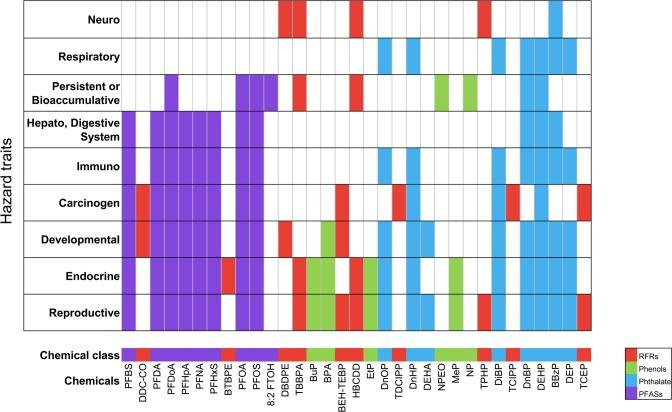
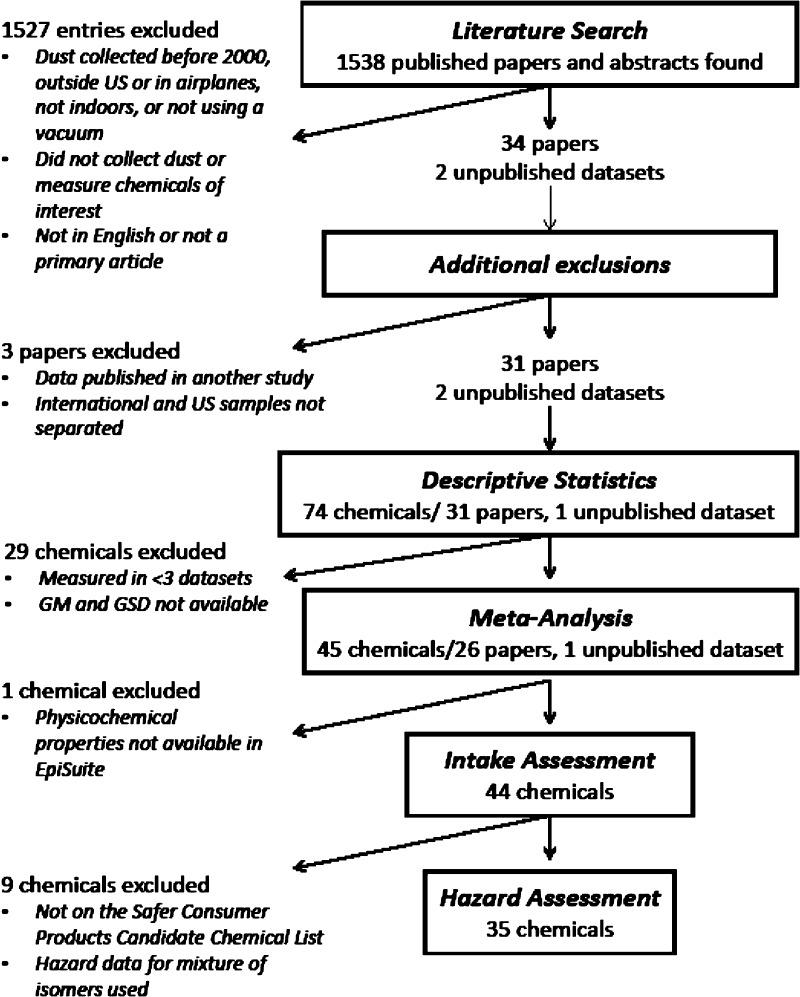
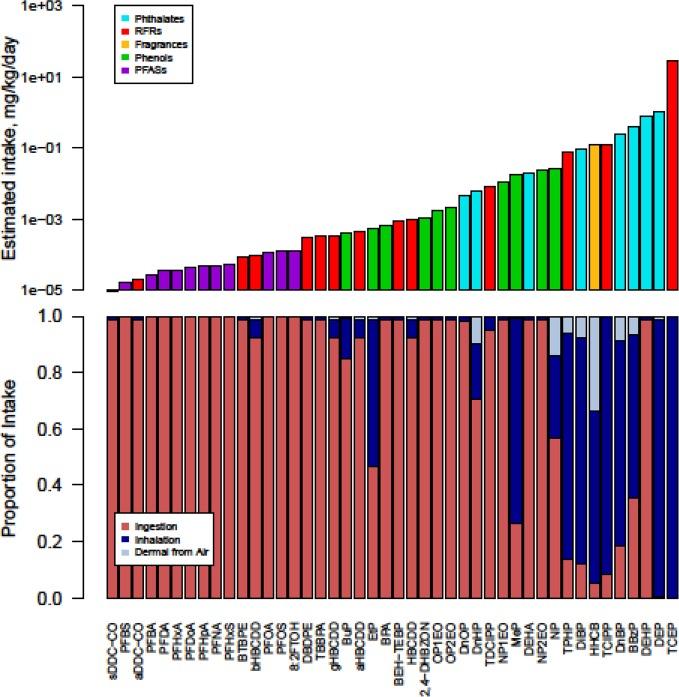
Indoor dust is a reservoir for commercial consumer product chemicals, including many compounds with known or suspected health effects. However, most dust exposure studies measure few chemicals in small samples. We systematically searched the U.S. indoor dust literature on phthalates, replacement flame retardants (RFRs), perfluoroalkyl substances (PFASs), synthetic fragrances, and environmental phenols and estimated pooled geometric means (GMs) and 95% confidence intervals for 45 chemicals measured in ≥3 data sets. In order to rank and contextualize these results, we used the pooled GMs to calculate residential intake from dust ingestion, inhalation, and dermal uptake from air, and then identified hazard traits from the Safer Consumer Products Candidate Chemical List. Our results indicate that U.S. indoor dust consistently contains chemicals from multiple classes. Phthalates occurred in the highest concentrations, followed by phenols, RFRs, fragrance, and PFASs. Several phthalates and RFRs had the highest residential intakes. We also found that many chemicals in dust share hazard traits such as reproductive and endocrine toxicity. We offer recommendations to maximize comparability of studies and advance indoor exposure science. This information is critical in shaping future exposure and health studies, especially related to cumulative exposures, and in providing evidence for intervention development and public policy.
室内灰尘是商业消费品化学品的一个储存库,其中包括许多已知或疑似对健康有影响的化合物。然而,大多数灰尘暴露研究在小样本中检测的化学品数量很少。我们系统地检索了美国关于邻苯二甲酸盐、替代阻燃剂(RFRs)、全氟烷基物质(PFASs)、合成香料和环境酚类的室内灰尘文献,并估计了在≥3个数据集中测量的45种化学品的合并几何均值(GMs)和95%置信区间。为了对这些结果进行排名并置于具体情境中,我们使用合并GMs来计算通过灰尘摄入、吸入以及从空气中皮肤吸收的住宅摄入量,然后从更安全消费品候选化学品清单中识别危害特征。我们的结果表明,美国室内灰尘始终含有多种类别的化学品。邻苯二甲酸盐的浓度最高,其次是酚类、RFRs、香料和PFASs。几种邻苯二甲酸盐和RFRs的住宅摄入量最高。我们还发现,灰尘中的许多化学品具有共同的危害特征,如生殖和内分泌毒性。我们提出了一些建议,以最大限度地提高研究的可比性并推动室内暴露科学的发展。这些信息对于塑造未来的暴露和健康研究至关重要,特别是与累积暴露相关的研究,并为干预措施的制定和公共政策提供证据。

 Zotero 插件