
女性阻塞性睡眠呼吸暂停:特殊问题与干预措施
Obstructive Sleep Apnea in Women: Specific Issues and Interventions.
作者信息
Wimms Alison, Woehrle Holger, Ketheeswaran Sahisha, Ramanan Dinesh, Armitstead Jeffery
机构信息
ResMed Science Centre, Fraunhoferstraße 16, 82152 Planegg, Germany; University of Sydney, Fisher Road, Sydney, NSW, Australia.
ResMed Science Centre, Fraunhoferstraße 16, 82152 Planegg, Germany; Sleep and Ventilation Center Blaubeuren, Lung Center Ulm, Ulm, Germany.
出版信息
Biomed Res Int. 2016;2016:1764837. doi: 10.1155/2016/1764837. Epub 2016 Sep 6.
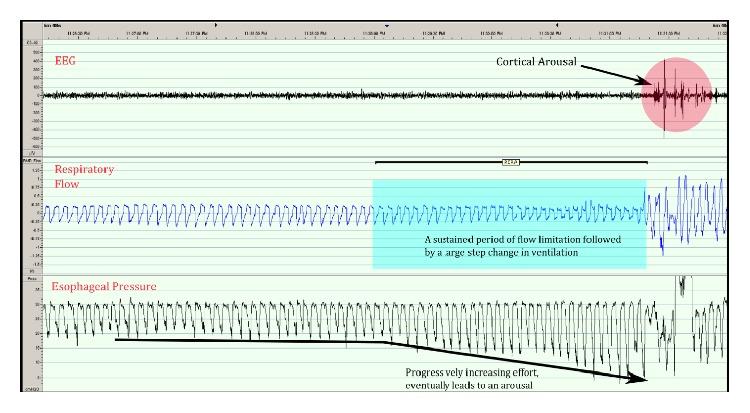
Obstructive sleep apnea (OSA) has traditionally been seen as a male disease. However, the importance of OSA in women is increasingly being recognized, along with a number of significant gender-related differences in the symptoms, diagnosis, consequences, and treatment of OSA. Women tend to have less severe OSA than males, with a lower apnea-hypopnea index (AHI) and shorter apneas and hypopneas. Episodes of upper airway resistance that do not meet the criteria for apneas are more common in women. Prevalence rates are lower in women, and proportionally fewer women receive a correct diagnosis. Research has also documented sex differences in the upper airway, fat distribution, and respiratory stability in OSA. Hormones are implicated in some gender-related variations, with differences between men and women in the prevalence of OSA decreasing as age increases. The limited data available suggest that although the prevalence and severity of OSA may be lower in women than in men, the consequences of the disease are at least the same, if not worse for comparable degrees of severity. Few studies have investigated gender differences in the effects of OSA treatment. However, given the differences in physiology and presentation, it is possible that personalized therapy may provide more optimal care.
阻塞性睡眠呼吸暂停(OSA)传统上被视为一种男性疾病。然而,OSA在女性中的重要性日益受到认可,同时在OSA的症状、诊断、后果及治疗方面存在一些与性别相关的显著差异。女性的OSA往往不如男性严重,呼吸暂停低通气指数(AHI)较低,呼吸暂停和低通气时间较短。不符合呼吸暂停标准的上气道阻力发作在女性中更为常见。女性的患病率较低,得到正确诊断的女性比例也相对较少。研究还记录了OSA患者在上气道、脂肪分布和呼吸稳定性方面的性别差异。激素与一些与性别相关的差异有关,随着年龄增长,OSA在男性和女性中的患病率差异减小。现有有限数据表明,尽管女性OSA的患病率和严重程度可能低于男性,但对于相当程度的严重程度,该疾病的后果至少相同,甚至可能更糟。很少有研究调查OSA治疗效果的性别差异。然而,考虑到生理和表现方面的差异,个性化治疗可能会提供更优化的护理。
 Zotero 插件