
父母维生素缺乏会影响免疫、脂质转运和载脂蛋白基因的胚胎基因表达。
Parental vitamin deficiency affects the embryonic gene expression of immune-, lipid transport- and apolipoprotein genes.
机构信息
National Institute of Nutrition and Seafood Research, NIFES, Norway.
Faculty of Biosciences and Aquaculture, Nord University, Norway.
出版信息
Sci Rep. 2016 Oct 12;6:34535. doi: 10.1038/srep34535.
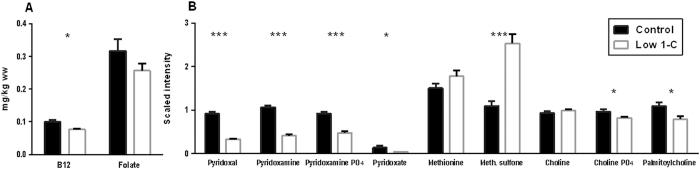
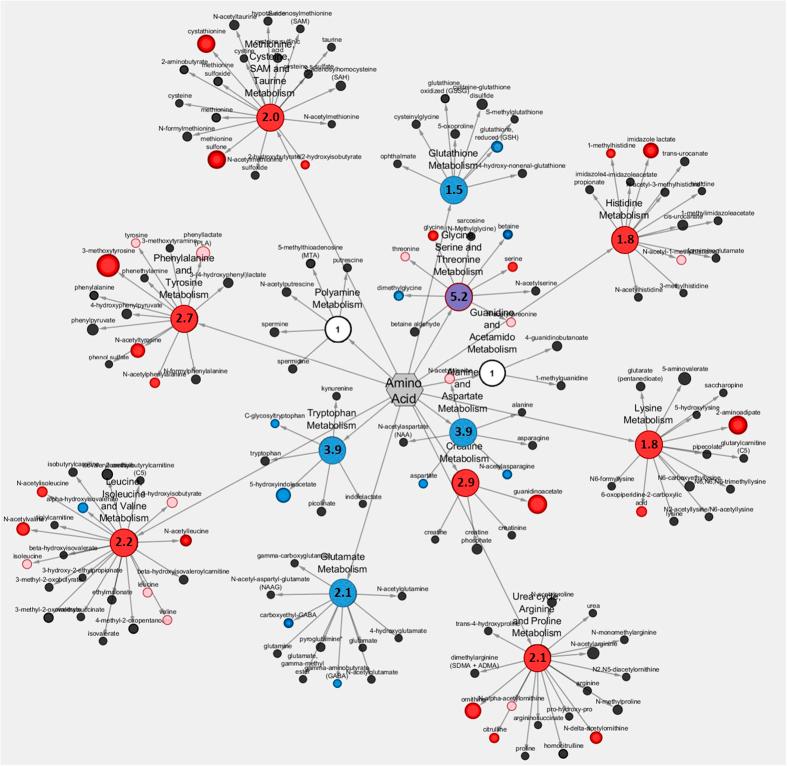
World Health Organization is concerned for parental vitamin deficiency and its effect on offspring health. This study examines the effect of a marginally dietary-induced parental one carbon (1-C) micronutrient deficiency on embryonic gene expression using zebrafish. Metabolic profiling revealed a reduced 1-C cycle efficiency in F generation. Parental deficiency reduced the fecundity and a total of 364 genes were differentially expressed in the F embryos. The upregulated genes (53%) in the deficient group were enriched in biological processes such as immune response and blood coagulation. Several genes encoding enzymes essential for the 1-C cycle and for lipid transport (especially apolipoproteins) were aberrantly expressed. We show that a parental diet deficient in micronutrients disturbs the expression in descendant embryos of genes associated with overall health, and result in inherited aberrations in the 1-C cycle and lipid metabolism. This emphasises the importance of parental micronutrient status for the health of the offspring.
世界卫生组织关注父母维生素缺乏及其对后代健康的影响。本研究使用斑马鱼研究了边缘性饮食诱导的父母一碳(1-C)微量营养素缺乏对胚胎基因表达的影响。代谢组学分析显示,F 代的 1-C 循环效率降低。父母的缺乏降低了生育能力,F 代胚胎中共有 364 个基因差异表达。在缺乏组中上调的基因(53%)在生物学过程中富集,如免疫反应和血液凝固。编码 1-C 循环和脂质转运(尤其是载脂蛋白)所必需的几种酶的基因表达异常。我们表明,父母饮食中缺乏微量营养素会扰乱与整体健康相关的后代胚胎中基因的表达,并导致 1-C 循环和脂质代谢的遗传异常。这强调了父母营养状况对后代健康的重要性。



 Zotero 插件