
重度幼儿龋(S-ECC)患儿白色念珠菌携带情况及其与母亲的相关性
Candida albicans Carriage in Children with Severe Early Childhood Caries (S-ECC) and Maternal Relatedness.
作者信息
Xiao Jin, Moon Yonghwi, Li Lihua, Rustchenko Elena, Wakabayashi Hironao, Zhao Xiaoyi, Feng Changyong, Gill Steven R, McLaren Sean, Malmstrom Hans, Ren Yanfang, Quivey Robert, Koo Hyun, Kopycka-Kedzierawski Dorota T
机构信息
Eastman Institute for Oral Health, University of Rochester Medical Center, Rochester, NY, United States of America.
Department of Dentistry, North Sichuan Medical University, Sichuan, China.
出版信息
PLoS One. 2016 Oct 14;11(10):e0164242. doi: 10.1371/journal.pone.0164242. eCollection 2016.
INTRODUCTION
Candida albicans has been detected together with Streptococcus mutans in high numbers in plaque-biofilm from children with early childhood caries (ECC). The goal of this study was to examine the C. albicans carriage in children with severe early childhood caries (S-ECC) and the maternal relatedness.
METHODS
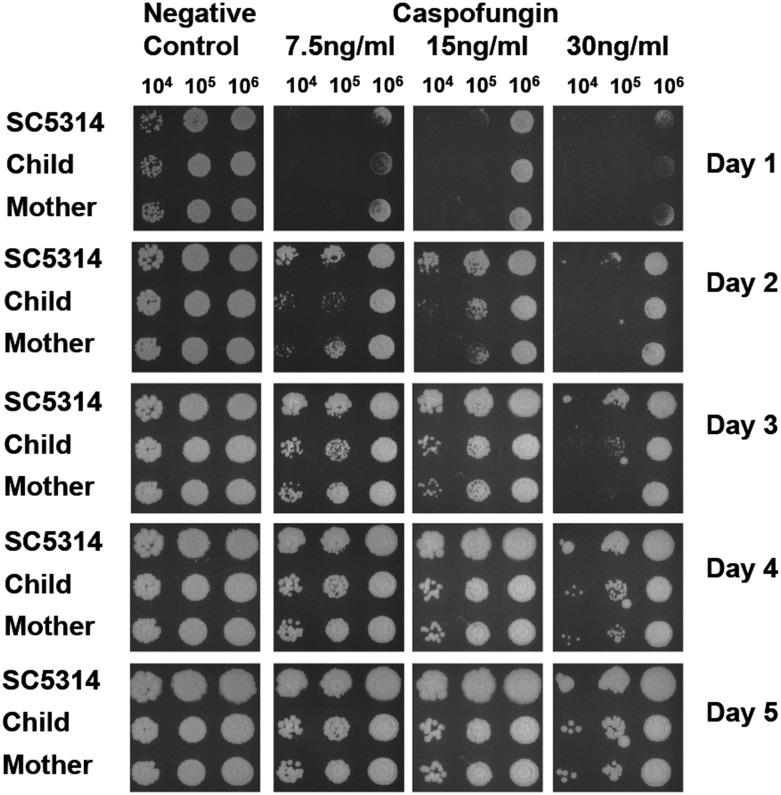
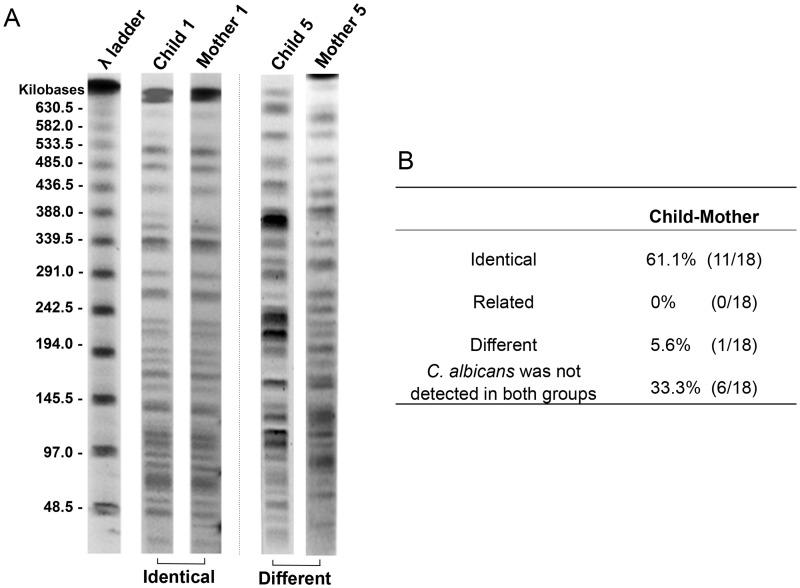
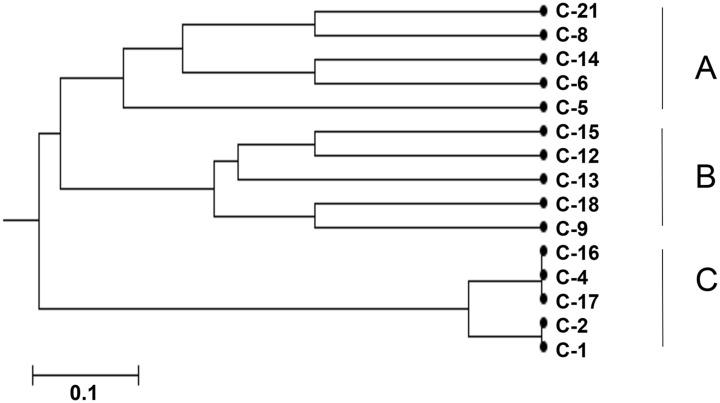
Subjects in this pilot cross-sectional study were recruited based on a convenient sample. DMFT(S)/dmft(s) caries and plaque scores were assessed during a comprehensive oral exam. Social-demographic and related background information was collected through a questionnaire. Saliva and plaque sample from all children and mother subjects were collected. C. albicans were isolated by BBL™ CHROMagar™ and also identified using germ tube test. S. mutans was isolated using Mitis Salivarius with Bacitracin selective medium and identified by colony morphology. Genetic relatedness was examined using restriction endonuclease analysis of the C. albicans genome using BssHII (REAG-B). Multilocus sequence typing was used to examine the clustering information of isolated C. albicans. Spot assay was performed to examine the C. albicans Caspofungin susceptibility between S-ECC children and their mothers. All statistical analyses (power analysis for sample size, Spearman's correlation coefficient and multiple regression analyses) were implemented with SAS 9.4.
RESULTS
A total of 18 S-ECC child-mother pairs and 17 caries free child-mother pairs were enrolled in the study. Results indicated high C. albicans carriage rate in the oral cavity (saliva and plaque) of both S-ECC children and their mothers (>80%). Spearman's correlation coefficient also indicated a significant correlation between salivary and plaque C. albicans and S. mutans carriage (p<0.01) and caries severity (p<0.05). The levels of C. albicans in the prepared saliva and plaque sample (1ml resuspension) of S-ECC children were 1.3 ± 4.5 x10⁴ cfu/ml and 1.2 ± 3.5 x10⁴ cfu/ml (~3-log higher vs. caries-free children). Among 18 child-mother pairs, >60% of them demonstrated identical C. albicans REAG-B pattern. C. albicans isolated from >65% of child-mother pairs demonstrated similar susceptibility to caspofungin in spot assay, while no caspofungin resistant strains were seen when compared with C. albicans wild-type strain SC5314. Interestingly, the regression analysis showed that factors such as antibiotic usage, birth weight, inhaler use, brushing frequency, and daycare attendance had no significant effect on the oral carriage of C. albicans in the S-ECC children.
CONCLUSIONS
Our results reveal that both the child with S-ECC and the mother were highly infected with C. albicans, while most of the strains were genetically related, suggesting that the mother might be a source for C. albicans acquisition in the oral cavity of children affected by the disease.
引言
在患有幼儿龋(ECC)的儿童牙菌斑生物膜中,已大量检测到白色念珠菌与变形链球菌共存。本研究的目的是检查重度幼儿龋(S-ECC)儿童的白色念珠菌携带情况及其与母亲的相关性。
方法
本试点横断面研究的受试者基于方便抽样招募。在全面口腔检查期间评估DMFT(S)/dmft(s)龋病和牙菌斑评分。通过问卷收集社会人口统计学及相关背景信息。收集所有儿童及其母亲受试者的唾液和牙菌斑样本。使用BBL™ CHROMagar™分离白色念珠菌,并通过芽管试验进行鉴定。使用含杆菌肽的变形链球菌选择性培养基分离变形链球菌,并通过菌落形态进行鉴定。使用BssHII对白色念珠菌基因组进行限制性内切酶分析(REAG-B)来检查遗传相关性。使用多位点序列分型来检查分离出的白色念珠菌的聚类信息。进行斑点试验以检查S-ECC儿童及其母亲之间白色念珠菌对卡泊芬净的敏感性。所有统计分析(样本量的功效分析、Spearman相关系数和多元回归分析)均使用SAS 9.4进行。
结果
本研究共纳入18对S-ECC儿童-母亲对和17对无龋儿童-母亲对。结果表明,S-ECC儿童及其母亲口腔(唾液和牙菌斑)中的白色念珠菌携带率很高(>80%)。Spearman相关系数还表明,唾液和牙菌斑中的白色念珠菌与变形链球菌携带情况(p<0.01)以及龋病严重程度(p<0.05)之间存在显著相关性。S-ECC儿童制备的唾液和牙菌斑样本(1ml重悬液)中白色念珠菌的水平分别为1.3±4.5x10⁴ cfu/ml和1.2±3.5x104 cfu/ml(比无龋儿童高约3个对数)。在18对儿童-母亲对中,超过60%的对显示出相同的白色念珠菌REAG-B模式。在斑点试验中,从超过65%的儿童-母亲对中分离出的白色念珠菌对卡泊芬净表现出相似的敏感性,与白色念珠菌野生型菌株SC5314相比,未发现卡泊芬净耐药菌株。有趣的是,回归分析表明,抗生素使用、出生体重、吸入器使用、刷牙频率和日托出勤等因素对S-ECC儿童口腔中白色念珠菌的携带没有显著影响。
结论
我们的结果表明,患有S-ECC的儿童及其母亲均受到白色念珠菌的高度感染,而大多数菌株具有遗传相关性,这表明母亲可能是受该疾病影响的儿童口腔中白色念珠菌的一个来源。
 Zotero 插件