
利用焦磷酸测序技术对三个欧洲国家的血矛线虫、细颈线虫和毛圆线虫进行苯并咪唑抗性调查,包括开发毛圆线虫的新检测方法。
Benzimidazole resistance survey for Haemonchus, Teladorsagia and Trichostrongylus in three European countries using pyrosequencing including the development of new assays for Trichostrongylus.
作者信息
Ramünke Sabrina, Melville Lynsey, Rinaldi Laura, Hertzberg Hubertus, de Waal Theo, von Samson-Himmelstjerna Georg, Cringoli Giuseppe, Mavrot Fabien, Skuce Philip, Krücken Jürgen, Demeler Janina
机构信息
Institute for Parasitology and Tropical Veterinary Medicine, Freie Universität Berlin, Berlin, Germany.
Moredun Research Institute, Pentlands Science Park, Edinburgh, EH26 0PZ, Scotland, UK.
出版信息
Int J Parasitol Drugs Drug Resist. 2016 Dec;6(3):230-240. doi: 10.1016/j.ijpddr.2016.10.002. Epub 2016 Oct 8.
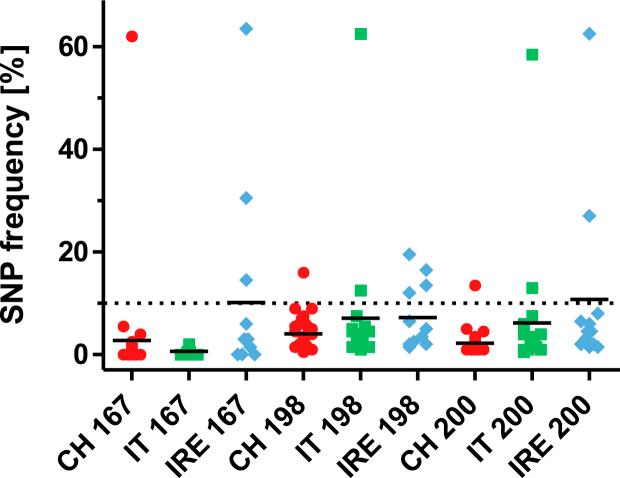
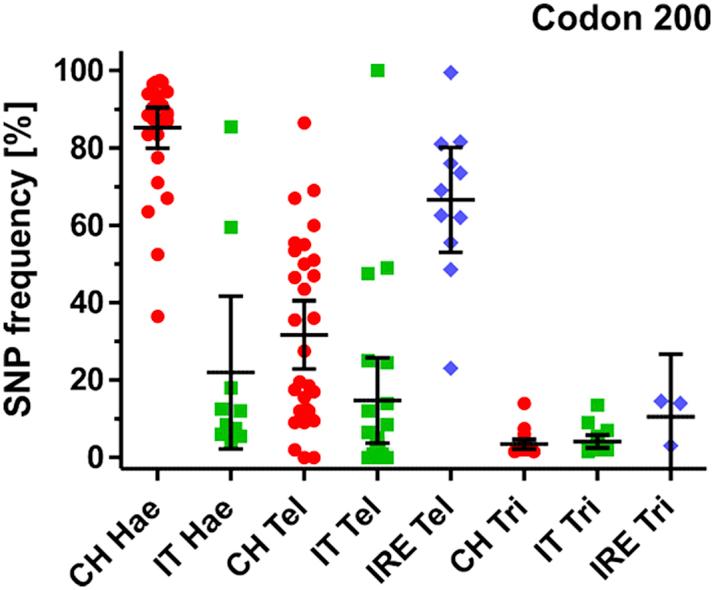
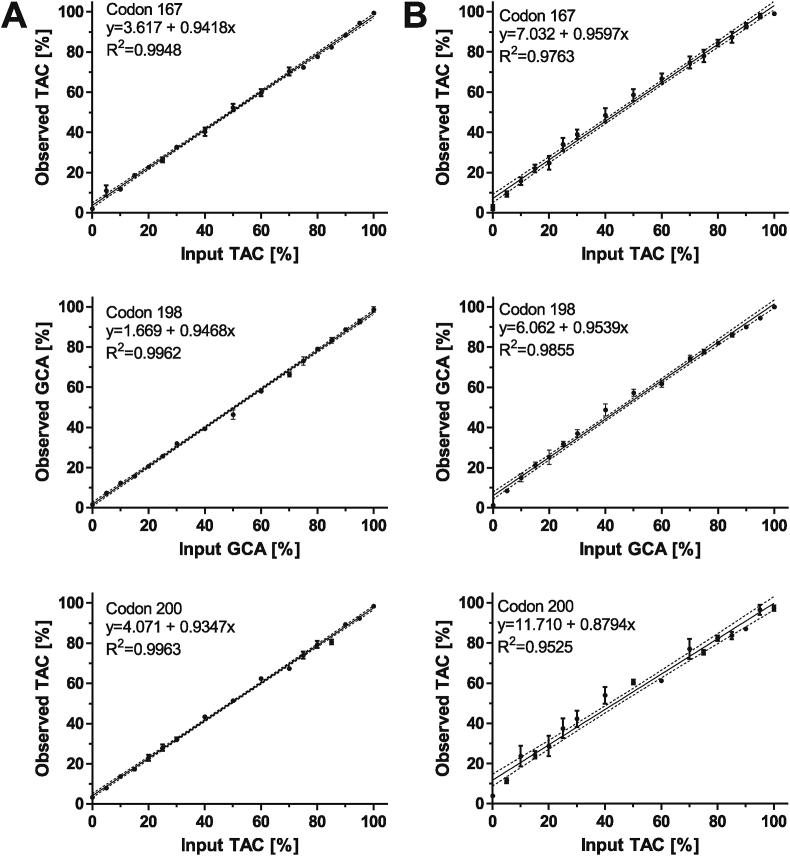
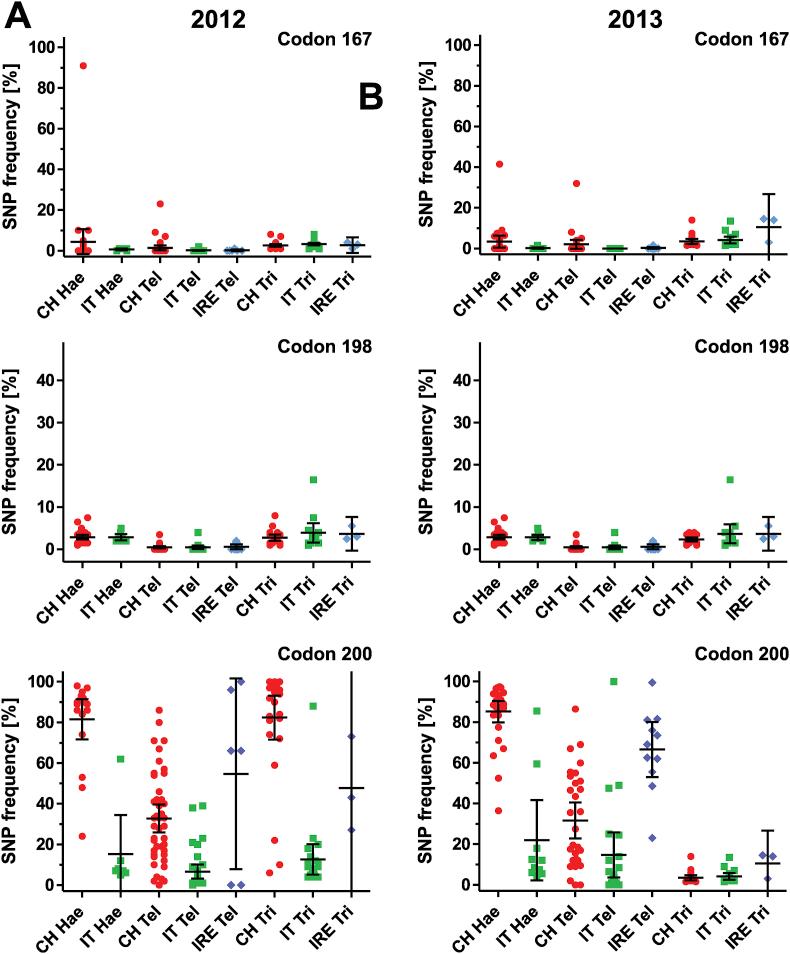
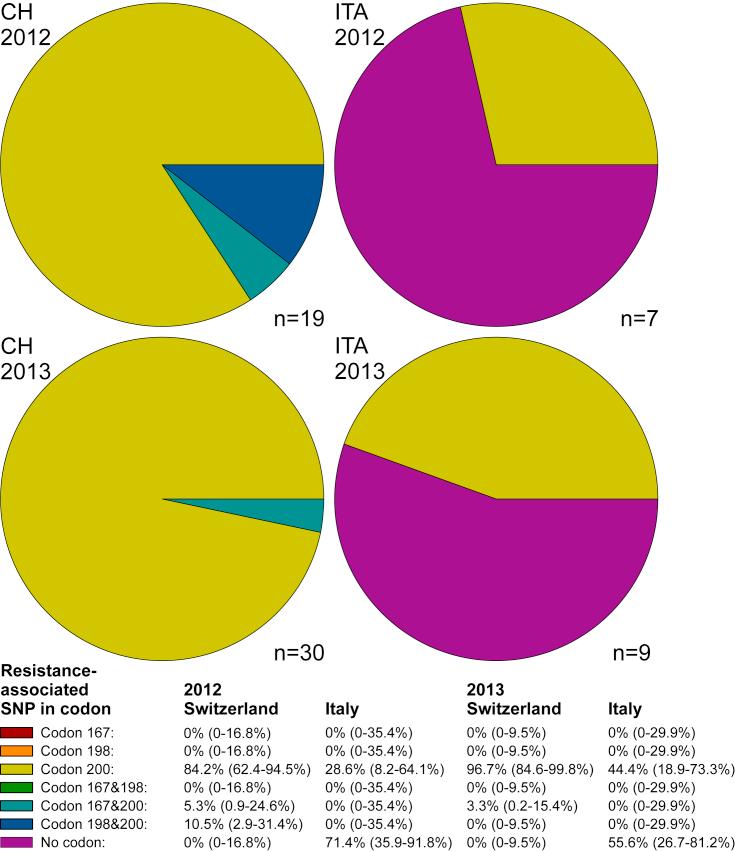
Resistance to benzimidazoles (BZs) in trichostrongyloid nematodes is a worldwide problem for livestock production, particularly regarding small ruminants. Sensitive and reliable methods are required to assess anthelmintic resistance status. Currently available methods for BZ resistance detection can be divided into three main groups, in vivo (e.g. faecal egg count reduction test), in vitro (e.g. egg hatch assay) and molecular tests. Three single nucleotide polymorphisms (SNPs) in the isotype-1 β-tubulin gene of various nematode species correlate with BZ resistance. While PCR-based methods have been reported for the three most economically important nematodes of sheep, namely, Trichostrongylus, Haemonchus and Teladorsagia, pyrosequencing assays are so far only available for the latter two. Here, the design and evaluation of pyrosequencing assays for isotype-1 and isotype-2 β-tubulin genes of Trichostrongylus colubriformis are described. PCR fragments carrying the susceptible and corresponding resistant genotype were combined in defined ratios to evaluate assay sensitivity and linearity. The correlation between the given and the measured allele frequencies of the respective SNPs (codons F167Y, E198A and F200Y) was very high. Pyrosequencing assays for Haemonchus, Teladorsagia and Trichostrongylus were subsequently used for a BZ resistance survey, carried out in the three European countries, namely Ireland, Italy and Switzerland. Larval cultures obtained from field survey samples in 2012 and 2013 were used for pyrosequencing. The test was applied when the target species represented at least 10% of the sample. Trichostrongylus and Teladorsagia were detected in all countries' samples whereas Haemonchus was not detected in samples from Ireland. SNPs in isotype-1 associated with resistance were detected for all three species, with frequencies at codon F200Y far exceeding those at codons F167Y and E198A. Elevated SNP frequencies in isotype-2 of Trichostrongylus were only rarely detected. Farms with BZ resistance-associated SNP frequencies above 10% were most often found in Switzerland followed by Ireland and Italy.
毛圆科线虫对苯并咪唑类药物(BZs)产生抗性是全球畜牧业生产面临的一个问题,对小型反刍动物而言尤为如此。需要灵敏可靠的方法来评估驱虫药抗性状况。目前可用于检测BZ抗性的方法主要分为三类:体内检测法(如粪便虫卵计数减少试验)、体外检测法(如虫卵孵化试验)和分子检测法。多种线虫的1型β - 微管蛋白基因中的三个单核苷酸多态性(SNP)与BZ抗性相关。虽然已有基于PCR的方法用于检测绵羊三种经济意义最为重大的线虫,即毛圆线虫、血矛线虫和细颈线虫,但焦磷酸测序法目前仅适用于后两种线虫。本文描述了针对蛇形毛圆线虫1型和2型β - 微管蛋白基因的焦磷酸测序法的设计与评估。将携带敏感和相应抗性基因型的PCR片段按特定比例混合,以评估检测方法的灵敏度和线性度。各个SNP(密码子F167Y、E198A和F200Y)的给定等位基因频率与测得的等位基因频率之间的相关性非常高。随后,针对血矛线虫、细颈线虫和毛圆线虫的焦磷酸测序法被用于在爱尔兰、意大利和瑞士这三个欧洲国家开展的BZ抗性调查。2012年和2013年从实地调查样本中获得的幼虫培养物用于焦磷酸测序。当目标物种在样本中所占比例至少达到10%时应用该检测方法。在所有国家的样本中均检测到了毛圆线虫和细颈线虫,而在爱尔兰的样本中未检测到血矛线虫。在所有这三个物种中均检测到了与抗性相关的1型SNP,密码子F200Y处的频率远高于密码子F167Y和E198A处的频率。仅在极少数情况下检测到蛇形毛圆线虫2型中SNP频率升高。BZ抗性相关SNP频率高于10%的养殖场在瑞士最为常见,其次是爱尔兰和意大利。


 Zotero 插件