
在非洲地区减少B族链球菌疾病方面所面临的挑战。
Challenges in reducing group B Streptococcus disease in African settings.
作者信息
Nishihara Yo, Dangor Ziyaad, French Neil, Madhi Shabir, Heyderman Robert
机构信息
Malawi-Liverpool-Wellcome Trust Clinical Research Programme, University of Malawi College of Medicine, Blantyre, Malawi.
Department of Paediatrics, Faculty of Health Sciences, University of the Witwatersrand, Johannesburg-Braamfontein, South Africa.
出版信息
Arch Dis Child. 2017 Jan;102(1):72-77. doi: 10.1136/archdischild-2016-311419. Epub 2016 Oct 18.
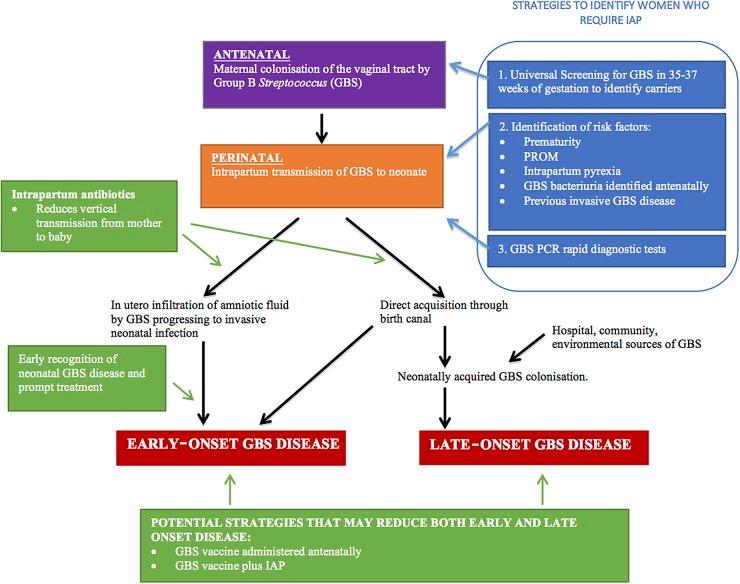
Group B Streptococcus (GBS) is a leading cause of neonatal sepsis and meningitis in high-income settings and is associated with high rates of neonatal mortality and morbidity. There is now increasing evidence to suggest that there is a high GBS disease burden in resource-limited countries, and it is therefore critically important to identify suitable and practical preventive strategies. In Europe and North America, intrapartum antibiotic prophylaxis (IAP) has led to a dramatic reduction of early-onset GBS disease. However, the methods for identifying pregnant women who should receive IAP and how to reduce late-onset GBS disease are not without controversy and are challenging for most sub-Saharan African countries. GBS vaccines are approaching phase III trials but are still under development. This review aims to explore the current evidence related to strategies for reducing invasive GBS disease in an African setting, the development of a GBS vaccine and whether preventative measures against GBS disease can be practically implemented.
B族链球菌(GBS)是高收入地区新生儿败血症和脑膜炎的主要病因,与新生儿高死亡率和高发病率相关。现在越来越多的证据表明,资源有限国家的GBS疾病负担很高,因此确定合适且实用的预防策略至关重要。在欧洲和北美,产时抗生素预防(IAP)已使早发型GBS疾病大幅减少。然而,确定应接受IAP的孕妇的方法以及如何减少晚发型GBS疾病并非没有争议,而且对大多数撒哈拉以南非洲国家来说具有挑战性。GBS疫苗正接近III期试验,但仍在研发中。本综述旨在探讨与非洲地区减少侵袭性GBS疾病策略、GBS疫苗的研发以及针对GBS疾病的预防措施能否实际实施相关的现有证据。
 Zotero 插件