
成纤维细胞向肌成纤维细胞的转变由NAD(P)H氧化酶产生的活性氧介导。
Fibroblast-to-myofibroblast switch is mediated by NAD(P)H oxidase generated reactive oxygen species.
作者信息
Alili Lirija, Sack Maren, Puschmann Katharina, Brenneisen Peter
机构信息
Institute of Biochemistry and Molecular Biology I, Medical Faculty, Heinrich-Heine-University, Düsseldorf, Germany
Institute of Biochemistry and Molecular Biology I, Medical Faculty, Heinrich-Heine-University, Düsseldorf, Germany.
出版信息
Biosci Rep. 2014 Feb 1;34(1). doi: 10.1042/BSR20130091.
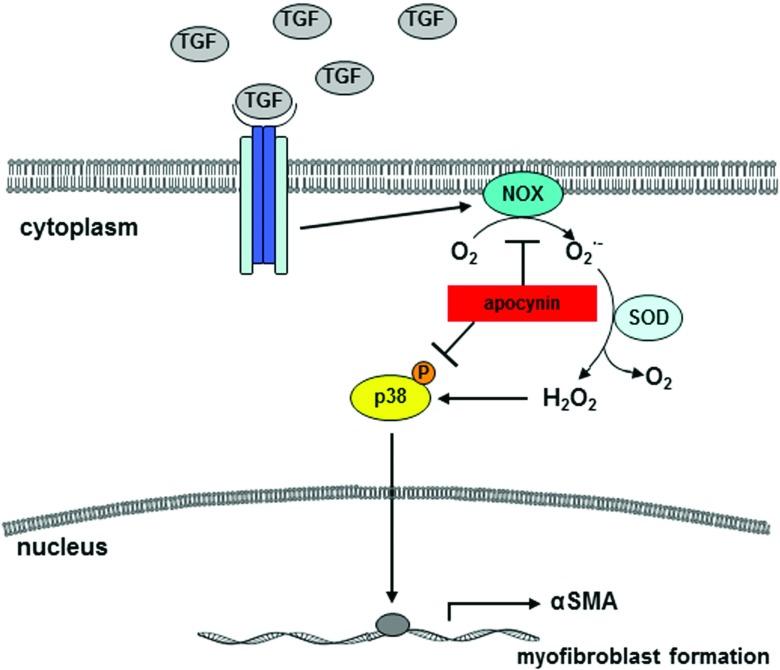
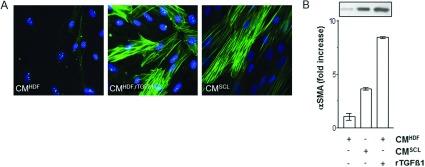
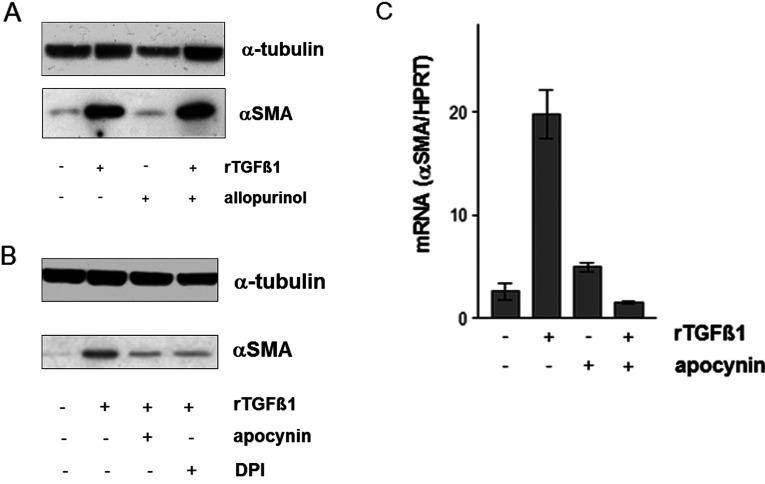
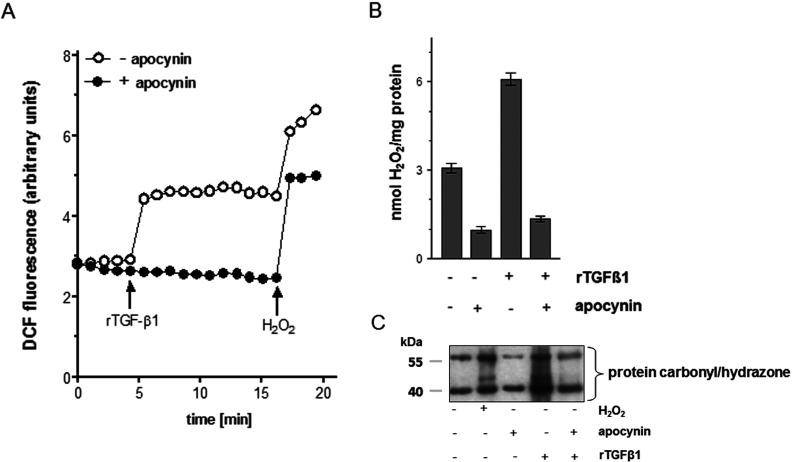
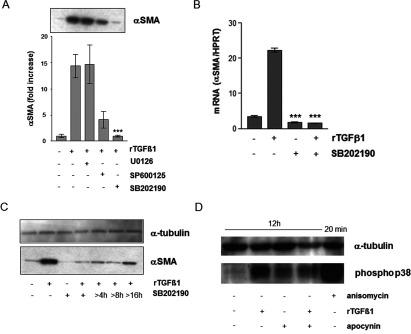
Tumour-stroma interaction is a prerequisite for tumour progression in skin cancer. Hereby, a critical step in stromal function is the transition of tumour-associated fibroblasts to MFs (myofibroblasts) by growth factors, for example TGFβ (transforming growth factor beta(). In this study, the question was addressed of whether fibroblast-associated NAD(P)H oxidase (NADH/NADPH oxidase), known to be activated by TGFβ1, is involved in the fibroblast-to-MF switch. The up-regulation of αSMA (alpha smooth muscle actin), a biomarker for MFs, is mediated by a TGFβ1-dependent increase in the intracellular level of ROS (reactive oxygen species). This report demonstrates two novel aspects of the TGFβ1 signalling cascade, namely the generation of ROS due to a biphasic NAD(P)H oxidase activity and a ROS-dependent downstream activation of p38 leading to a transition of dermal fibroblasts to MFs that can be inhibited by the selective NAD(P)H oxidase inhibitor apocynin. These data suggest that inhibition of NAD(P)H oxidase activity prevents the fibroblast-to-MF switch and may be important for chemoprevention in context of a 'stromal therapy' which was described earlier.
肿瘤-基质相互作用是皮肤癌肿瘤进展的前提条件。在此过程中,基质功能的一个关键步骤是肿瘤相关成纤维细胞通过生长因子(如转化生长因子β(TGFβ))转变为肌成纤维细胞(MFs)。在本研究中,探讨了已知被TGFβ1激活的成纤维细胞相关NAD(P)H氧化酶(NADH/NADPH氧化酶)是否参与成纤维细胞向肌成纤维细胞的转变。α平滑肌肌动蛋白(αSMA)是肌成纤维细胞的生物标志物,其上调由TGFβ1依赖性细胞内活性氧(ROS)水平增加介导。本报告展示了TGFβ1信号级联的两个新方面,即双相NAD(P)H氧化酶活性导致的ROS生成以及ROS依赖性p38下游激活,从而导致真皮成纤维细胞向肌成纤维细胞转变,这一转变可被选择性NAD(P)H氧化酶抑制剂阿朴吗啡抑制。这些数据表明,抑制NAD(P)H氧化酶活性可防止成纤维细胞向肌成纤维细胞的转变,这对于之前描述的“基质疗法”背景下的化学预防可能很重要。

 Zotero 插件