
经历与痴呆症相关着装问题的拉丁裔/西班牙裔阿尔茨海默病护理人员:自我保护模型的验证以及对基于计算机的“智能着装器”着装辅助工具的反应
Latino/Hispanic Alzheimer's caregivers experiencing dementia-related dressing issues: corroboration of the Preservation of Self model and reactions to a "smart dresser" computer-based dressing aid.
作者信息
Mahoney Diane Feeney, Coon David W, Lozano Cecil
机构信息
School of Nursing, MGH Institute of Health Professions, Boston, MA, USA.
College of Nursing & Health Innovation, Arizona State University, Phoenix, AZ, USA.
出版信息
Digit Health. 2016 Nov;2. doi: 10.1177/2055207616677129.
OBJECTIVE
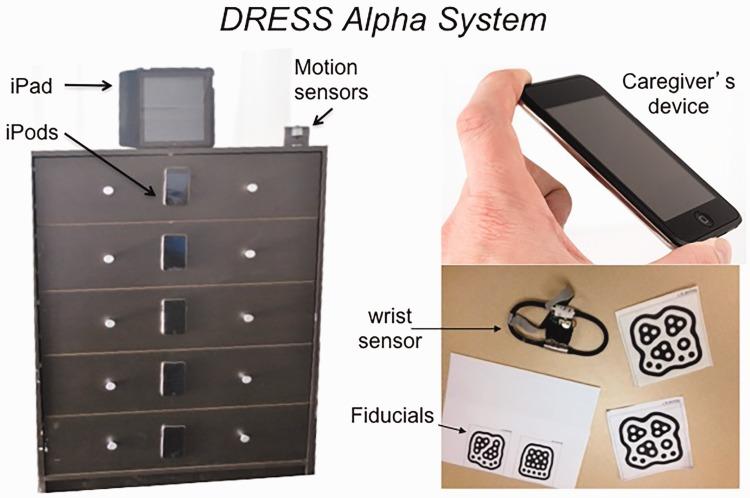
To gain an understanding of Latino/Hispanic caregivers' dementia-related dressing issues, their impressions of using a "smart" context-aware dresser to coach dressing, and recommendations to improve its acceptability.
METHOD
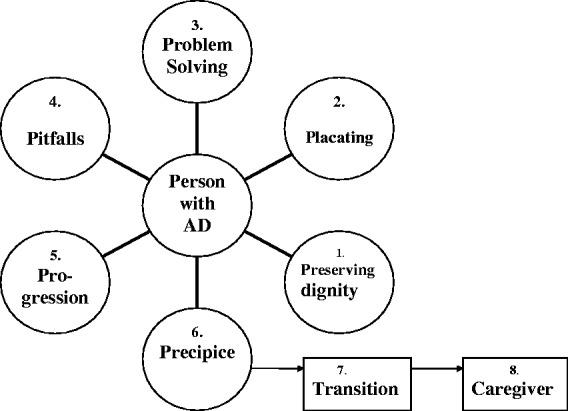
The same Latina moderator conducted all the caregiver focus groups. She followed a semi-structured interview guide that was previously used with White and African American family caregivers who experienced Alzheimer's disease related dressing challenges. From that study, the Preservation of Self model emerged. Using a deductive qualitative analytic approach, we applied the thematic domains from the Preservation of Self model to ascertain relevance to Latino/Hispanic caregivers.
RESULTS
Twenty Latino/Hispanic experienced caregivers were recruited, enrolled, and participated in one of three focus groups. The majority were female (75%) and either the spouse (25%) or adult child (35%). Striking similarities occurred with the dressing challenges and alignment with the Preservation of Self model. Ethnic differences arose in concerns over assimilation weakening the Latino culture of family caregiving. Regional clothing preferences were noted. Technology improvement recommendations for our system, called DRESS, included developing bilingual prompting dialogs and video modules using the local vernacular to improve cultural sensitivity. Caregivers identified the potential for the technology to enable user privacy, empowerment, and exercise as well as offering respite time for themselves.
CONCLUSION
Findings suggest dementia-related dressing issues were shared in common by different racial/ethnic groups but the response to them was influenced by cultural dynamics. For the first time Latino/Hispanic voices are heard to reflect their positive technology impressions, concerns, and recommendations in order to begin to address the cultural digital disparities divide.
目的
了解拉丁裔/西班牙裔护理人员与痴呆症相关的穿衣问题、他们对使用“智能”情境感知梳妆台指导穿衣的印象,以及提高其可接受性的建议。
方法
同一位拉丁裔主持人主持了所有护理人员焦点小组。她遵循一份半结构化访谈指南,该指南先前曾用于经历过与阿尔茨海默病相关穿衣挑战的白人和非裔美国家庭护理人员。从该研究中,出现了自我保护模型。我们采用演绎性定性分析方法,应用自我保护模型的主题领域来确定其与拉丁裔/西班牙裔护理人员的相关性。
结果
招募、登记了20名有经验的拉丁裔/西班牙裔护理人员,并让他们参加了三个焦点小组中的一个。大多数是女性(75%),要么是配偶(25%),要么是成年子女(35%)。在穿衣挑战以及与自我保护模型的一致性方面存在显著相似之处。在对同化削弱拉丁裔家庭护理文化的担忧方面出现了种族差异。注意到了地区服装偏好。针对我们名为DRESS的系统的技术改进建议包括开发双语提示对话框和使用当地方言的视频模块,以提高文化敏感性。护理人员确定了该技术在保护用户隐私、增强权能和促进锻炼方面的潜力,以及为他们自己提供喘息时间的潜力。
结论
研究结果表明,不同种族/族裔群体都存在与痴呆症相关的穿衣问题,但对这些问题的反应受到文化动态的影响。首次听到了拉丁裔/西班牙裔的声音,以反映他们对技术的积极印象、担忧和建议,从而开始解决文化数字差距问题。
 Zotero 插件