
基于电荷的细胞外囊泡沉淀
Charge-based precipitation of extracellular vesicles.
作者信息
Deregibus Maria Chiara, Figliolini Federico, D'Antico Sergio, Manzini Paola Maria, Pasquino Chiara, De Lena Michela, Tetta Ciro, Brizzi Maria Felice, Camussi Giovanni
机构信息
Department of Medical Sciences, University of Turin, I-10126 Turin, Italy.
2i3T - Scarl. - Molecular Biotechnology Center (MBC), University of Turin, I-10126 Turin, Italy.
出版信息
Int J Mol Med. 2016 Nov;38(5):1359-1366. doi: 10.3892/ijmm.2016.2759. Epub 2016 Sep 29.
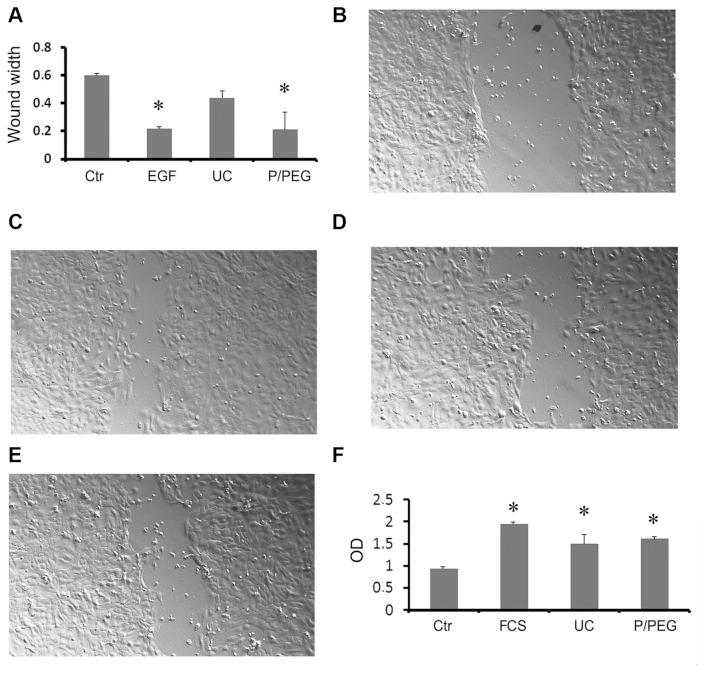
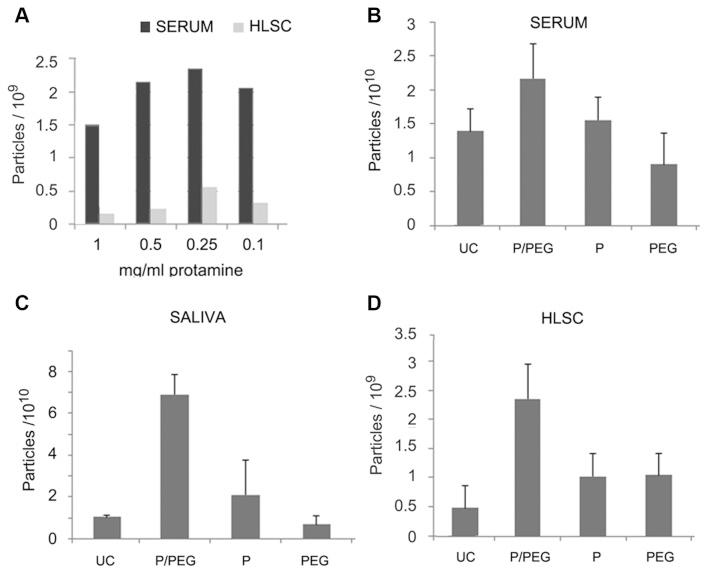
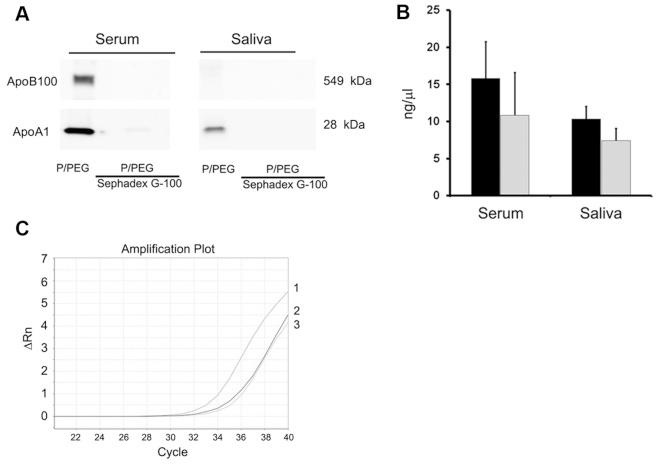
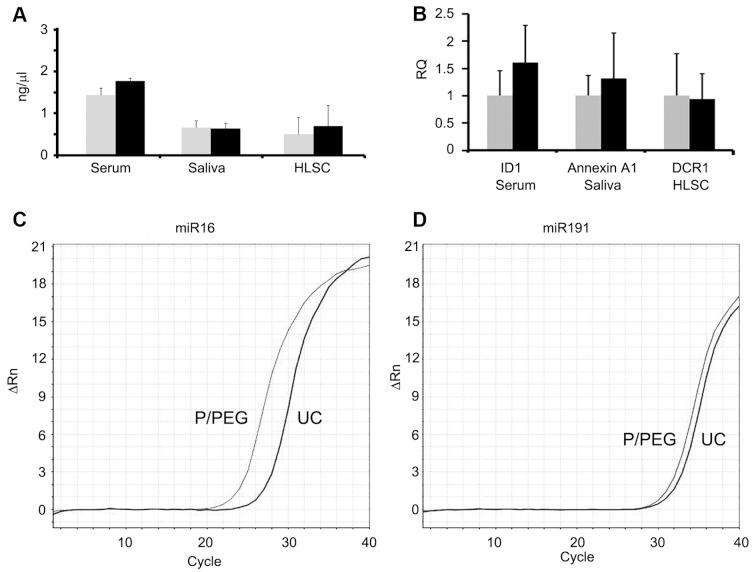
Vesicular-mediated communication between cells appears critical in many biological processes. Extracellular vesicles (EVs) released from healthy and diseased cells are involved in a network of exchange of biologically active molecules. Since EVs present in biological fluids carry the signature of the cell of origin, they are potential biomarkers for ongoing physiological or pathological processes. Despite the knowledge on EV biology accrued in recent years, techniques of EV purification remain a challenge and all the described methods have some advantages and disadvantages. In the present study, we described a method based on charge precipitation of EVs from biological fluids and from cell supernatants in comparison with the differential ultracentrifugation, which is considered the gold standard for EV purification. The analysis of ζ‑potential revealed that EVs have a negative charge that allows the interaction with a positively charged molecule, such as protamine. Protamine was shown to induce EV precipitation from serum and saliva and from cell culture media without the need for ultracentrifugation. EV resuspension was facilitated when protamine (P) precipitation was performed in the presence of PEG 35,000 Da (P/PEG precipitation). The recovery of precipitated EVs evaluated by NanoSight analysis was more efficient than that obtained by ultracentrifugation. By electron microscopy the size of EVs was similar after both methods were used, and the expression of CD63, CD9 and CD81 exosomal markers in the P/PEG‑precipitated EVs indicated an enrichment in exosomes. The RNA recovery of P/PEG‑precipitated EVs was similar to that of EVs isolated by ultracentrifugation. In addition, P/PEG‑precipitated EVs retained the biological activity in vitro as observed by the induction of wound closure by keratinocytes and of proliferation of tubular epithelial cells. In conclusion, charge-based precipitation of EVs has the merit of simplicity and avoids the requirement of expensive equipments and may be used for the efficient isolation of EVs from small biological samples.
细胞间的囊泡介导通讯在许多生物学过程中似乎至关重要。从健康细胞和患病细胞释放的细胞外囊泡(EVs)参与了生物活性分子交换网络。由于生物体液中存在的细胞外囊泡携带起源细胞的特征,它们是正在进行的生理或病理过程的潜在生物标志物。尽管近年来积累了有关细胞外囊泡生物学的知识,但细胞外囊泡的纯化技术仍然是一个挑战,并且所有已描述的方法都有一些优点和缺点。在本研究中,我们描述了一种基于从生物体液和细胞上清液中通过电荷沉淀细胞外囊泡的方法,并与差速超速离心法进行了比较,差速超速离心法被认为是细胞外囊泡纯化的金标准。ζ电位分析表明,细胞外囊泡带负电荷,这使其能够与带正电荷的分子(如鱼精蛋白)相互作用。已证明鱼精蛋白可诱导血清、唾液和细胞培养基中的细胞外囊泡沉淀,而无需超速离心。当在35,000 Da的聚乙二醇(PEG)存在下进行鱼精蛋白(P)沉淀时(P/PEG沉淀),有助于细胞外囊泡的重悬。通过纳米可视分析评估,沉淀的细胞外囊泡的回收率比通过超速离心获得的回收率更高。通过电子显微镜观察,两种方法使用后细胞外囊泡的大小相似,并且P/PEG沉淀的细胞外囊泡中CD63、CD9和CD81外泌体标志物的表达表明外泌体富集。P/PEG沉淀的细胞外囊泡的RNA回收率与通过超速离心分离的细胞外囊泡相似。此外,如通过角质形成细胞诱导伤口闭合和肾小管上皮细胞增殖所观察到的,P/PEG沉淀的细胞外囊泡在体外保留了生物活性。总之,基于电荷的细胞外囊泡沉淀具有操作简单的优点,避免了对昂贵设备的需求,可用于从小生物样本中高效分离细胞外囊泡。

 Zotero 插件