
PKCθ 的药理学抑制可对抗杜氏肌营养不良症小鼠模型中的肌肉疾病。
Pharmacological Inhibition of PKCθ Counteracts Muscle Disease in a Mouse Model of Duchenne Muscular Dystrophy.
机构信息
Dept. of Anatomy, Histology, Forensic Medicine and Orthopedics, Unit of Histology and Med. Embryology, CE-BEMM and Interuniversity Institute of Myology, Sapienza University of Rome, 00161 Rome, Italy.
Dept. of Anatomy, Histology, Forensic Medicine and Orthopedics, Unit of Histology and Med. Embryology, CE-BEMM and Interuniversity Institute of Myology, Sapienza University of Rome, 00161 Rome, Italy.
出版信息
EBioMedicine. 2017 Feb;16:150-161. doi: 10.1016/j.ebiom.2017.01.001. Epub 2017 Jan 7.
UNLABELLED
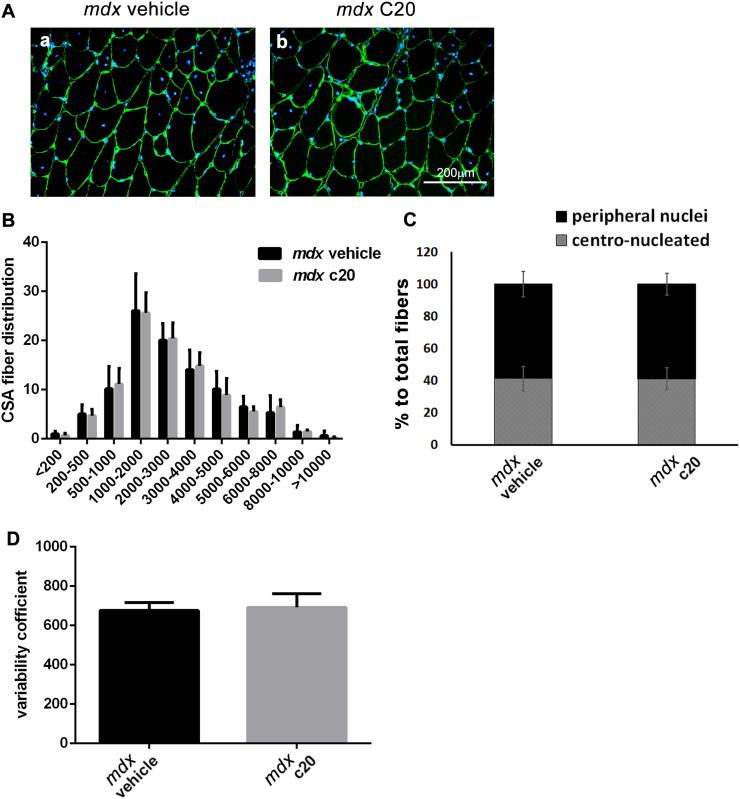
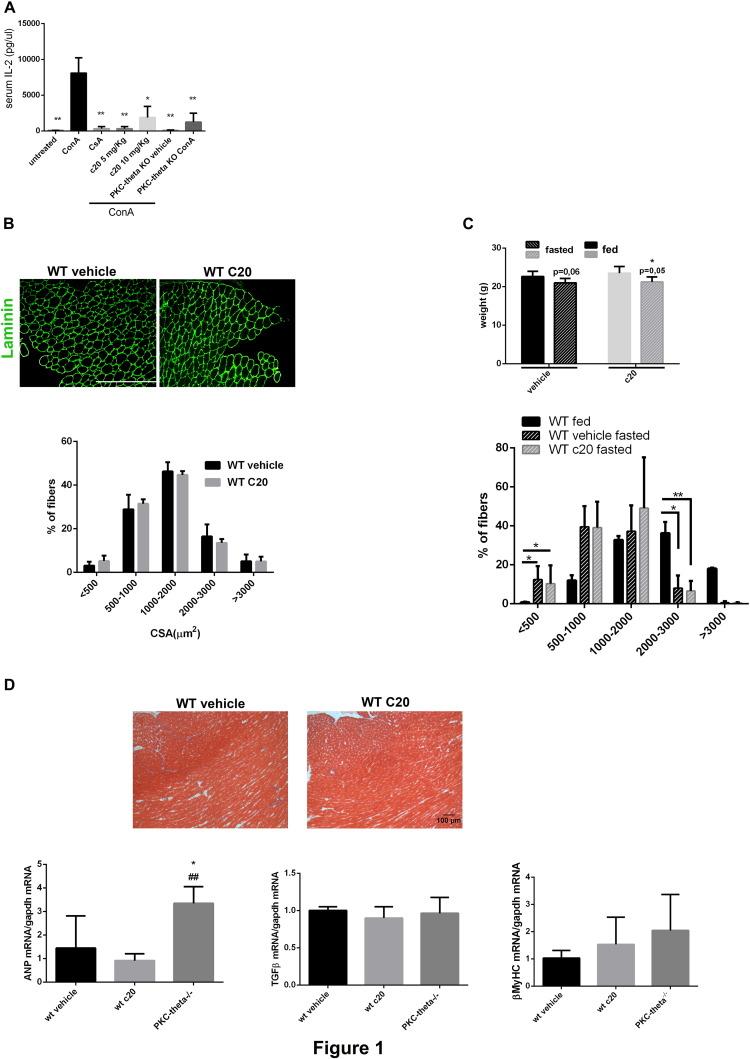
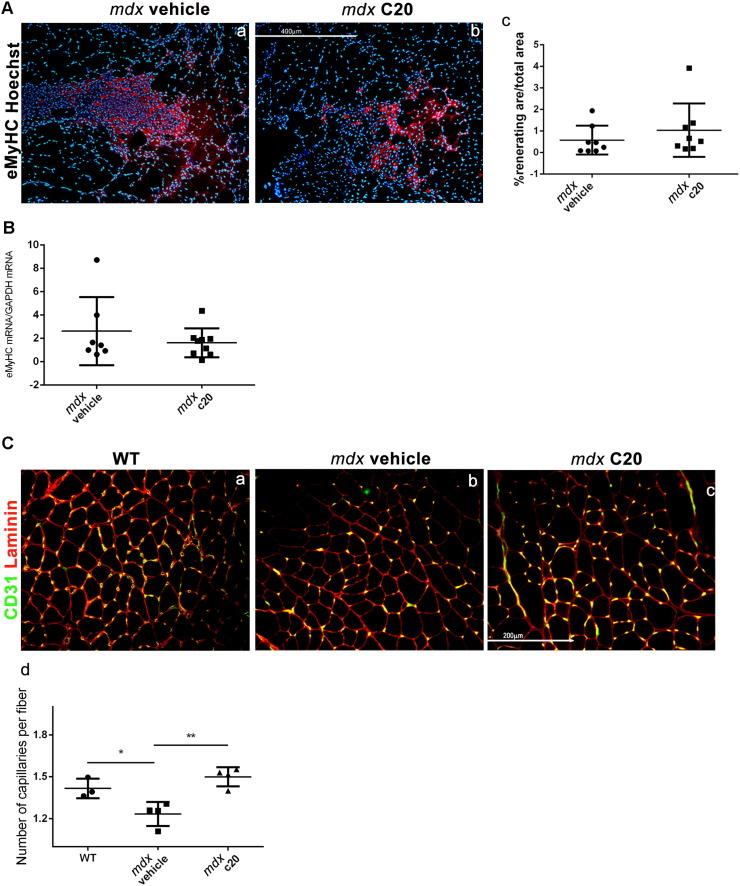
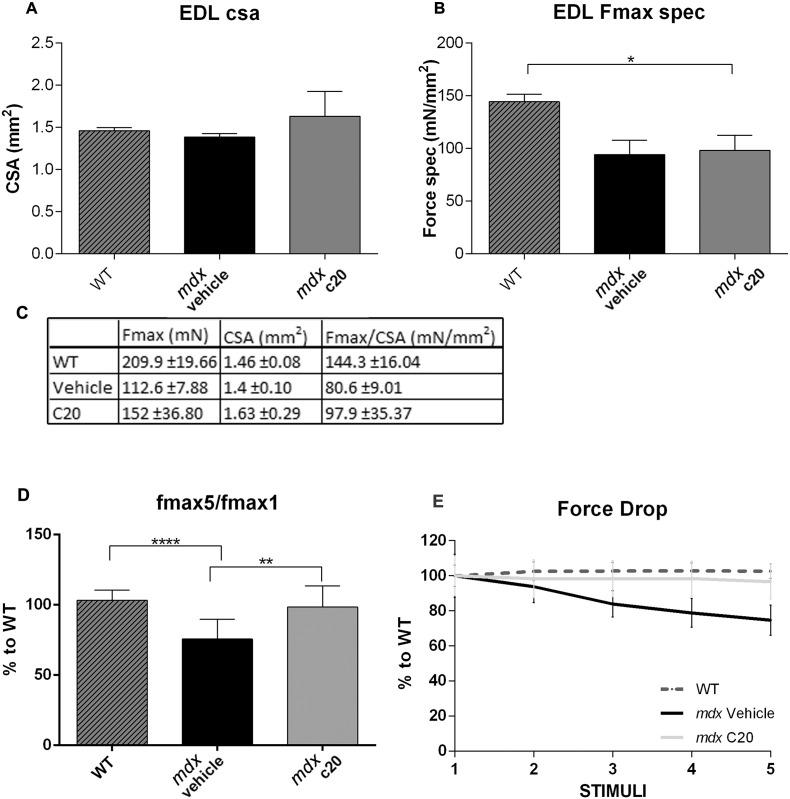
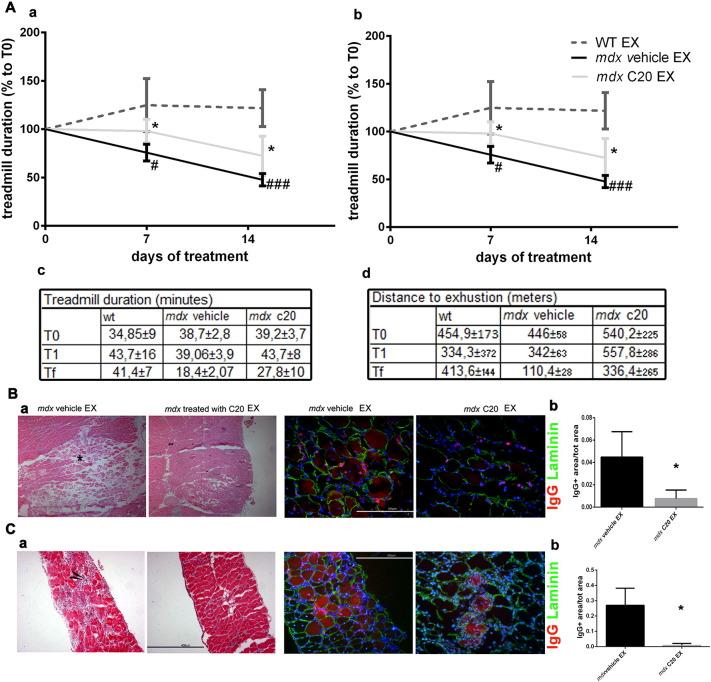
Inflammation plays a considerable role in the progression of Duchenne Muscular Dystrophy (DMD), a severe muscle disease caused by a mutation in the dystrophin gene. We previously showed that genetic ablation of Protein Kinase C θ (PKCθ) in mdx, the mouse model of DMD, improves muscle healing and regeneration, preventing massive inflammation. To establish whether pharmacological targeting of PKCθ in DMD can be proposed as a therapeutic option, in this study we treated young mdx mice with the PKCθ inhibitor Compound 20 (C20). We show that C20 treatment led to a significant reduction in muscle damage associated with reduced immune cells infiltration, reduced inflammatory pathways activation, and maintained muscle regeneration. Importantly, C20 treatment is efficient in recovering muscle performance in mdx mice, by preserving muscle integrity. Together, these results provide proof of principle that pharmacological inhibition of PKCθ in DMD can be considered an attractive strategy to modulate immune response and prevent the progression of the disease.
RESEARCH IN CONTEXT
Duchenne muscular dystrophy (DMD) is a severe muscle disease affecting 1:3500 male births. DMD is caused by a mutation in dystrophin gene, coding for a protein required for skeletal and cardiac muscle integrity. Lack of a functional dystrophin is primarily responsible for the muscle eccentric contraction-induced muscle damage, observed in dystrophic muscle. However, inflammation plays a considerable role in the progression of DMD. Glucocorticoids, which have anti-inflammatory properties, are being used to treat DMD with some success; however, long term treatment with these drugs induces muscle atrophy and wasting, outweighing their benefit. The identification of specific targets for anti-inflammatory therapies is one of the ongoing therapeutic options. Although blunting inflammation would not be a "cure" for the disease, the emerging clue is that multiple strategies, addressing different aspects of the pathology, which may eventually converge, may be successful. In this context, we previously showed that genetic ablation of Protein Kinase C θ (PKCθ), an enzyme known to be involved in immune response, in mdx, the mouse model of DMD, improves muscle healing and regeneration, preventing massive inflammation. To establish whether pharmacological targeting of PKCθ in DMD can be proposed as a therapeutic option, in this study we treated young mdx mice with the PKCθ inhibitor Compound 20 (C20). We show that C20 treatment led to a significant reduction in muscle damage associated with reduced immune cells infiltration, reduced inflammatory pathways activation, and maintained muscle regeneration. Importantly, C20 treatment is efficient in recovering muscle performance in mdx mice, by preserving muscle integrity. Together, these results provide proof of principle that pharmacological inhibition of PKCθ in DMD can be considered an attractive strategy to modulate immune response and prevent the progression of the disease.
非标记
炎症在杜氏肌营养不良症(DMD)的进展中起着相当大的作用,DMD 是一种严重的肌肉疾病,由肌营养不良蛋白基因的突变引起。我们之前的研究表明,在 mdx 小鼠(DMD 的小鼠模型)中基因敲除蛋白激酶 Cθ(PKCθ)可改善肌肉愈合和再生,从而防止大量炎症。为了确定 DMD 中 PKCθ 的药理学靶向是否可以作为一种治疗选择,在这项研究中,我们用 PKCθ 抑制剂 Compound 20(C20)治疗年轻的 mdx 小鼠。我们发现 C20 治疗可显著减少与免疫细胞浸润减少、炎症途径激活减少相关的肌肉损伤,并维持肌肉再生。重要的是,C20 治疗通过保持肌肉完整性有效地恢复 mdx 小鼠的肌肉功能。这些结果共同提供了一个原理证明,即 DMD 中 PKCθ 的药理学抑制可被视为调节免疫反应和预防疾病进展的一种有吸引力的策略。
研究背景
杜氏肌营养不良症(DMD)是一种严重的肌肉疾病,影响每 3500 名男性新生儿中的 1 名。DMD 是由肌营养不良蛋白基因的突变引起的,该基因编码一种骨骼和心肌完整性所必需的蛋白质。缺乏功能性肌营养不良蛋白主要导致在 DMD 中观察到的、由肌纤维离心收缩引起的肌肉损伤。然而,炎症在 DMD 的进展中起着相当大的作用。具有抗炎特性的糖皮质激素被用于治疗 DMD,取得了一定的成功;然而,长期使用这些药物会导致肌肉萎缩和消瘦,超过了它们的益处。寻找抗炎疗法的特定靶点是正在进行的治疗选择之一。尽管抑制炎症不会成为该疾病的“治愈方法”,但新出现的线索是,多种策略,针对病理的不同方面,最终可能会成功汇聚。在这种情况下,我们之前的研究表明,在 mdx 小鼠(DMD 的小鼠模型)中,基因敲除已知参与免疫反应的蛋白激酶 Cθ(PKCθ)可改善肌肉愈合和再生,防止大量炎症。为了确定 DMD 中 PKCθ 的药理学靶向是否可以作为一种治疗选择,在这项研究中,我们用 PKCθ 抑制剂 Compound 20(C20)治疗年轻的 mdx 小鼠。我们发现 C20 治疗可显著减少与免疫细胞浸润减少、炎症途径激活减少相关的肌肉损伤,并维持肌肉再生。重要的是,C20 治疗通过保持肌肉完整性有效地恢复 mdx 小鼠的肌肉功能。这些结果共同提供了一个原理证明,即 DMD 中 PKCθ 的药理学抑制可被视为调节免疫反应和预防疾病进展的一种有吸引力的策略。



 Zotero 插件