
健康女性的肠-脑轴:微生物组成与多样性与精神指标之间缺乏显著关联。
The Gut-Brain Axis in Healthy Females: Lack of Significant Association between Microbial Composition and Diversity with Psychiatric Measures.
作者信息
Kleiman Susan C, Bulik-Sullivan Emily C, Glenny Elaine M, Zerwas Stephanie C, Huh Eun Young, Tsilimigras Matthew C B, Fodor Anthony A, Bulik Cynthia M, Carroll Ian M
机构信息
Department of Nutrition, The University of North Carolina at Chapel Hill, Chapel Hill, North Carolina, United States of America.
Department of Medicine, The University of North Carolina at Chapel Hill, Chapel Hill, North Carolina, United States of America.
出版信息
PLoS One. 2017 Jan 19;12(1):e0170208. doi: 10.1371/journal.pone.0170208. eCollection 2017.
OBJECTIVE
This study examined associations between the composition and diversity of the intestinal microbiota and measures of depression, anxiety, eating disorder psychopathology, stress, and personality in a group of healthy adult females.
METHODS
Female participants (n = 91) ages 19-50 years with BMI 18.5-25 kg/m2 were recruited from central North Carolina between July 2014 and March 2015. Participants provided a single fecal sample and completed an online psychiatric questionnaire that included five measures: (i) Beck Anxiety Inventory; (ii) Beck Depression Inventory-II; (iii) Eating Disorder Examination-Questionnaire; (iv) Perceived Stress Scale; and (v) Mini International Personality Item Pool. Bacterial composition and diversity were characterized by Illumina sequencing of the 16S rRNA gene, and associations were examined using Kendall's tau-b correlation coefficient, in conjunction with Benjamini and Hochberg's False Discovery Rate procedure.
RESULTS
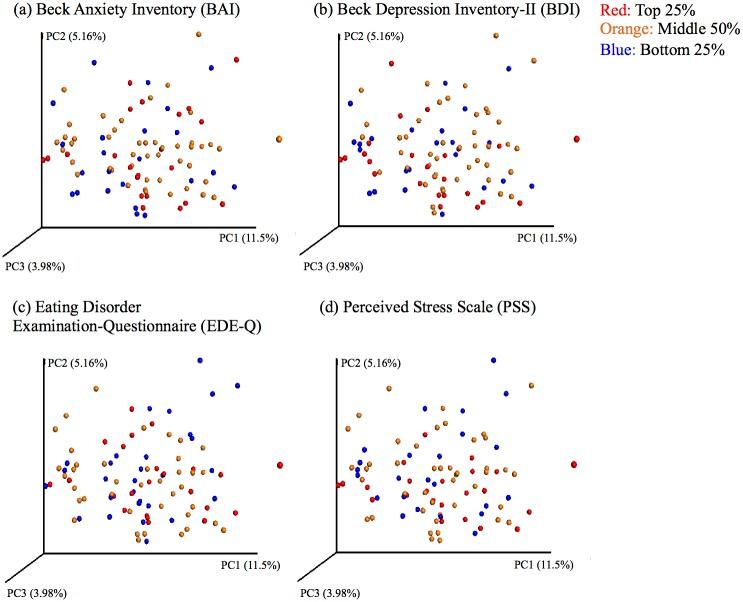
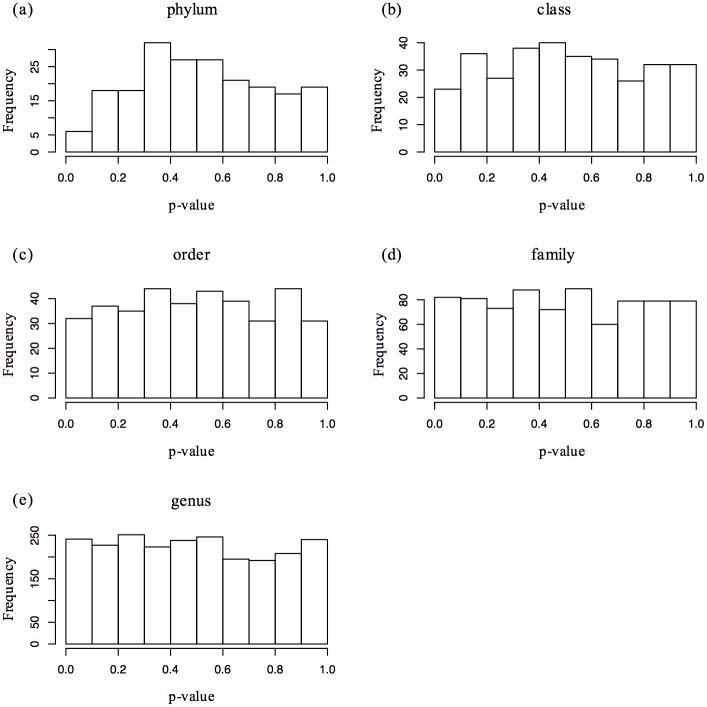
We found no significant associations between microbial markers of gut composition and diversity and scores on psychiatric measures of anxiety, depression, eating-related thoughts and behaviors, stress, or personality in a large cohort of healthy adult females.
DISCUSSION
This study was the first specifically to examine associations between the intestinal microbiota and psychiatric measures in healthy females, and based on 16S rRNA taxonomic abundances and diversity measures, our results do not suggest a strong role for the enteric microbe-gut-brain axis in normal variation on responses to psychiatric measures in this population. However, the role of the intestinal microbiota in the pathophysiology of psychiatric illness may be limited to more severe psychopathology.
目的
本研究调查了一组健康成年女性肠道微生物群的组成和多样性与抑郁、焦虑、饮食失调精神病理学、压力和人格测量指标之间的关联。
方法
2014年7月至2015年3月期间,从北卡罗来纳州中部招募了年龄在19 - 50岁、体重指数(BMI)为18.5 - 25 kg/m²的女性参与者(n = 91)。参与者提供了一份粪便样本,并完成了一份在线精神科问卷,该问卷包括五项测量指标:(i)贝克焦虑量表;(ii)贝克抑郁量表第二版;(iii)饮食失调检查问卷;(iv)感知压力量表;以及(v)迷你国际人格项目池。通过对16S rRNA基因进行Illumina测序来表征细菌组成和多样性,并使用肯德尔tau - b相关系数结合本雅明尼和霍奇伯格的错误发现率程序来检验关联。
结果
在一大群健康成年女性中,我们发现肠道组成和多样性的微生物标志物与焦虑、抑郁、饮食相关思维和行为、压力或人格的精神科测量得分之间没有显著关联。
讨论
本研究首次专门调查了健康女性肠道微生物群与精神科测量指标之间的关联,基于16S rRNA分类丰度和多样性测量,我们的结果并不表明肠道微生物 - 肠 - 脑轴在该人群对精神科测量指标的正常反应变化中起重要作用。然而,肠道微生物群在精神疾病病理生理学中的作用可能仅限于更严重的精神病理学情况。
 Zotero 插件